Alaska's Ocean Data Lifeline Cut
The National Science Foundation (NSF) announced in May 2026 plans to decommission the Ocean Observatories Initiative (OOI), a nearly $368 million network of scientific instruments that tracks ocean chemistry, wave action, water temperature, salinity, and other critical metrics. The decision has sparked deep anxiety in Alaska, the nation's top fish-producing state, where temperatures are warming twice as fast as the global average. The real-time data from these observatories has been vital for scientists, fishery managers, coastal hazard planners, and even the military.
Impact on Fisheries and Coastal Communities
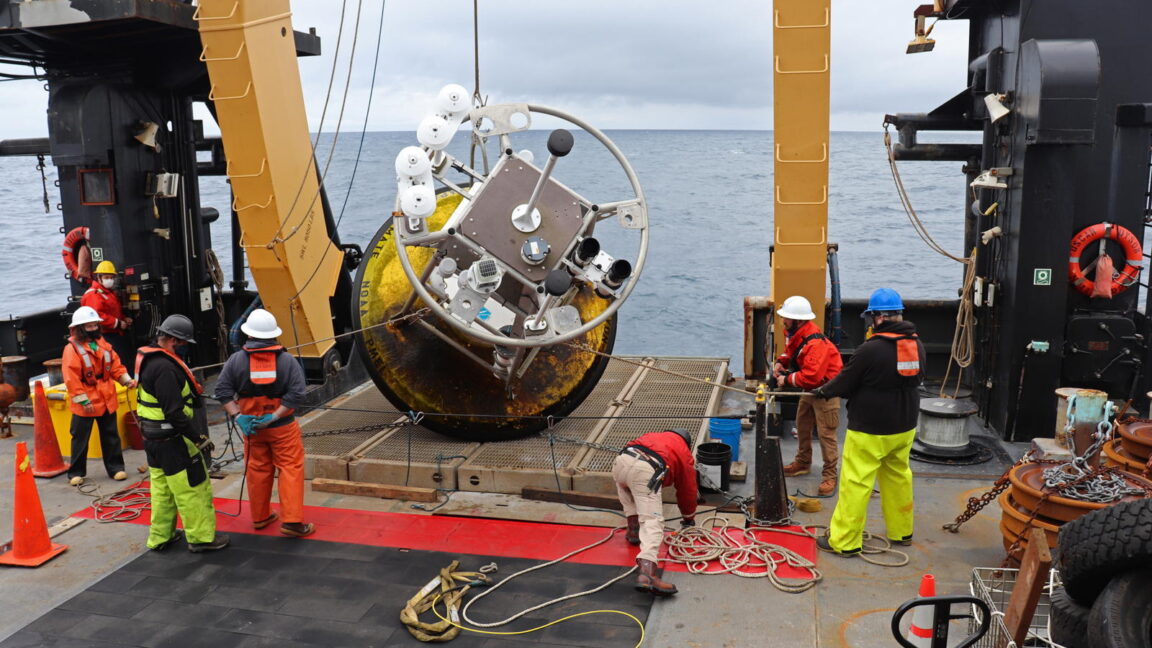
Alaska's commercial seafood industry is a $5.3 billion economic engine that employs nearly 42,000 people, according to a recent report by McKinley Research Group for the Alaska Seafood Marketing Institute. The loss of Ocean Station Papa, a deep-ocean observing system in the Gulf of Alaska at a depth of nearly 14,000 feet, means the state will lose one of its only systems that documents ocean changes in real time. Michelle Stratton, executive director of the Alaska Marine Community Coalition, warned that the state is in the middle of salmon crashes, crab collapses, and repeated marine heatwaves, and this decision removes the data needed to understand and manage these crises.
Real-Time Data for Critical Decisions
The OOI network provides information that helps calculate fish harvest limits, predict marine heatwaves, and monitor giant wave activity. Jan Newton, a University of Washington affiliate professor of biological oceanography, emphasized that the data helps us see where we're going and what's coming at us. Without it, fishery managers will be flying blind, potentially leading to overfishing or inadequate protection of vulnerable stocks.

NSF's Rationale and Criticism
NSF spokesperson Cassandra Eichner stated that the decision aligns with the NSF's wider strategy of a nimbler approach to prioritize support for evolving scientific priorities and emerging technologies, as well as smart lifecycle management within its research infrastructure portfolio. She assured that all previously collected data will remain accessible and that NSF remains committed to ocean science. However, critics argue that decommissioning a functioning network that provides irreplaceable real-time data is shortsighted, especially given the accelerating impacts of climate change in the region.
Broader Implications for Safety and Economy
Beyond fisheries, the data from OOI is used by coastal hazard planners to prepare for extreme weather events and by the military for navigation and operations. The loss of this monitoring capability could increase risks for Alaska's vulnerable coastal communities, which already face threats from erosion, storm surges, and sea-level rise. The decision has prompted calls for alternative funding sources or a reversal of the decommissioning plan.
Looking Ahead
As the NSF moves forward with decommissioning, stakeholders are scrambling to find ways to maintain some level of ocean monitoring in the Gulf of Alaska. The state's congressional delegation may push for federal intervention, but with budget constraints and competing priorities, the future of ocean data collection in Alaska remains uncertain. The coming months will be critical in determining whether the state can adapt to this loss or face increased economic and environmental risks.
This article is based on reporting by Ars Technica. Read the original article.

Originally published on arstechnica.com