Serendipitous Discovery in Crowd Dynamics
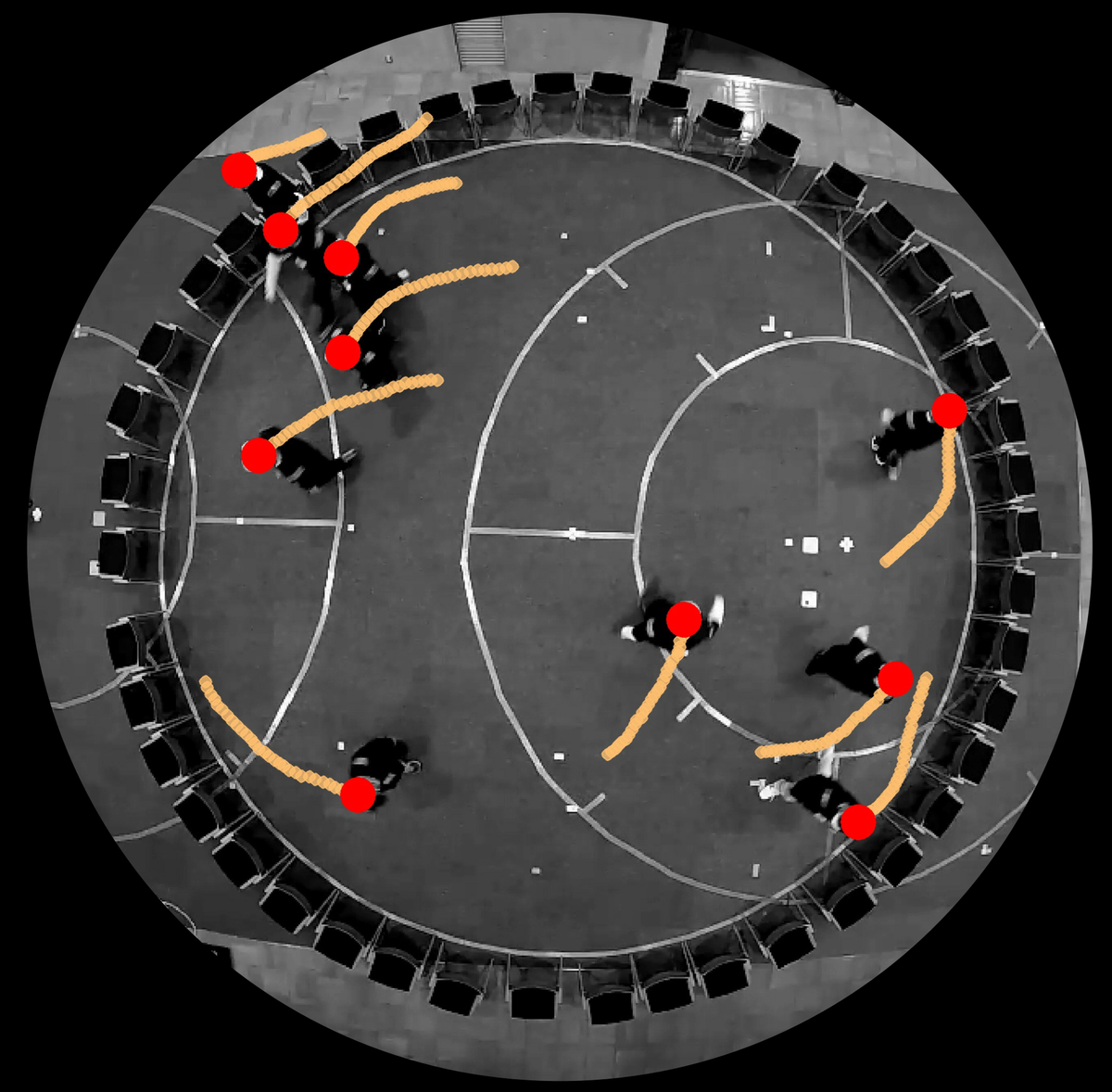
During the Covid-19 pandemic, researchers studying pedestrian movements to inform social distancing guidelines stumbled upon an unexpected phenomenon: a consistent bias toward counterclockwise turning when people change direction. The finding, published in Nature Communications, suggests a hidden rule of human behavior that may be rooted in biology.
Iñaki Echeverría Huarte, a professor of pedestrian dynamics at the University of Navarra in Spain, and his team analyzed videos of crowds in various settings. They noticed that individuals, whether alone or in groups, showed a preference for turning left (counterclockwise) rather than right. This pattern held across different environments, from schoolyards to busy public spaces.
Cross-Cultural Consistency
To test whether this bias was culturally influenced, the researchers conducted experiments in Spain and Japan. They hypothesized that cultural differences in avoidance behavior might reverse the turning preference in Japan. However, the counterclockwise bias persisted in both countries, indicating a universal tendency independent of culture.
“We were convinced the rotation would flip there, for several reasons (cultural ones, and the different type of avoidance behaviour that exists in Japan compared with Spain). However...it did not,” Huarte told 404 Media.

Individual, Not Collective, Bias
The study involved hundreds of participants, including adults moving freely, teenagers in schoolyards, and children at a nursery school. By analyzing their movements, the researchers determined that the bias is individual rather than a collective phenomenon that only emerges in crowds. Claudio Feliciani, a professor of crowd dynamics at the University of Tokyo and co-author of the study, emphasized the robustness of this finding: “We are now only sure that it is not a collective but an individual bias, and that is very, very robust.”
Potential Biological Roots
The team accounted for variables such as handedness, age, and local social etiquette. Despite these factors, the counterclockwise preference remained. The researchers speculate that this bias may represent a manifestation of a deeper biological principle of symmetry breaking, possibly linked to brain lateralization or motor asymmetries.

Implications and Future Research
While the discovery is intriguing, the authors caution against labeling it a universal law without further study. Future research will explore more complex scenarios, such as emergency evacuations or dense crowds, to understand how this bias might affect safety and crowd management. Understanding this hidden rule could have practical applications in designing public spaces, improving traffic flow, and enhancing evacuation procedures.
“The discovery was a serendipitous one (as sometimes happens in science),” Huarte noted. The team plans to continue investigating the underlying mechanisms and whether similar biases exist in other species.
Conclusion
The accidental finding of a counterclockwise turning bias in human crowds opens new avenues for research into the biological and evolutionary origins of human behavior. As scientists delve deeper, this hidden rule may reshape our understanding of how individuals navigate the world.
This article is based on reporting by 404 Media. Read the original article.
Originally published on 404media.co