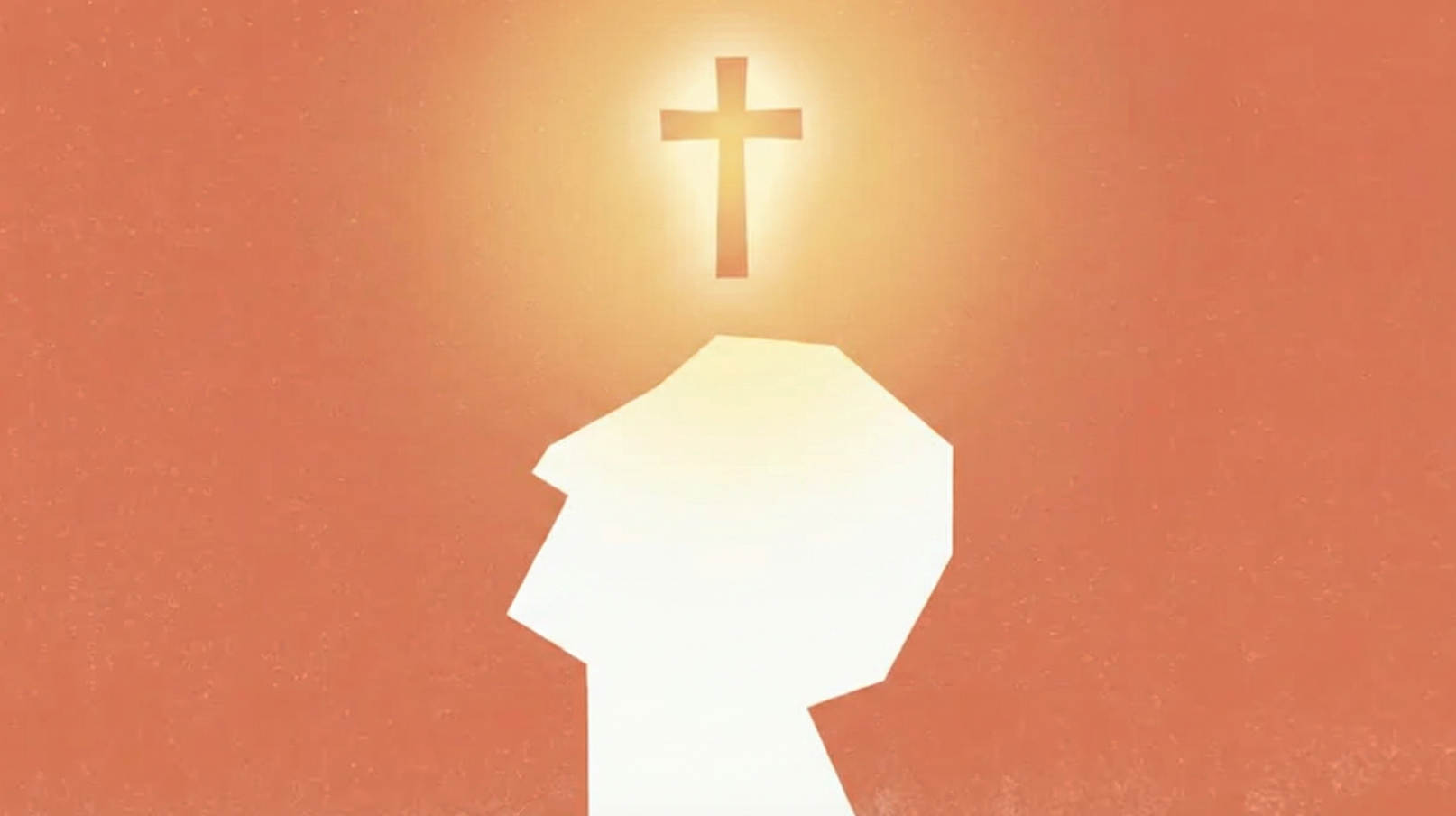
A Striking Split-Screen for the AI Debate
The launch of Pope Leo XIV’s encyclical on artificial intelligence produced an unusually clear snapshot of the current AI argument. On one side was Anthropic co-founder Christopher Olah, who said today’s language models show evidence of introspection and internal states that functionally mirror emotions such as joy, fear, grief, and unease. On the other side was the encyclical itself, which warned against equating machine “intelligence” with human intelligence and insisted that AI systems do not undergo lived experience.
That contrast matters because it separates two debates that are often blurred together. One is about what advanced models are internally doing and how interpretable those systems may be. The other is about governance, moral responsibility, labor disruption, military use, and the social authority of the institutions building them. The Vatican event put both arguments on the same stage and made their tension impossible to miss.
Anthropic’s Case for Mystery
According to the supplied source text, Olah argued that AI systems are not engineered in the same way as conventional machines such as bridges or airplanes. Instead, he described them as “grown” on structures roughly modeled after the brain and trained on a vast inheritance of human thought and speech. From that starting point, he said Anthropic’s internal research keeps uncovering patterns that are “mysterious, even unsettling,” including structures that mirror findings from human neuroscience and evidence of introspection.
He also paired that interpretation with a social warning. There is, he said, a real possibility that AI will displace human labor at very large scale. That claim links the more philosophical discussion of model interiors to a very concrete economic concern. Even if one rejects stronger suggestions about machine inner life, the labor question is already practical and urgent.
The Pope’s Counterpoint
The encyclical, as described in the source material, takes a more grounded and cautionary line. It says AI is never neutral because it takes on the characteristics of those who devise, finance, regulate, and use it. It explicitly rejects the idea that these systems should be mistaken for human beings. The document states that AI systems merely imitate certain functions of human intelligence and do not know joy, pain, work, friendship, or responsibility from within.
This is not a technical rebuttal so much as a moral and political positioning. The Vatican is less interested in whether models produce human-like internal representations than in whether societies allow those systems to erode responsibility, concentrate power, or normalize harmful decisions. That is why the document also criticizes narrow “alignment” discourse and argues that a supposedly more moral AI is insufficient if that morality is set by only a few actors.
Regulation, War, and Resource Use
The encyclical’s policy concerns are broad. It raises the environmental costs of AI, pointing to the enormous energy and water demands of data centers and calling for more efficient systems. It also addresses military use, insisting that deadly or irreversible decisions should not be delegated to machines and declaring that no algorithm can make war morally acceptable.
Those concerns place the Vatican’s intervention firmly inside mainstream governance debates. Energy use, oversight, labor displacement, and autonomous decision-making are no longer fringe topics. They are becoming central to how governments, religious institutions, and civil society groups evaluate AI deployment.
Why the Moment Matters
The significance of the event is not that the Vatican settled the question of machine consciousness. It did not. Nor did Olah’s remarks provide decisive public evidence that language models possess anything like inner subjective life. What the moment did reveal is how quickly AI discussion now moves between technical interpretation and civilizational stakes.
The contrast is especially useful because it clarifies the burden of proof. Claims about introspection-like behavior in models may be interesting and worth investigating, but they do not remove the need for law, oversight, and democratic accountability. In fact, if advanced systems remain “mysterious even to those who create them,” that uncertainty strengthens the argument for stricter institutional guardrails rather than weaker ones.
In that sense, the launch of the encyclical offered something more valuable than consensus. It showed where the lines are being drawn. Frontier AI companies may continue exploring increasingly provocative interpretations of model behavior. Religious and civic institutions, meanwhile, are signaling that whatever the models are, societies still need human responsibility to remain fully in charge. That is likely to be one of the defining arguments of the next phase of AI governance.
This article is based on reporting by The Decoder. Read the original article.
Originally published on the-decoder.com