Powering the Next Generation of Uncrewed Fighters
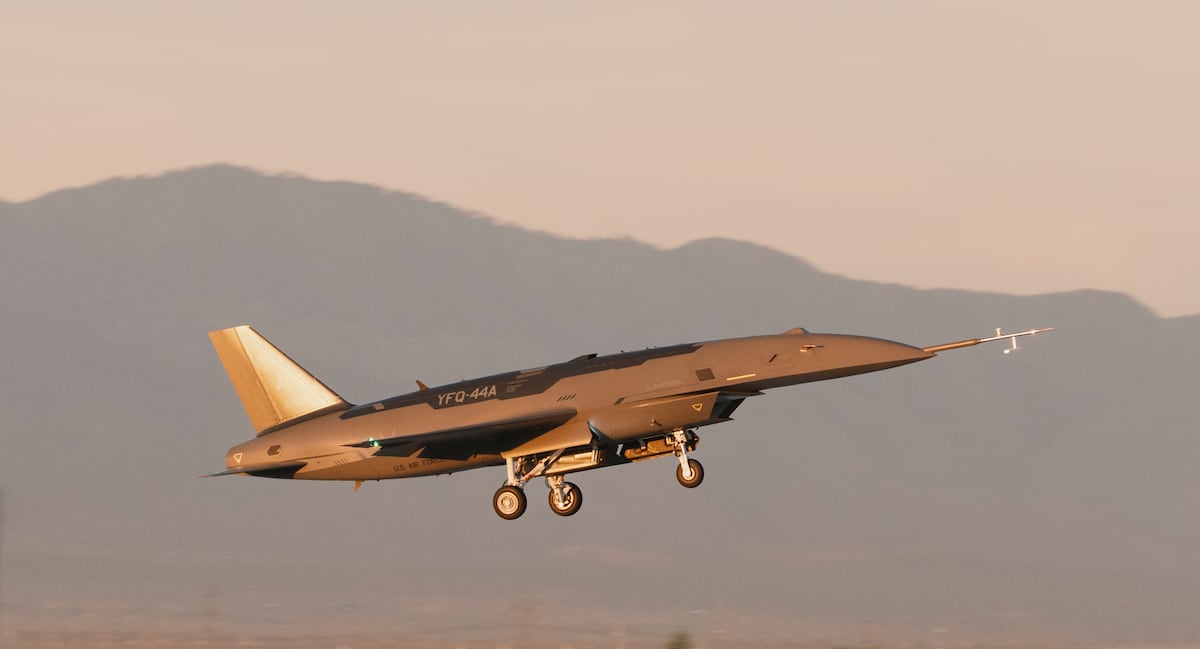
The US Air Force has taken a decisive step toward fielding autonomous drone wingmen by awarding Honeywell a prototype contract to develop a propulsion system for its Collaborative Combat Aircraft program. The company announced the contract on February 23, confirming it will adapt its existing SkyShot 1600 engine to fit the unmanned aircraft that the Air Force envisions flying alongside piloted fighters in future conflicts.
The CCA program represents one of the most ambitious unmanned aviation initiatives in the Pentagon's portfolio. Rather than replacing human pilots, the concept pairs autonomous drones with crewed fighters like the F-35, creating mixed formations where the uncrewed aircraft handle high-risk missions — scouting ahead into contested airspace, carrying additional weapons, or acting as decoys to draw enemy fire away from human pilots.
The SkyShot 1600 Engine
Honeywell's SkyShot 1600 is a compact turbine engine designed from the start for autonomous aircraft applications. It delivers substantial thrust relative to its size and can be configured in either turbofan or turbojet variants, giving aircraft designers flexibility to optimize for different mission profiles.
A turbofan configuration distributes airflow more evenly around the engine core, generally providing better fuel efficiency and longer range at subsonic speeds. A turbojet variant delivers raw thrust more directly, favoring higher speeds at the cost of fuel economy. The ability to offer both options from a common engine architecture is a significant selling point for a program that may ultimately field multiple CCA variants with different performance requirements.
The engine's compact form factor is critical. Autonomous wingmen need to be significantly cheaper than the crewed fighters they accompany — current targets suggest a unit cost of roughly $20 to $30 million per drone, compared to over $80 million for an F-35. Keeping the propulsion system small and manufacturable at scale is essential to hitting those cost targets.
The Collaborative Combat Aircraft Program
The Air Force has been developing the CCA concept for several years, with Anduril and General Atomics selected in 2024 as the primary airframe developers for the first increment of the program. The Honeywell engine contract fills a critical subsystem gap, ensuring that the airframes will have purpose-built propulsion rather than relying on modified engines from existing platforms.
Secretary of the Air Force Frank Kendall has repeatedly emphasized that CCA is not a science project but a fielding priority. The service plans to acquire at least 1,000 autonomous wingmen over the coming decade, creating a force structure where each crewed fighter could be accompanied by two or more uncrewed aircraft. The scale of that ambition makes affordable, reliable propulsion a bottleneck that must be resolved early in the program.
- Honeywell will adapt its SkyShot 1600 engine for the Air Force's autonomous drone wingmen
- The engine supports both turbofan and turbojet configurations for different mission profiles
- CCA drones are designed to fly alongside F-35s at a fraction of the cost
- The Air Force plans to procure at least 1,000 autonomous wingmen over the next decade
Why Propulsion Matters for Attritable Drones
The term frequently used to describe CCA-class aircraft is "attritable" — meaning they are designed to be affordable enough that losing some in combat is acceptable, unlike a crewed fighter where every loss represents both a human life and a hundred-million-dollar investment. Achieving attritability requires driving down the cost of every subsystem, and the engine is typically one of the most expensive components of any aircraft.
Traditional military turbine engines are precision-engineered machines designed for decades of service with extensive maintenance. An attritable drone engine needs a different design philosophy: reliable enough for hundreds of flight hours, simple enough to manufacture at high rates, and cheap enough that the overall drone stays within its cost envelope. Honeywell's approach of adapting a purpose-built autonomous aviation engine rather than shrinking a legacy military powerplant aligns with that philosophy.
Implications for Air Combat Doctrine
The Honeywell contract is a procurement milestone, but its significance extends into how the Air Force will fight. Mixed formations of crewed and uncrewed aircraft will require new tactical doctrines, new command-and-control architectures, and new training regimens for the human pilots who will manage their autonomous wingmen in combat.
A pilot leading a formation of two or three CCA drones into contested airspace will need to trust the autonomous systems to execute maneuvers, respond to threats, and coordinate with each other — all while the pilot focuses on the mission's strategic objectives. The engine contract signals that the hardware development is progressing from concept to engineering reality, bringing those doctrinal questions closer to requiring concrete answers.
For Honeywell, the contract opens a potentially lucrative new market. If CCA production reaches the thousand-unit scale the Air Force envisions, the engine program alone could represent billions in revenue over the life of the fleet. For the Air Force, having a proven aerospace manufacturer committed to the propulsion challenge reduces one of the program's key technical risks as it moves toward first flight and eventual operational deployment.
This article is based on reporting by C4ISRNET. Read the original article.
Originally published on c4isrnet.com