Industrial AI is moving deeper into materials recovery
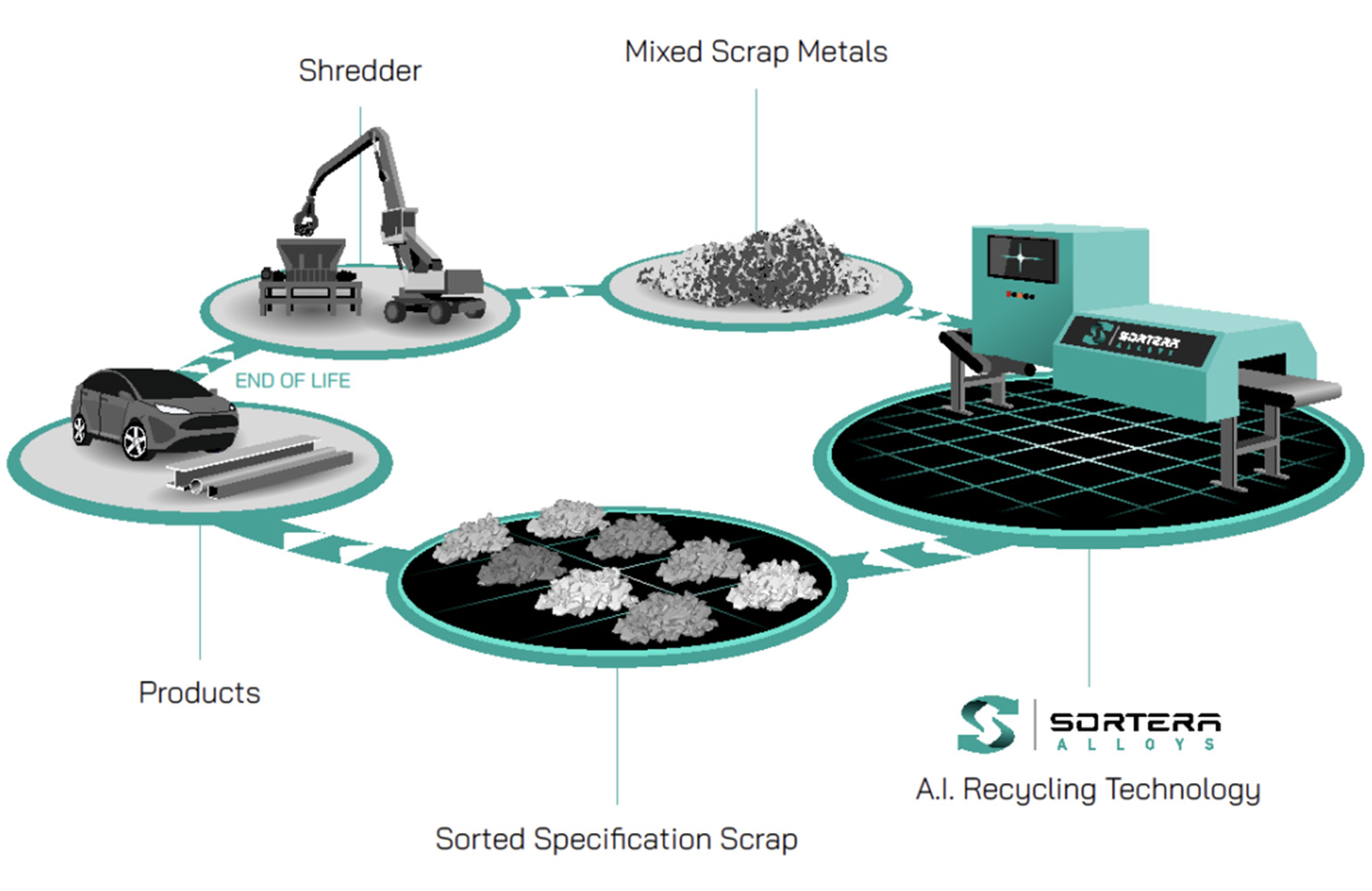
Sortera Technologies says its second advanced processing facility in Lebanon, Tennessee, is moving into full operational status this month, a step that significantly expands the company’s footprint in AI-driven scrap sorting. According to the company information reported by The Robot Report, the added site raises annual processing capacity to an estimated 240 million pounds and effectively doubles output when paired with Sortera’s existing operation in Markle, Indiana.
The headline here is not merely another recycling plant opening. It is the continued industrialization of what Sortera describes as an upcycling platform built on artificial intelligence, data analytics, and advanced sensors. In a sector where mixed scrap has historically been downgraded or exported, the company is making a direct claim that software-guided sorting can recover higher-value material streams for domestic manufacturing.
The business case is about quality as much as volume
Sorting scrap more efficiently matters, but purity is the real economic lever. If a processor can take mixed alloy inputs and produce feedstock clean enough for automotive, construction, and aerospace use, the value of the recovered material changes substantially. Sortera says its system is designed to turn mixed alloy scrap into high-value fractions rather than treating it as lower-grade output.
That is significant because manufacturers want dependable materials, not just recycled materials. A recycling process that cannot deliver consistency will struggle to displace primary inputs in demanding sectors. Sortera’s pitch is that AI-guided sorting lines can improve consistency at the speed and scale required for commercial manufacturing supply chains.
The company’s CEO says the performance of the Indiana facility demonstrated strong demand for sustainable, high-quality recycled aluminum. Bringing the Tennessee facility online, he argues, allows Sortera to meet that demand while building a more localized supply chain for regional customers. That localization point matters because it connects recycling economics to industrial resilience. If recovered materials can be processed closer to end users, the system reduces exposure to longer transport routes and international market volatility.
Why industrial policy and manufacturing strategy intersect here
The source frames the Lebanon plant as part of a domestic infrastructure buildout. Sortera says the model helps keep critical materials inside the US economy and reduces reliance on international imports. That claim lands in a broader policy context where manufacturers, especially in strategic industries, are under pressure to secure supply chains that are cleaner, more traceable, and less vulnerable to disruption.
Recycled aluminum is particularly important in that discussion because the energy difference between recycled and virgin production is enormous. Sortera says its upcycled metals use about 95% less energy than virgin aluminum production. If that number holds across operational reality, the implications are substantial: lower embodied energy, reduced carbon intensity, and potentially lower input costs for manufacturers trying to meet both commercial and sustainability targets.
The company also says the resulting carbon reduction can help partners pursue 2030 and 2040 goals. Even without extending beyond the supplied material, the underlying point is clear. Better recycling is no longer only an environmental story. It is now part of procurement strategy, regional manufacturing policy, and long-term cost control.
“Physical AI” is becoming a real operating model
There is often a gap between AI narratives and physical-world deployment. Many claims remain abstract, tied to pilots or software demonstrations that never reshape an industrial process. What makes Sortera’s expansion notable is that the AI component is attached to a clear throughput metric, a new facility, and a repeatable operating model copied from a prior site.
That is closer to what useful industrial AI looks like. The software is not the end product. It is the control layer inside a machine-and-material system that has to function continuously, at speed, and under variable input conditions. If the Lebanon operation mirrors the reported success of the Markle facility, then Sortera is demonstrating that AI can be embedded in commodity-heavy industrial environments where margins depend on reliability.
The term “physical AI” is often overused, but in this case it captures something real: machine perception and decision-making being used to route matter, not just data. The harder challenge is not generating an output on a screen. It is classifying physical material accurately enough to improve industrial economics.

A test of whether advanced recycling can scale regionally
The Tennessee launch is also a test of replication. Many advanced processing systems work once. Far fewer can be repeated across locations without losing performance. Sortera’s chief operating officer says the full launch of the Lebanon facility reflects the team’s ability to scale complex technology quickly. That claim will matter most if customers see the same purity, throughput, and logistics benefits at the new site that the company attributes to Indiana.
If that happens, the company’s model becomes more than a specialty operation. It becomes a blueprint for regional recycled-material hubs that support domestic manufacturing with lower-energy feedstock. In an economy increasingly focused on both resource security and industrial decarbonization, that is the kind of infrastructure shift worth watching closely.
This article is based on reporting by The Robot Report. Read the original article.
Originally published on therobotreport.com