Unpacked 2026: AI Takes Center Stage
Samsung's annual Unpacked event has become one of the tech industry's most anticipated product launches, and the 2026 edition delivered what many expected — a flagship phone lineup that puts artificial intelligence at the core of the user experience. The Galaxy S26 series, showcased alongside Google's latest Android AI capabilities, represents the most comprehensive integration of on-device AI in a mainstream smartphone to date.
The partnership between Samsung and Google continues to deepen. At the event, Google VP of Product Management and User Experiences Mindy Brooks detailed how the S26 devices incorporate the latest advances in Android's AI stack, from natural language processing to computer vision. The collaboration reflects both companies' bet that AI-powered features will be the primary differentiator in an increasingly commoditized smartphone market.
Gemini Comes to the Foreground
The most visible change in the Galaxy S26 is the deeper integration of Google's Gemini AI assistant. Unlike previous implementations that felt bolted onto the existing interface, Gemini on the S26 operates as a contextual layer across the entire operating system. Users can invoke it within any app, and the assistant has access to on-screen content, recent activity, and device state to provide more relevant responses.
For Samsung, this represents a strategic shift. The company's own Bixby assistant has been gradually deprioritized in favor of Google's more capable AI. The S26 makes this transition nearly complete, with Gemini handling everything from text composition to image analysis to multi-step task automation. Bixby remains available for device-level commands, but the intelligence layer is now firmly Google's domain.
The on-device processing capabilities have also received a significant upgrade. Samsung's latest Exynos and Qualcomm Snapdragon chipsets (depending on market) include dedicated neural processing units that can handle many AI tasks without sending data to the cloud. This matters for privacy-conscious users and for functionality in areas with poor connectivity — the phone can summarize documents, translate languages, and process photos using local computing power alone.

Circle to Search Gets Smarter
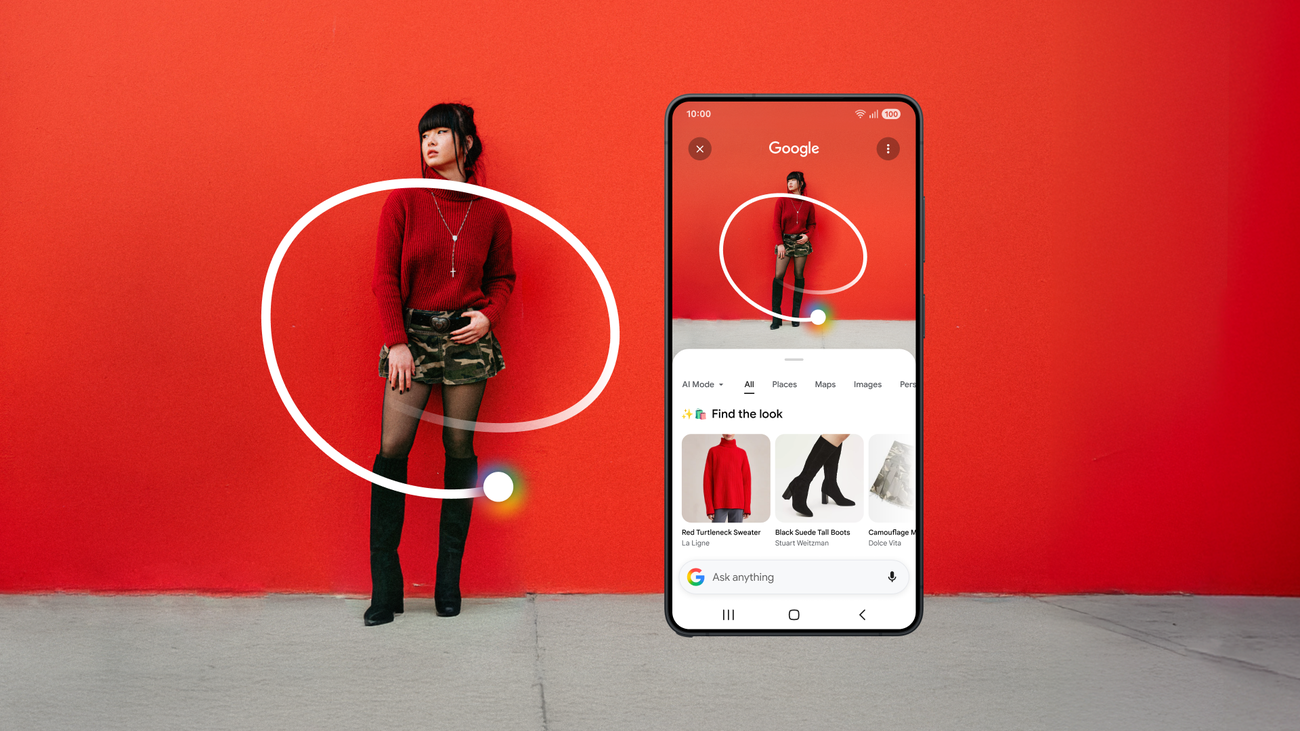
One of the standout features demonstrated at Unpacked is an enhanced version of Circle to Search, the gesture-based visual search tool that Google introduced on previous Galaxy devices. The updated version can now process multiple items within a single image simultaneously, allowing users to circle several objects and receive information about each one in a unified results view.
The practical applications are significant. A shopper photographing a room can identify and find purchase links for multiple furniture pieces at once. A student studying a diagram can circle different components and receive explanations for each. A traveler can photograph a street scene and get information about multiple landmarks, restaurants, or shops in a single interaction.
Google's product team has also added a virtual try-on capability to Circle to Search, leveraging AI-generated imagery to show users how clothing and accessories would look on them. While similar features have existed in standalone shopping apps, embedding this functionality into the operating system's core search experience makes it considerably more accessible.
The Hardware Foundation
AI capabilities are only as good as the hardware running them, and Samsung has made targeted improvements to support the S26's computational demands. The new devices feature larger thermal management systems to sustain AI workloads without throttling, expanded RAM configurations starting at 12GB for the base model, and improved display technology that can dynamically adjust refresh rates based on content type — saving battery when displaying static AI-generated summaries and ramping up for video content.
Battery life, historically a casualty of ambitious software features, has been addressed through a combination of more efficient chipsets and larger cells. Samsung claims the S26 Ultra can handle a full day of heavy AI feature usage without reaching for a charger, though real-world performance will need to be validated through independent testing.
The Competitive Landscape
Samsung's AI push doesn't exist in a vacuum. Apple has been building out its own on-device AI capabilities through Apple Intelligence, and Chinese manufacturers including Xiaomi, Oppo, and Vivo are shipping phones with increasingly capable AI features at lower price points. Google's own Pixel phones serve as the reference implementation for Android AI features, often receiving capabilities months before Samsung devices.
What Samsung brings to the competition is scale. As the world's largest smartphone manufacturer by volume, the Galaxy S26 will put advanced AI features in more hands than any competitor. The question is whether those features translate into meaningful daily utility or become another set of bullet points on a spec sheet that most users ignore.
Early hands-on impressions suggest the former. The integration feels natural rather than forced, and the AI features address genuine friction points in how people use their phones. Whether that translates into sales momentum — particularly given the RAM-driven price increases affecting the entire industry — remains to be seen when the devices hit shelves in March.
This article is based on reporting by Google AI Blog. Read the original article.
Originally published on blog.google