The robotics deployment gap starts with perception more often than teams admit
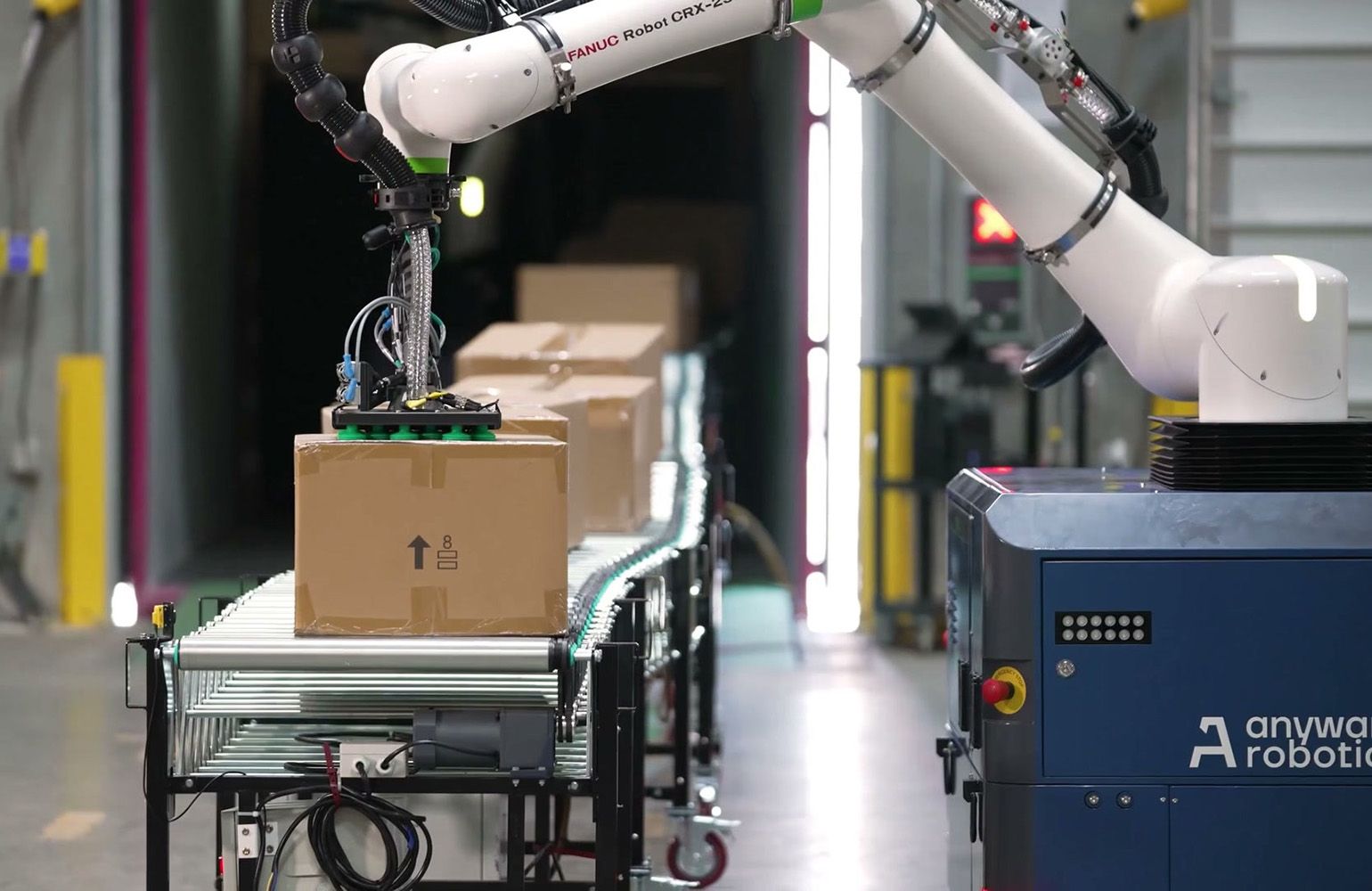
A new essay in The Robot Report argues that one of robotics’ most stubborn problems is not flashy autonomy or advanced planning, but perception that collapses outside controlled conditions. The author, Orbbec engineering executive David Chen, describes a familiar pattern: a robot performs smoothly in a demo, then struggles when deployed into environments with shifting light, reflective surfaces, transparent materials, vibration, people, and forklift traffic.
The point is not that artificial intelligence has failed. It is that many real-world failures begin before higher-level reasoning gets a chance to help. If the robot’s depth map is wrong, overconfident, or unstable, planning and manipulation layers inherit bad input. The result may look like a motion or task-planning problem when the root cause is sensing, calibration, or poor confidence estimation.
Why 2D vision is not enough for many deployments
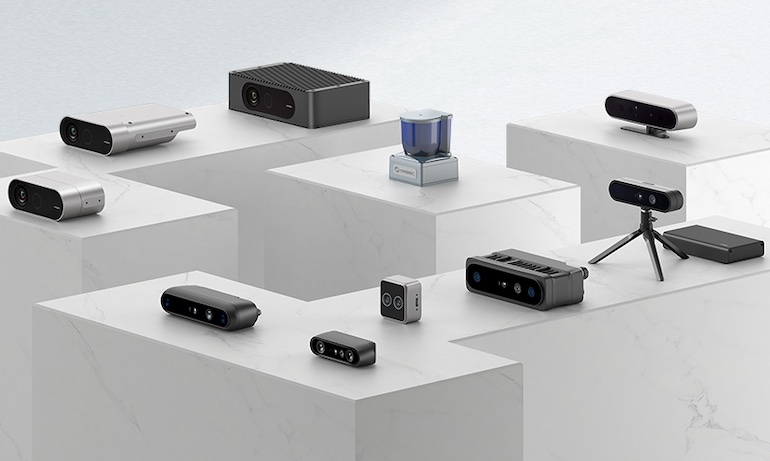
The essay makes a direct case for 3D vision systems, depth cameras, and sensor fusion. Traditional 2D cameras remain useful for recognition, inspection, and tracking, but they do not measure depth directly. Depth can be inferred through motion, multi-view geometry, or learned priors, yet those methods often break when lighting, texture, occlusion, or materials change.
That observation matters because modern robotics is increasingly moving from fixed, structured settings into warehouses, hospitals, and mixed industrial environments. In those spaces, robots need spatial measurements from the physical world rather than a best guess from flat imagery. Reliable deployment therefore depends on choosing sensing modalities that reflect the task and the environment, not just the benchmark.
Depth sensing is not one thing
Chen’s piece also stresses that depth sensing itself is not a single technology. It walks through several generations of robotic vision, including structured light systems and the tradeoffs they carry. Structured light can work well for indoor inspection and measurement, but it may be sensitive to ambient light, motion, reflective surfaces, transparent materials, and interference from other active emitters.
That reminder is useful because robotics discussions often flatten perception into a generic capability. In practice, sensing performance depends heavily on which physical method is being used, where it is being used, and what kind of objects or materials the robot must handle.
The hidden problem is confidence
One of the sharper lines in the essay is that a robot cannot reliably plan around a depth map that is confident but wrong. That gets at a major engineering challenge. Perception systems do not just need accuracy; they need trustworthy uncertainty estimates. A system that fails loudly can sometimes be managed. A system that fails silently while appearing certain is much harder to deploy safely and efficiently.
This issue becomes especially important when robots move into less structured spaces. A warehouse floor with glare, a hospital corridor with people moving unpredictably, or a manufacturing line with varied materials can all produce sensing ambiguities. If the robot cannot represent that ambiguity correctly, downstream decision-making becomes brittle.
What the source supports directly
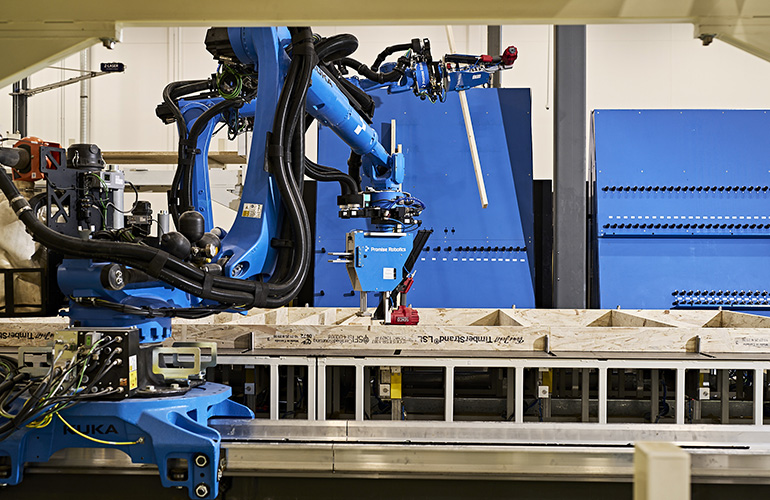
The supplied source text supports the article’s main claims clearly. Real-world deployment introduces shifting light, reflective surfaces, transparent materials, moving people, vibration, and other variables that expose weaknesses not seen in demos. The essay argues that robotic perception should be reliable, task-specific, and measurable under real operating conditions. It also states that 3D vision systems, depth cameras, and sensor fusion have become central to robotics deployment.
Because the piece is written by an executive at a company that sells robot-vision hardware, it should be read with that context in mind. Even so, the technical diagnosis aligns with a widely recognized problem inside robotics: the transition from staged demonstrations to robust operation remains constrained by sensing quality.
Why this matters now
Robotics has entered a phase where expectations are broadening faster than deployment reality. Investors, customers, and platform developers increasingly expect robots to handle more open-ended environments and more varied tasks. That shift puts pressure on perception stacks first. The demo can still be choreographed. The commercial environment cannot.
As a result, perception engineering is becoming a strategic differentiator rather than a background subsystem. Companies that can make sensing more reliable under real conditions will shorten the distance between proof-of-concept and revenue. Those that cannot may keep producing impressive demonstrations that fail to generalize.

The takeaway
The essay’s argument is ultimately conservative in the best sense: robotics teams should stop treating perception as solved whenever a demo works. Real deployment requires sensing that is calibrated, measurable, and durable under messy conditions.
That message may sound basic, but it remains one of the field’s hardest truths. Robots still struggle to see the real world because the real world refuses to behave like the lab.
This article is based on reporting by The Robot Report. Read the original article.
Originally published on therobotreport.com