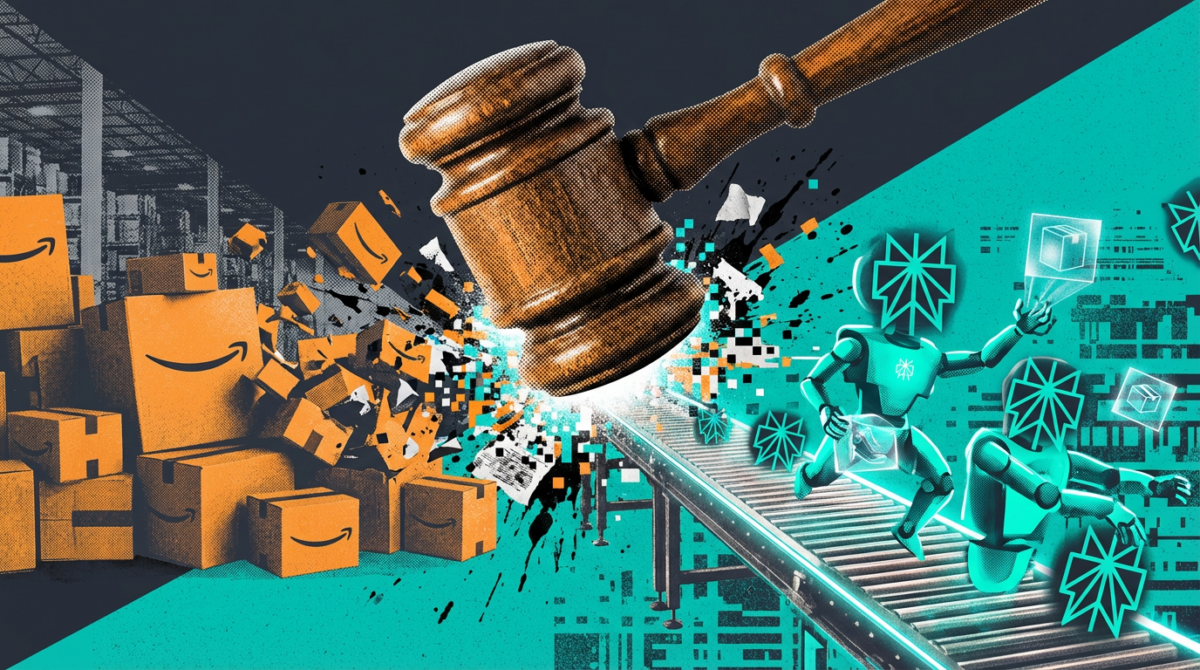
Appeals Court Hands AI Agents an Early Legal Opening
A U.S. federal appeals court has overturned a preliminary injunction that had blocked Perplexity from using its AI shopping agent on Amazon, creating an early legal marker for how courts may view autonomous software acting on behalf of users. The ruling does not end the case, but it does give Perplexity room to keep operating the tool while the broader dispute continues.
According to the supplied source text, the 9th U.S. Circuit Court of Appeals in San Francisco found Amazon was unlikely to succeed, at least at this stage, on its claim that Perplexity violated federal computer fraud law. The court’s reasoning turned on attribution: it concluded that the relevant access to Amazon’s systems was carried out by users through the agent, rather than by Perplexity itself.
That distinction matters because the law at issue prohibits accessing computers and obtaining information without permission. If a court sees the software as merely carrying out a user’s instructions, the legal theory against the AI provider becomes harder to sustain. If, instead, the software company is treated as the actor, platform owners may have broader room to challenge agentic services that log in, browse, and transact on behalf of customers.
Why the Decision Matters Beyond One Startup
The source describes the decision as the first ruling by a U.S. federal appeals court on whether AI agents can lawfully access online platforms for users. That makes it more than a company-specific procedural victory. It is an early signal for a wider market that is rapidly moving from chatbots toward agentic systems that can complete tasks with limited human oversight.
Those systems are increasingly designed to do more than answer questions. They can navigate websites, sign into accounts, compare products, and place orders. In that model, the software becomes a practical interface to the internet rather than a standalone tool. Whether courts accept that arrangement will shape competition between platform operators and AI intermediaries.
The ruling also touches a core business question for the emerging agent economy. If AI companies can more confidently argue that their systems act as user-controlled instruments, then developers may gain a stronger basis for building assistants that work across the web. If courts reject that framing later, many of those same products could face legal friction wherever they interact with services that do not want outside automation.

Amazon’s Complaint and Perplexity’s Defense
Amazon sued Perplexity in November, according to the source material, accusing the company of covertly accessing private customer accounts through its Comet browser and embedded AI agent. The complaint alleged that the agent could log into shopping accounts and place orders on behalf of users, and that this behavior created security concerns. Amazon also claimed Perplexity ignored repeated demands to stop.
Perplexity, for its part, called the lawsuit baseless. Its central argument, reflected in the appeals ruling, is that the company is not itself trespassing into Amazon’s systems. Rather, users are choosing to use an AI interface to access their own accounts and complete actions they could otherwise perform manually.
That disagreement gets at a deeper tension in the next phase of AI deployment. Platforms want control over how outside tools interact with their services, especially when accounts, payments, and proprietary data are involved. AI companies want to offer users seamless automation across those same services. Consumers may see convenience, but operators see questions about authorization, security, and commercial leverage.
A Preliminary Win, Not a Final Resolution
The appeals court ruling is significant, but it is narrow in an important sense. It overturned a preliminary injunction, meaning the court addressed whether Amazon was likely to prevail on a specific legal claim and whether emergency relief should remain in place. The underlying case is still unresolved.
That leaves several issues open. Amazon has already said it disagrees with the decision and is evaluating next steps. Perplexity has responded in more expansive terms, saying it will continue fighting for users’ right to choose the AI they want. Those dueling statements show that both sides see the dispute as bigger than one shopping feature.
From Amazon’s perspective, the case concerns who gets to mediate access to its marketplace and how customer accounts can be used through third-party tools. From Perplexity’s perspective, it concerns whether users can appoint AI software as a practical representative online. The eventual answer could influence not only retail transactions, but also booking tools, travel agents, browser assistants, and workplace automations.

What the Ruling Suggests About the Agentic Web
The supplied source text frames the dispute as a test case for agentic AI. That framing is warranted. Agentic systems are valuable precisely because they can move beyond passive assistance into execution. But that execution depends on interacting with websites and digital services built by others, often under terms that were written for humans clicking through interfaces themselves.
The appeals court’s attribution logic suggests one route by which AI agents may fit into the existing legal structure: treat them as user-directed instruments. That approach would not eliminate every legal or policy concern, but it would give developers a clearer argument that automation does not automatically become unauthorized just because software is carrying out the steps.
At the same time, the source text makes clear that the practical concerns cited by Amazon remain part of the conflict. AI agents that log into accounts and place orders raise operational and security questions even if a user has initiated the process. Companies will continue to push for technical controls, contractual limits, and litigation strategies designed to contain outside automation where it threatens platform control.
For now, Perplexity has won a consequential interim victory. The ruling does not settle the law of AI agents, but it does establish that at least one federal appeals court is willing to distinguish between a company acting on its own behalf and software acting as an extension of a user. In a market racing toward automated online action, that is a meaningful line.
This article is based on reporting by The Decoder. Read the original article.
Originally published on the-decoder.com