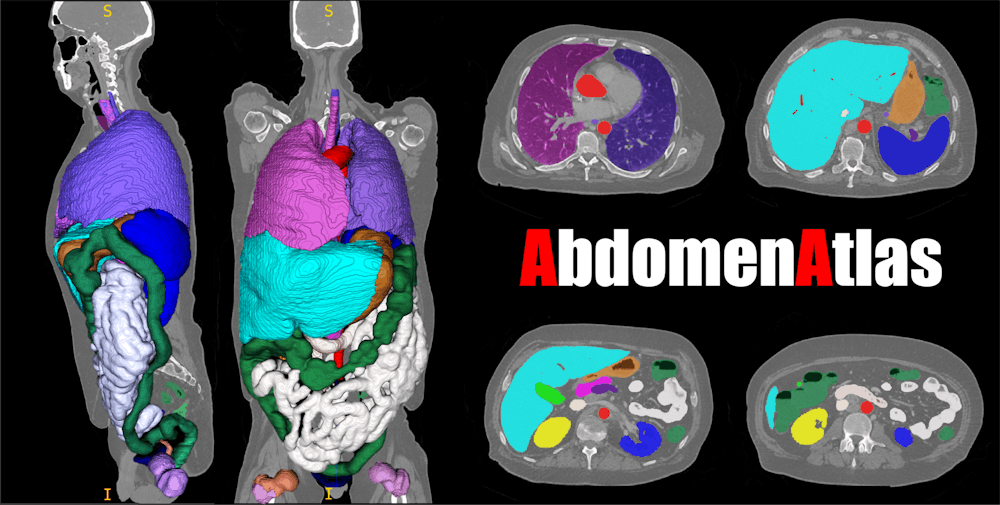
A Significant Placement for Diagnostic AI
The journal Science has published a study describing an expert-level generalist artificial intelligence system designed for abdominal CT diagnosis. The work appears in Volume 393, Issue 6817, dated September 2026, placing it within one of the most widely read venues for peer-reviewed research across the sciences. The record is accessible through the journal's digital object identifier, though the full text sits behind restricted access, with only the abstract-level entry publicly available.
Even at the level of its title, the paper telegraphs an ambitious claim. It does not describe a tool for spotting a single abnormality, nor a model confined to one organ or one disease. Instead, it presents a generalist system pitched at expert-level diagnostic performance in the abdomen — a region dense with anatomy and notoriously varied in how disease presents.
Why the Word "Generalist" Matters
For most of the past decade, medical imaging AI has advanced through specialization. Researchers have typically trained models on tightly bounded tasks: flagging a particular finding, in a particular organ, on a particular type of scan, often within a single institution's data. Those narrow tools can perform impressively, but each one solves a problem that must be defined in advance by a human.
A generalist model implies something structurally different. Rather than being built around one question, it is expected to handle many at once. The distinctions are worth spelling out:
- Scope of task: a narrow model answers one query; a generalist is expected to address a broad set of diagnostic questions within the same interaction.
- Anatomical coverage: specialist tools often focus on a single organ, while a generalist must contend with the full abdominal cavity and its neighboring structures.
- Flexibility of input: generalist systems aim to accept varied clinical prompts rather than fixed, pre-engineered inputs.
- Transfer of learning: the promise of a generalist is that capability gained on one class of problem carries over to others without retraining from scratch.
The framing also echoes a broader trend across machine learning, in which general-purpose systems have increasingly displaced task-specific pipelines. Whether that trend translates cleanly into clinical medicine is precisely the question this paper appears to take on.

Abdominal CT as a Stress Test
Choosing the abdomen as the proving ground is not incidental. Abdominal CT is one of the highest-volume imaging studies in modern hospitals, used across emergency departments, oncology services, surgical planning, and routine follow-up. It is also one of the hardest settings in which to build a reliable automated reader.
- The region contains a large number of organs and tissue types packed into close proximity, with subtle boundaries between them.
- Findings range from the obvious to the nearly invisible, and clinical importance does not always track with visual prominence.
- Incidental discoveries are common, meaning a useful system must distinguish urgent pathology from benign curiosities.
- Scan quality, contrast protocols, and patient anatomy vary enormously between institutions.
An expert-level generalist for this domain would therefore represent a meaningful capability jump rather than an incremental gain. It would also raise the bar for validation, because a system that claims broad competence must be tested across broad conditions.
What It Could Mean for Radiology Practice
Should systems of this kind mature, their practical influence would likely show up in workflow rather than in replacement of clinicians.
Triage and prioritization
A generalist reader could review incoming scans and surface the cases most likely to need urgent human attention, helping departments manage queues when demand outpaces staffing. This is among the most plausible near-term applications, since it changes ordering rather than the final interpretation.
Second-reader support
Radiologists under heavy caseloads benefit from a redundant check on difficult studies. A system capable of commenting across a wide range of findings, rather than only the one it was trained to detect, could serve as a more useful safety net than a narrow detector.
Access in under-resourced settings
Generalist capability is particularly attractive where specialist radiology coverage is thin. A single model addressing many diagnostic questions is more deployable than a portfolio of separate tools, each requiring its own validation and maintenance.

Open Questions the Field Will Ask
Publication in a journal of this stature signals that the work has cleared peer review, but it does not settle the questions that matter most for clinical adoption. Among the issues likely to shape discussion:
- External validation: how well does performance hold outside the institutions whose data informed development?
- Error profile: what does the system miss, and are those misses concentrated in clinically dangerous categories?
- Explainability: can clinicians interrogate the basis of a conclusion, or must they accept it as a black box?
- Regulatory pathway: generalist claims sit awkwardly within frameworks built around narrowly defined indications.
- Liability and accountability: responsibility for a missed diagnosis remains a live question wherever software participates in interpretation.
- Data provenance: the composition of training data determines whose anatomy the system knows best.
These are not reasons for skepticism so much as the standard conditions any diagnostic technology must satisfy before it reaches patients at scale.
The Bigger Picture
The paper's significance extends beyond a single clinical application. If expert-level generalist performance can be demonstrated in a domain as demanding as abdominal imaging, it argues that the generalist approach is viable in medicine at all — a claim that until recently rested more on extrapolation than on evidence. That would shift resources and expectations across the field, away from bespoke single-task tools and toward broader systems that can be adapted rather than rebuilt.
It also reframes how researchers think about evaluation. Benchmarking a generalist means testing breadth, not just peak accuracy on a curated task, and the metrics that served narrow models may prove inadequate.

What to Watch Next
The natural follow-ups are independent replication, prospective studies conducted in live clinical environments, and clarity on how such a system would be cleared by regulators. Each of those steps takes years, and each is where promising imaging AI has historically either proven itself or stalled. For now, the paper stands as a notable marker: a top-tier journal lending its pages to the proposition that a single AI system can reason across the abdomen at the level of an expert.
This article is based on reporting by Science (AAAS). Read the original article.
Originally published on science.org