Nyobolt Targets a Power Bottleneck in Robotics
Nyobolt has raised $60 million to accelerate development of battery systems aimed at autonomous machines, arguing that conventional power technology is not keeping up with the needs of large robot fleets. The company announced the financing on May 8, 2026, saying the new capital will help it expand a fast-charging, high-efficiency platform for robotics and other physical AI applications.
The pitch is straightforward. As more mobile robots move into warehouses, factories, hospitals, and eventually public environments, energy infrastructure becomes a core operational constraint. A robot that can work longer, recharge faster, and avoid frequent battery swaps is not merely more convenient. It can materially change economics, uptime, and deployment density. Nyobolt is trying to position itself at that leverage point.
The company said the funding round values it at more than $1 billion and follows a period of strong commercial growth, with revenue up fivefold year over year. Symbotic led the investment, with participation from IQ Capital, Latitude, Scania Invest, and CBMM. That investor mix is notable because it combines robotics exposure, industrial interest, and mobility relevance rather than framing Nyobolt only as a generic battery startup.
Why Robot Power Systems Matter More Now
Battery performance has always mattered in mobile robotics, but it matters more as fleets scale and workloads intensify. Early deployments could tolerate more operational workarounds: charging pauses, spare packs, or application constraints that reduced duty cycles. At greater scale, those inefficiencies compound. Downtime, power instability, and maintenance interruptions can turn into serious costs.
Nyobolt’s argument is that physical AI systems need power architectures designed for continuous high-intensity operation. In the company’s framing, autonomous systems cannot afford long charge windows, swap delays, or unreliable peak performance. That helps explain why its messaging emphasizes durability, sustainability, and immediate availability rather than headline energy density alone.
The robotics sector increasingly treats batteries as a strategic subsystem rather than a background component. A stronger power platform can support faster workflows, lighter designs, or more flexible deployment schedules. It can also reduce the amount of charging infrastructure needed to keep fleets active. Those advantages are especially valuable in environments where every square foot and every minute of uptime matters.

Symbotic Use Case Gives the Announcement Weight
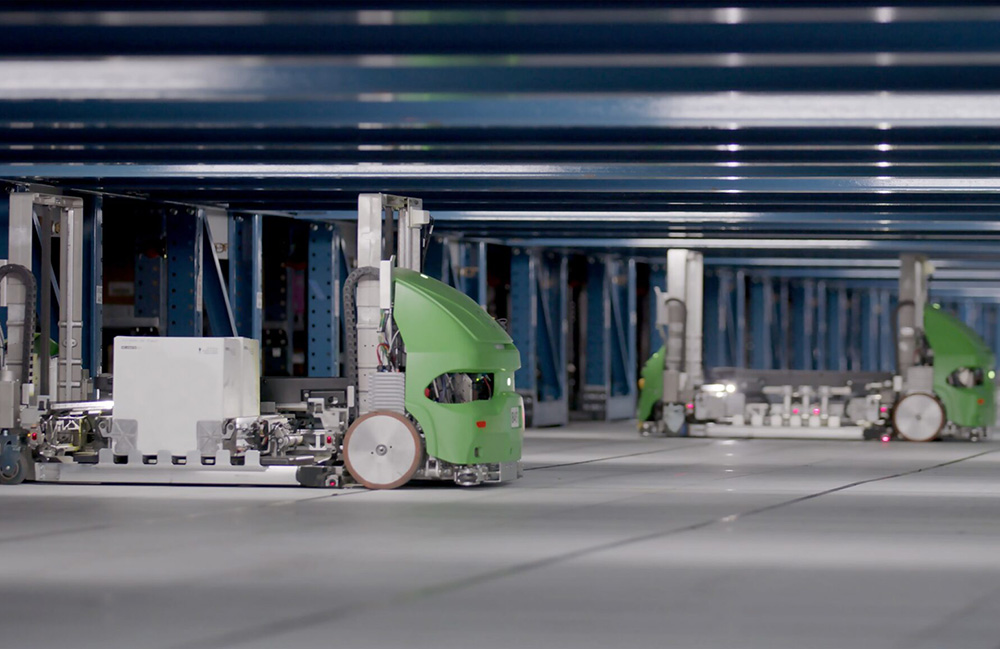
The most concrete deployment example in the source report involves Symbotic’s SymBot autonomous mobile robots. Nyobolt says its battery delivers six times more energy capacity than the ultracapacitors previously used in those systems while being 40% lighter. It also says the platform achieves at least 10 times the cycle life of traditional lithium-ion technology, enabling continuous 24/7 operation in warehouse deployments.
If those numbers translate consistently in the field, they point to a meaningful shift in how industrial robot operators can think about uptime and system design. More usable energy in a lighter package can improve performance envelope and reduce the need for operational compromise. Longer cycle life can lower replacement frequency and improve total cost of ownership. Together, those factors make power systems a meaningful differentiator in robotic fleet economics.
Bill Boyd, Symbotic’s chief strategy officer, said Nyobolt’s technology is a key enabler of improved uptime and efficiency for customers, and expressed confidence in the broader market potential of what he described as a new instant power category. That endorsement matters because Symbotic is one of the most visible names in AI-enabled supply chain robotics. A vote of confidence from a scaled deployment partner carries more weight than a standalone lab claim.
From Warehouses to Wider Physical AI Infrastructure
Nyobolt says its commercial traction extends across advanced robotics deployments and AI data center infrastructure, suggesting the company sees a wider addressable market than warehouse automation alone. Still, robotics appears to be one of the clearest near-term fits. Autonomous mobile robots, in particular, benefit directly from any improvement in charging speed, durability, and weight.
The company said its technology is designed to support AMRs as they expand beyond factories and warehouses into hospitals and city streets. That is an ambitious framing, but it identifies an important direction: robots are moving into environments where downtime is harder to schedule and where service continuity matters more. In such settings, power systems stop being an internal engineering detail and become a visible part of service reliability.
The financing also reflects a broader investor thesis around physical AI. If AI is increasingly embodied in machines that move, lift, inspect, and transport, then the enabling stack includes more than software and models. It also includes batteries, charging systems, sensors, connectivity, and ruggedized compute. Nyobolt is making the case that energy performance is one of the gating layers in that stack.

A Signal About the Next Phase of Robotics Competition
The biggest takeaway from Nyobolt’s funding round is that robotics competition is expanding beyond autonomy algorithms into infrastructure components that determine whether machines can operate continuously in the real world. Better path planning matters. Better manipulation matters. But none of it scales well if the robots spend too much time idle or tethered to inconvenient charging cycles.
Nyobolt’s fresh capital gives it more room to press that advantage. Whether the company can translate strong early traction into broad market leadership will depend on deployment results, manufacturing execution, and how well its performance claims hold up across varied use cases. But the direction is clear. Investors and industrial partners increasingly see power technology as central to the viability of large autonomous fleets.
That makes this more than a battery funding story. It is a signal that in the physical AI economy, energy systems are becoming part of the competitive core.
This article is based on reporting by The Robot Report. Read the original article.
Originally published on therobotreport.com