Cognex Pushes More Factory Vision Work to the Edge
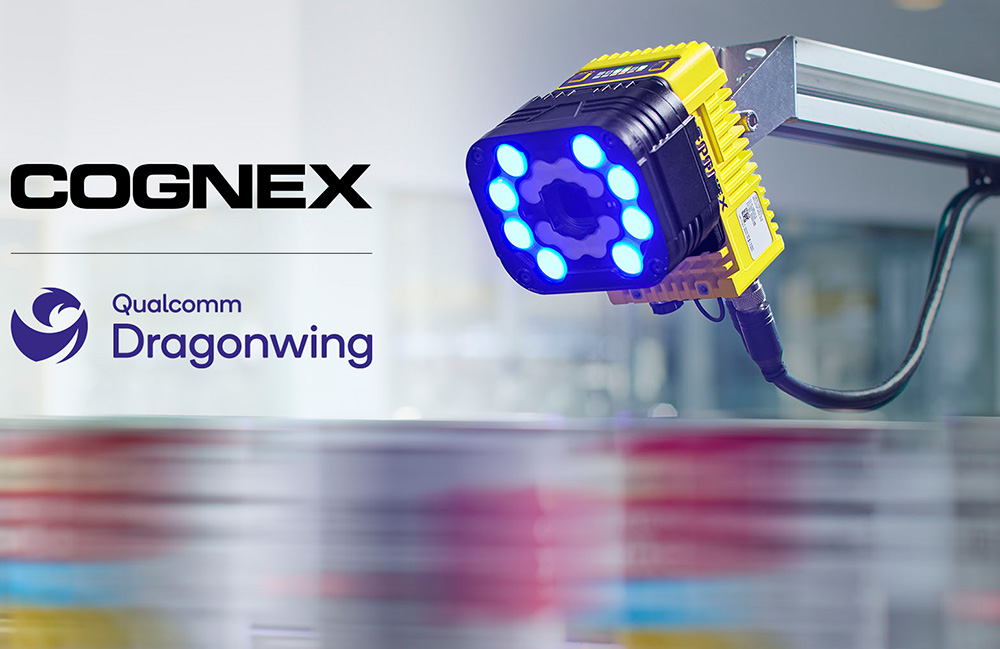
Cognex has launched a new industrial vision product that it says is built to close a long-standing gap in automated inspection: the tradeoff between deeper analysis and faster production lines. Announced on May 9, 2026, the company’s In-Sight 3900 Vision System combines embedded AI, rule-based vision tools, and high-performance edge compute in a single package intended for real-time factory inspection.
According to Cognex and reporting from The Robot Report, the new system is designed to deliver speed, accuracy, and high resolution directly at the edge, allowing manufacturers to run more demanding inspections without sacrificing throughput. That positioning matters because inspection has become one of the most important applications for industrial AI. Manufacturers increasingly need to detect defects, verify labels, read codes, and validate assembly quality while keeping production lines moving at full pace.
The challenge is that more advanced inspection often brings computational overhead. Higher image resolution, more complex models, and broader inspection criteria can slow analysis or force manufacturers to make compromises in line speed. Cognex is explicitly targeting that bottleneck with the In-Sight 3900, which it says can perform inspections up to four times faster than previous-generation Cognex vision systems.
A New Hardware and AI Stack for Machine Vision
The In-Sight 3900 is built on a new generation of Cognex embedded AI vision technology and is powered by Qualcomm Dragonwing platforms. In practical terms, that combination signals a broader shift in industrial AI architecture. Instead of depending primarily on centralized compute or simpler legacy tools, more inspection workloads are being pushed into compact, purpose-built edge systems that can make deterministic decisions in real time.
Cognex says the platform combines three layers of capability: edge AI, advanced AI, and rule-based vision tools. That hybrid approach is important in industrial environments, where explainability, repeatability, and precise thresholds still matter. Purely model-driven systems can be powerful, but many factories need a mix of learned perception and engineered logic. A product that supports both may be easier to deploy into regulated or quality-sensitive workflows.
The company also says the system supports image resolutions up to 25 megapixels. That expands the field of view and enables finer measurement and defect detection within a single acquisition. In manufacturing environments, that can translate into fewer compromises between coverage and detail. Instead of splitting a task across multiple captures or accepting lower fidelity, operators may be able to inspect more of the product surface at once.

Inspection at Line Speed Is the Core Promise
The most consequential claim around the In-Sight 3900 is not simply that it is smarter, but that it is designed to remain synchronized with high-speed production lines. Cognex says embedded AI acceleration and optimized processing pipelines enable deterministic, real-time inspection at full throughput. That is a stronger promise than generic AI enhancement. It implies the system is aimed at production-critical environments where latency variability can become a business problem.
That matters in packaging, automotive, electronics, and consumer goods manufacturing, all sectors cited by the company as target applications. In those industries, small inspection delays can create downstream bottlenecks, reduce yield, or force plant operators to choose between quality confidence and output volume. A vision system that improves detection while preserving speed could therefore deliver value in both quality assurance and operations efficiency.
The product’s dual Ethernet architecture is also notable. Industrial vision systems rarely operate in isolation; they need to communicate with programmable logic controllers, robots, and higher-level enterprise systems. Reliable connectivity is therefore central to deployment. By emphasizing industrial-grade communication, Cognex is positioning the device not as a lab demonstration but as production infrastructure.
Early Customer Signal Points to Packaging Demand
An example cited in the source report comes from Fuji Seal, where engineering manager Andrea Sabbadini said the company’s packaging lines run at extremely high speeds that previously limited the use of traditional OCR tools. He said the In-Sight 3900 now allows deployment of Cognex’s Edge AI Read tools at full production speed without compromising throughput, resulting in a more robust inspection process that is faster to set up and easier to maintain.
That comment is useful because it points to one of the most practical tests for factory AI: not whether the model works in principle, but whether it fits the maintenance realities of actual production. Industrial customers typically care about accuracy, but they also care about setup time, uptime, integration effort, and whether plant teams can maintain the system across multiple lines. If a product improves inspection quality but is difficult to roll out, adoption can stall. Cognex is clearly trying to present the opposite case.

Why This Launch Matters
The In-Sight 3900 arrives as manufacturers intensify investment in edge AI rather than treating vision as an isolated sensing problem. Inspection systems are becoming more computationally capable, more tightly integrated, and more central to how factories balance automation with quality. Cognex’s announcement suggests that machine vision vendors now see performance at the edge as the next competitive frontier.
If the company’s speed and resolution claims hold up in broad deployment, the product could strengthen the case for pushing more complex inspection tasks directly onto factory-floor devices rather than offloading them elsewhere. That would fit a wider industry direction in which AI systems are expected to operate in real time, in place, and with minimal compromise.
For manufacturers, the appeal is straightforward: better defect detection, faster decisions, and fewer production bottlenecks. For the industrial AI market, the message is just as clear. Edge vision is no longer just about adding intelligence to cameras. It is becoming a core layer of manufacturing performance.
This article is based on reporting by The Robot Report. Read the original article.
Originally published on therobotreport.com