A decade after DARPA, a new push for common measurement
The humanoid robot boom has produced no shortage of demonstrations, funding rounds, and marketing videos. What it has not produced is a widely accepted way to compare platforms. NIST is now trying to change that. According to the supplied report, the agency has proposed a comprehensive baseline benchmark for humanoid robots, describing it as the first standardized performance benchmark for the category since the 2015 DARPA Robotics Challenge.
The timing is not accidental. Humanoid startups and industrial incumbents alike are pushing to show they have systems that can operate in factories, warehouses, healthcare settings, and eventually homes. But without common test methods, it is difficult to tell whether one system is genuinely more capable than another or simply better staged for video.
What NIST is proposing
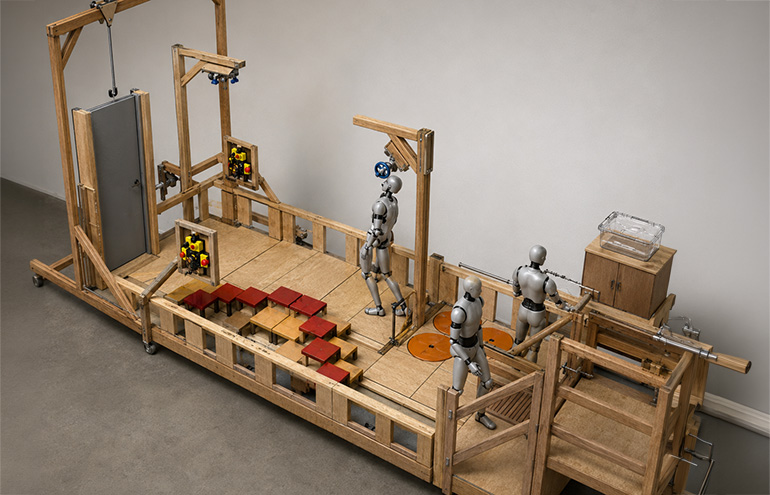
The proposed benchmark is described as a low-footprint set of locomotion and manipulation tasks built on previously defined and standardized test methods and performance metrics. NIST says the tasks are meant to reflect minimum expected capabilities for commercially available humanoid robots across industrial, household, healthcare, and other settings.
The source text says the benchmark is intended to establish capability measurements for current industry-leading robots while giving researchers and manufacturers a shared task set. That matters because baseline testing does not need to capture every advanced skill to be useful. It needs to create a common floor that exposes what systems can actually do under repeatable conditions.
From spectacle to comparable performance
NIST says the benchmark would examine domain-agnostic mobility and dexterity, coordinated locomotion-and-manipulation tasks, confined-space manipulation requiring whole-body awareness and control, and minimal reasoning and scene understanding. That mix is revealing. It suggests the agency is aiming not only to test walking or grasping in isolation, but to capture the coordinated behavior that makes humanoids relevant outside tightly controlled demos.
This is a critical shift for the sector. Investors have poured money into humanoid platforms from companies including Tesla, Figure, Agility, Apptronik, and Unitree, yet the field still lacks a standard answer to a basic question: what can these machines reliably do? Benchmarks do not solve commercialization, but they make claims easier to test and harder to inflate.
Why standards matter now
The market case for humanoids depends on trust as much as engineering. Customers in logistics, manufacturing, healthcare, and service environments need to know whether a robot can perform tasks predictably, safely, and with enough consistency to justify deployment. Standardized testing helps close the gap between technical ambition and buying confidence.
The supplied report also notes that NIST designed the apparatus in collaboration with industry and the research community and is seeking participants as it develops a consensus around the process. That collaborative structure increases the odds that the benchmark becomes something more than a paper proposal. Adoption, not publication alone, is what determines whether a standard shapes the market.
What the proposal could change
- It could give buyers a neutral frame for comparing humanoid claims.
- It could help researchers target development gaps with more consistent metrics.
- It could pressure companies to show repeatable performance instead of curated demonstrations.
The humanoid sector still has major technical and economic hurdles to clear. But if NIST succeeds in getting broad participation around a shared baseline, the field may finally gain a measurement system suited to its commercial ambitions.
This article is based on reporting by The Robot Report. Read the original article.
Originally published on therobotreport.com