Mistral is extending its AI portfolio from language systems into industrial simulation
French AI company Mistral AI has acquired Vienna-based startup Emmi AI, adding a physical-simulation specialist to its growing industrial push across Europe. Financial terms were not disclosed, but the strategic rationale is clear from the companies’ positioning: Mistral wants to strengthen its ability to serve manufacturers and other industrial clients with systems that model not only language and workflow, but also physical processes.
Emmi AI specializes in AI models that simulate phenomena such as airflow, heat transfer and material stress. Those are core concerns in sectors including aerospace, automotive and semiconductors, three industries that Mistral chief executive Arthur Mensch specifically identified in connection with the acquisition, according to the source text.
Why this acquisition matters
Most public discussion of European AI competition still revolves around foundation models, chat interfaces and enterprise assistants. This deal points to a different battleground: domain-specific AI embedded in industrial operations. For manufacturers, the value of AI is not only in summarizing documents or writing code. It is also in improving design, detecting defects, optimizing processes and controlling physical equipment.
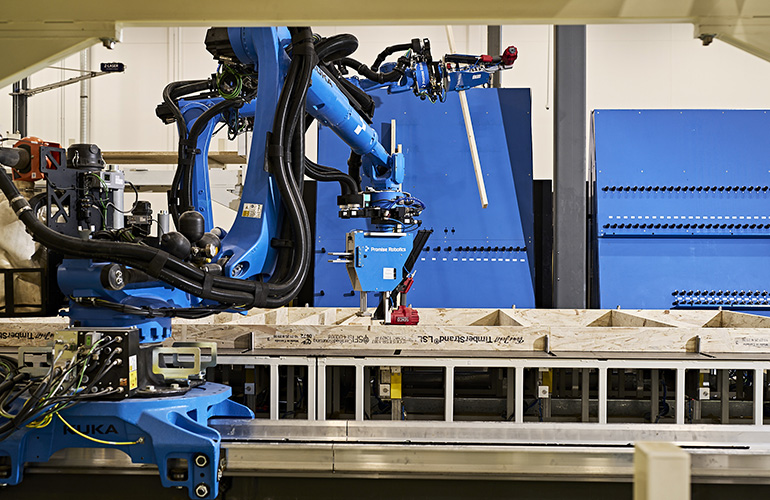
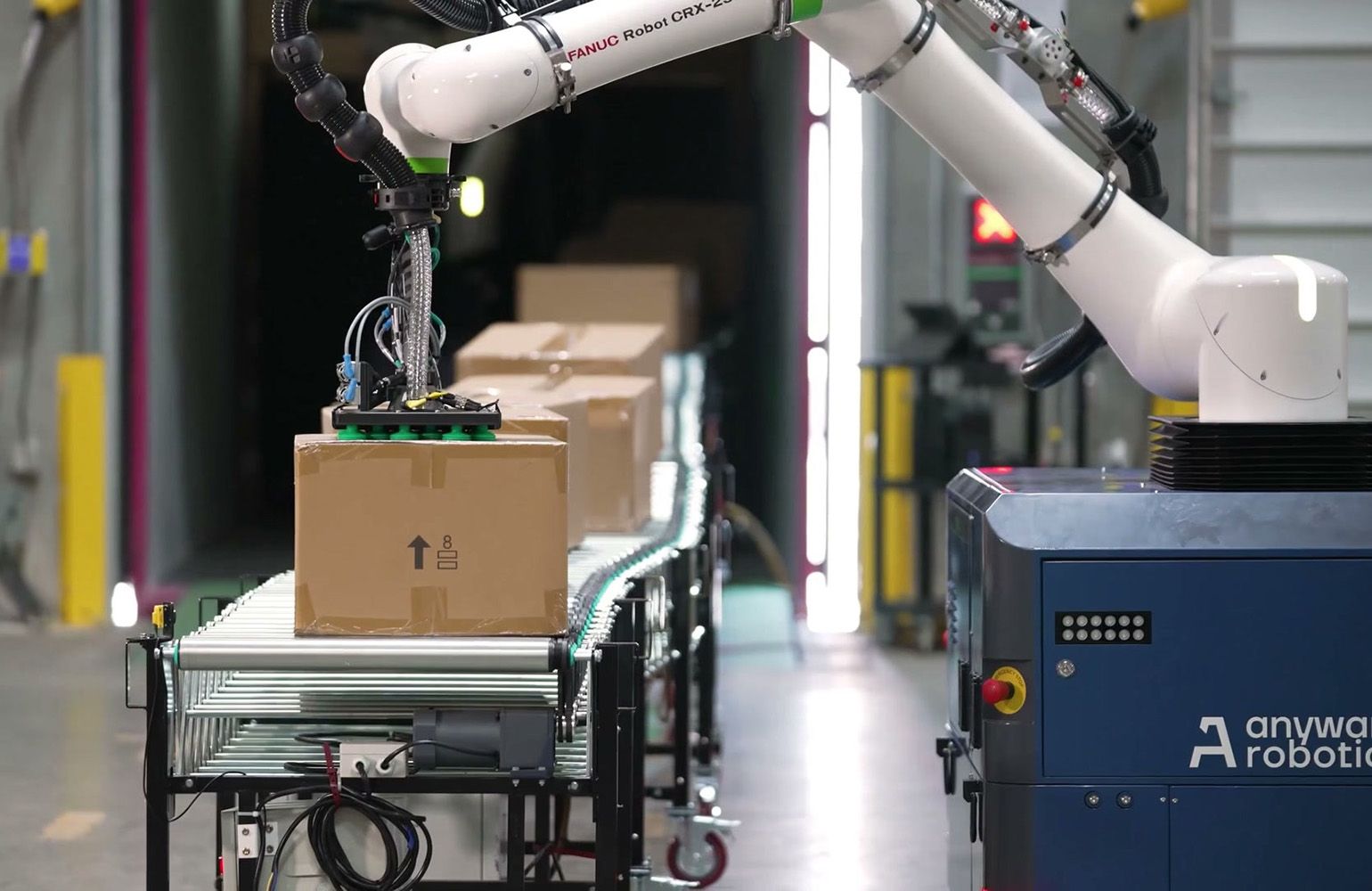
The source text says Mistral already builds custom AI systems for clients including ASML, Stellantis and Veolia. Those systems can detect production defects or control robotic arms. By acquiring Emmi AI, Mistral appears to be moving closer to a full-stack industrial offering where language models, control systems and physical simulation can reinforce one another.
That is strategically important because industrial AI has higher barriers to entry than general-purpose chatbot software. It requires specialized data, operational integration and trust in high-consequence settings. A company that can combine frontier AI branding with applied industrial systems may find a durable niche.
Emmi AI’s role
Emmi AI brings specific expertise in modeling how physical systems behave. Airflow, thermal transfer and material stress are not peripheral simulation tasks. They sit at the heart of engineering workflows from cooling design to structural reliability. Faster or more adaptive simulation can shorten development cycles, support better maintenance decisions and improve production quality.
The source text also notes that Emmi AI raised 15 million euros in 2025, described as Austria’s largest funding round that year, according to Reuters. That detail signals that Mistral is not simply absorbing a tiny research outpost. It is acquiring a well-financed startup that had already gained visibility in the regional ecosystem.
A broader European pattern
The acquisition also says something about European AI strategy more broadly. Europe has often been portrayed as trailing the United States in hyperscale AI platforms, but it has structural strengths in industrial manufacturing, engineering and regulated sectors. That creates an opening for AI companies that align closely with physical industries rather than trying to replicate every consumer-facing move from Silicon Valley.
Mistral has increasingly positioned itself as a European champion in sovereign and enterprise AI. Buying Emmi AI fits that posture. It gives Mistral more direct access to industrial use cases where European companies already have global depth and where local trust, data residency and domain expertise can matter as much as raw model size.
From copilots to controls
Another way to read the deal is as part of the shift from AI copilots to AI systems that influence real-world operations. The source text says Mistral’s existing industrial work includes detecting defects and controlling robotic arms. Add physical-process simulation, and the combined stack begins to look less like office software and more like operational intelligence.
That transition raises both opportunity and complexity. In industrial settings, AI must handle constraints, safety requirements and measurable physical outcomes. A model that is merely plausible is not enough. It must be predictively useful and operationally reliable. Emmi AI’s specialization suggests Mistral is trying to strengthen that reliability layer rather than stopping at language interfaces.
What to watch next
The acquisition price was not disclosed, and the source text does not describe how Emmi AI’s products will be integrated. The central open question is whether Mistral will keep Emmi’s tools as a distinct simulation offering, embed them inside broader custom deployments, or use them primarily to improve internal industrial-model capabilities.
Another question is competitive response. Large industrial software vendors, robotics firms and AI platform companies are all pushing deeper into simulation and control. Mistral’s move suggests it does not want to cede that ground. If anything, it signals an ambition to differentiate itself from pure language-model competitors by becoming more useful where European industry actually spends money.

An industrial identity for European AI
At a moment when much of the AI market is crowded with similar enterprise messaging, Mistral’s acquisition of Emmi AI stands out for its specificity. It ties frontier AI to the physics of factories, vehicles and engineered systems. That may be one of the most credible ways for a European AI company to convert reputation into durable market position.
If Mistral can combine language models, industrial automation and physical simulation into a coherent product strategy, the Emmi AI deal may look less like a bolt-on acquisition and more like a statement of identity: European AI, built for physical industry as much as digital workflow.
This article is based on reporting by The Decoder. Read the original article.
Originally published on the-decoder.com