Locus Robotics Expands From Mobile Movement Into Manipulation
Locus Robotics built its reputation on warehouse autonomy that moves efficiently through real facilities at scale. Its autonomous mobile robots have logged extensive deployments and supported more than 6 billion picks, according to the supplied source material. Now the company is trying to solve a harder layer of warehouse automation: getting robots not just to arrive at the right place, but to reliably grasp the right object.
That ambition is behind Locus’s acquisition of Nexera Robotics, a company known for its NeuraGrasp technology. The deal strengthens Locus’s effort to turn its Array mobile manipulator into a more capable picking system, especially for the messy reality of warehouse inventories where packaging, texture, weight, and shape vary widely from one stock-keeping unit to the next.
In logistics robotics, navigation and orchestration have matured much faster than dexterous picking. Moving through aisles is difficult but increasingly standardized. Picking remains stubborn because the physical world is inconsistent. Items crumple, deform, reflect light, shift in bins, and present awkward grasp points. That is why manipulation is one of the most commercially important unsolved problems in robotics, and why Locus’s move is more than a routine acquisition.
Why Picking Is Still So Hard
A warehouse robot that can travel from point A to point B is useful. A robot that can identify, approach, grasp, and place a broad variety of objects is much more valuable, because it automates one of the most labor-intensive steps in fulfillment. The difficulty is that warehouse inventories are not made up of neat, uniform parts. They include small containers, porous polybags, cloth items, and other packages that can defeat simple grippers.
According to the source text, Nexera spent years refining soft end effectors through at least six product generations before joining Locus. That iteration matters. In manipulation, performance often depends on the interaction between hardware compliance, sensing, suction or contact mechanics, and software control. A gripping system has to do more than attach to an object once in a lab demo. It has to work repeatedly, across changing packaging types, at the pace and reliability required by a production environment.
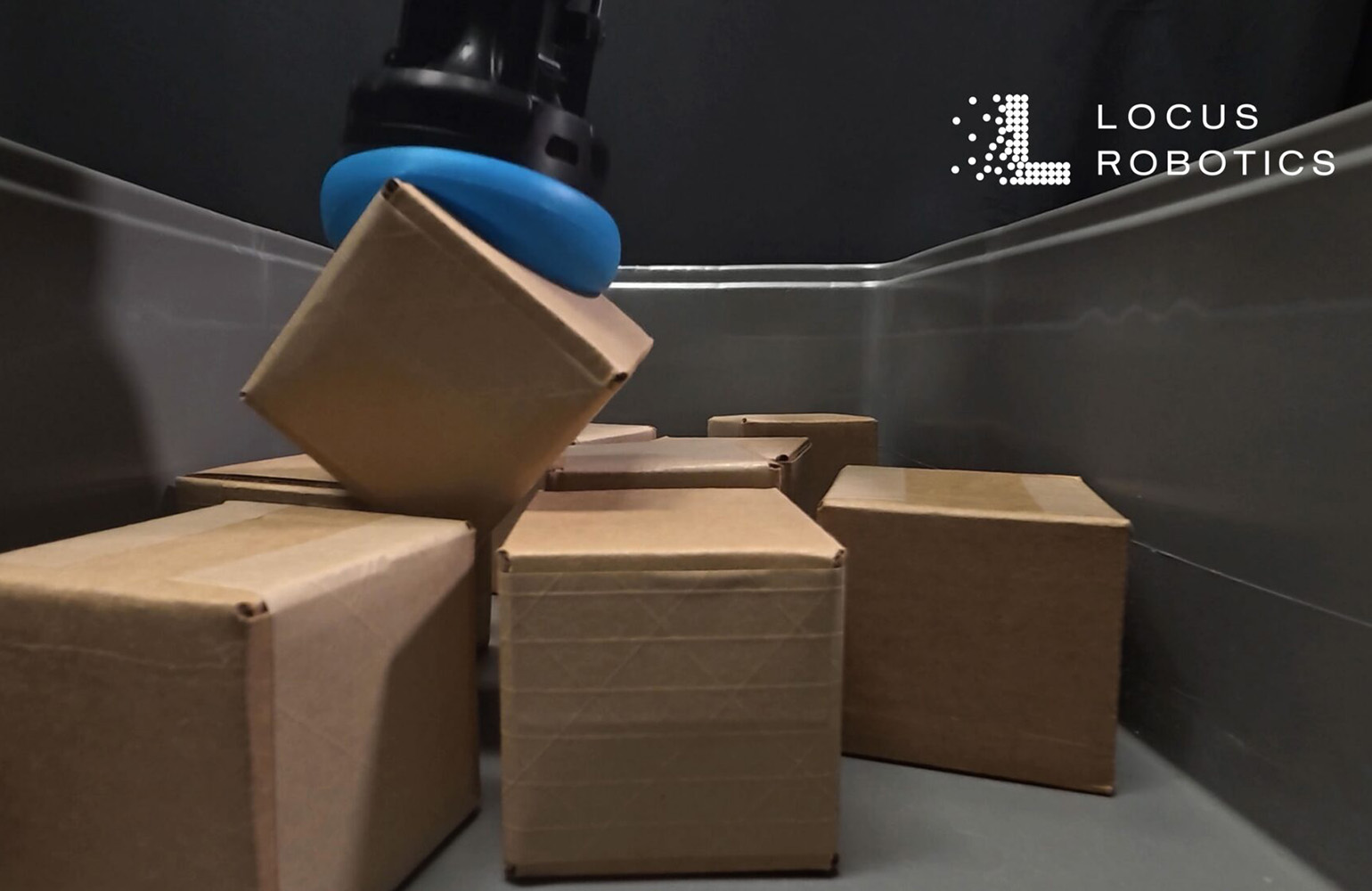
The appeal of NeuraGrasp appears to be exactly that broader handling range. The supplied report describes it as able to grasp items spanning small containers to porous polybags and cloth goods. Those are meaningful examples because they map to the categories that often challenge rigid or narrowly optimized end effectors.
How the Acquisition Fits Array
Locus entered robotic picking in March 2025 when it introduced Array, a mobile manipulator with a vision-guided picking arm. At that time, Array used a more standard suction-cup gripper. Nexera’s technology offered a path to expand what the system could handle, but the timing was tight. By the time the companies connected, Locus was already preparing Array for early market release.
That could have been a problem. Retrofitting manipulation hardware late in a robot’s development cycle can trigger redesigns across power, pneumatics, weight balance, software integration, and maintenance workflows. But Roy Belak, Nexera’s former CEO and now Locus senior vice president of robotic grasping, said Array already had many of the prerequisites needed for the technology, including air and power supply. In practical terms, that meant the acquiring company was not trying to force a fundamentally incompatible tool onto an unprepared machine.
The source text suggests that integration work started before the acquisition was finalized. That detail is notable because it shows the deal was likely driven by product fit and deployment ambition, not just portfolio building. Belak said there had been substantial work to ensure Nexera’s system could be integrated into Array’s development stream. He also suggested that if the companies had missed the timing window by another year, making those changes would have been much harder.
That kind of statement reveals something important about robotics commercialization: platform decisions harden quickly. Once a machine architecture is deployed or deeply committed, even a promising component can become expensive to incorporate. Locus appears to have acquired Nexera at a moment when the technical path to integration was still open.
From Interesting Technology to Scaled Deployment
The strategic logic of the deal is clear in Belak’s comments about scale. Nexera had refined a specialized gripping technology, but Locus already had the customer footprint, facility access, and operational credibility to deploy it broadly. For a robotics startup with a compelling end effector, that distribution and deployment engine can matter as much as the hardware itself.
This is one of the recurring patterns in warehouse robotics. Smaller firms often develop targeted breakthroughs in gripping, perception, or software. Larger platform companies then become the route to scale because they control the robots, the customer relationships, and the service infrastructure. In that sense, the Locus-Nexera combination is not merely about adding a better gripper. It is about compressing the path between prototype capability and production use.
The source material does not provide an exact customer timeline for availability of Nexera’s technology on Array. Belak said only that he was optimistic and expected progress to be visible the next time Array is publicly shown. That leaves uncertainty around commercialization pace, but it does not obscure the direction of travel. Locus wants Array to address more SKUs, and better grasping is central to that goal.
Why This Matters for the Robotics Market
Warehouse operators care less about whether a robot uses suction, soft gripping, or some hybrid method than whether it can reliably increase throughput without adding operational fragility. The market has been waiting for systems that move beyond carefully constrained demos and deliver useful manipulation across a messy product mix. A broader-grasping mobile manipulator could help close that gap.
The move also signals a wider industry shift. Robotics vendors that once specialized in a narrow layer of automation are increasingly assembling fuller stacks. Navigation alone is not enough. Picking alone is not enough. The next competitive battleground is integrated systems that can travel, perceive, pick, and fit into existing warehouse workflows with minimal customization.
Locus already had strong credibility in mobile automation. By adding Nexera, it is betting that manipulation can become the next extension of that installed base rather than a separate robotics category. If that bet works, Locus will not just move inventory around a warehouse more efficiently. It will capture more of the value chain inside each pick.
The Bottom Line
The acquisition of Nexera Robotics is best understood as a targeted attempt to solve one of the most commercially important problems in automation. Locus is using its scale and existing platform to bring in a gripping technology designed for more varied, more difficult warehouse items. That does not guarantee success; reliable robotic picking remains a hard engineering and operations challenge. But it does put Locus in a stronger position to compete where the warehouse robotics market is heading.
In a sector crowded with claims about autonomy, the significance here is concrete. Better manipulation expands what a deployed robot can actually do. That makes the Locus-Nexera deal a meaningful signal that the next phase of warehouse automation will be judged not just by how robots move, but by what they can handle once they arrive.
This article is based on reporting by The Robot Report. Read the original article.
Originally published on therobotreport.com