The Motor at the Heart of Every Robot
Every robot, regardless of its complexity or purpose, is ultimately defined by its motors. These components determine how fast a robot can move, how precisely it can position itself, how much force it can exert, and how efficiently it uses energy. Over the past decade, advances in motor design have fundamentally reshaped what robots can do, enabling both deep specialization for industrial functions and a surprising convergence between robot types that were once considered entirely distinct categories.
The story of modern robotic motors is largely the story of permanent-magnet brushless servomotors. These units have come to dominate the landscape, particularly in industrial six-axis robots, thanks to their exceptional torque density, reliability, and ability to operate without the maintenance headaches associated with brushed motor designs. But within this broad category, a rich ecosystem of specialized configurations has emerged to serve very different robotic applications.
Six-Axis Industrial Arms: Power Meets Precision
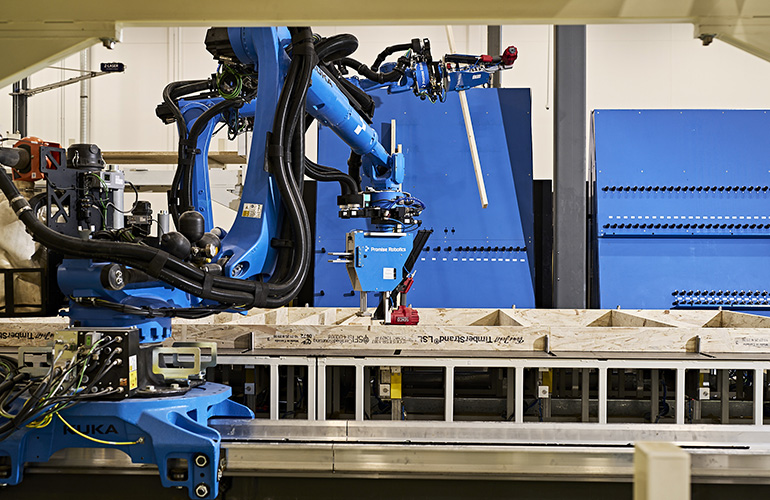
The workhorse of modern manufacturing — the six-axis articulated robot — relies heavily on high pole-count frameless motors paired with strain-wave gearing and absolute encoders. This combination delivers the torque needed to manipulate heavy payloads while maintaining the positional accuracy required for tasks like welding, painting, and assembly.
Frameless motors are particularly valued in these applications because they integrate directly into the joint structure of the robot arm, eliminating the weight and bulk of a separate motor housing. This tight integration reduces the overall inertia of the arm, allowing faster accelerations and more responsive motion control. Safety holding brakes are typically incorporated to retain load position during power loss events, an essential safety feature in industrial environments where a falling payload could cause serious damage or injury.
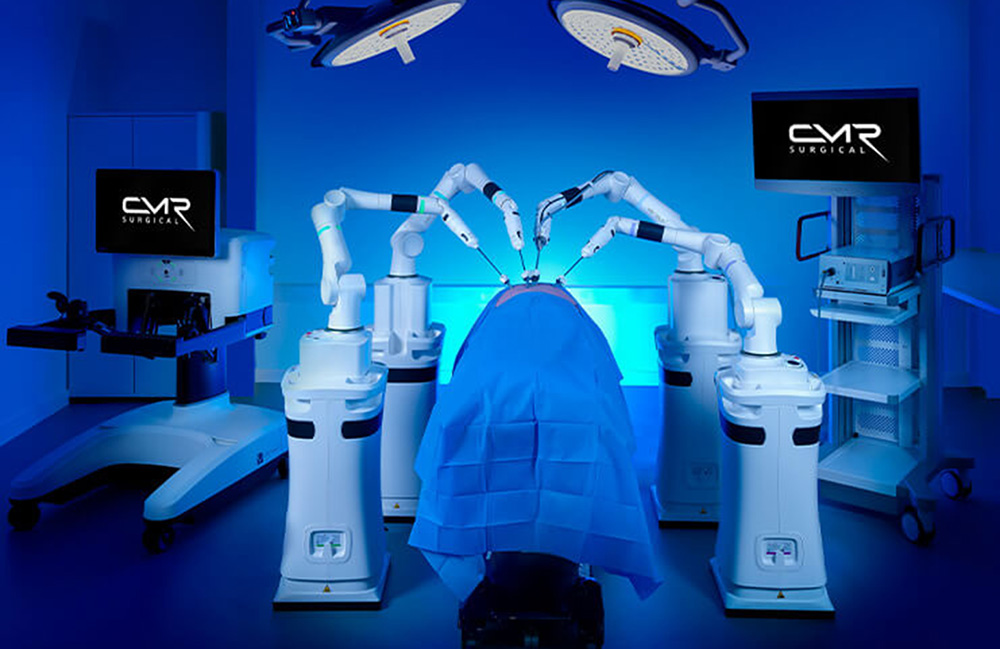
The trend toward direct-drive configurations in six-axis arms is gaining momentum as well. By eliminating the gearbox entirely, direct-drive torque motors achieve zero-backlash operation, which is critical for inspection robots and surgical arms where even microscopic positional errors are unacceptable.
SCARA Systems: Speed Above All
Selective Compliance Articulated Robot Arms, better known as SCARA systems, face a fundamentally different set of motor requirements. These robots are optimized for speed, particularly in pick-and-place operations where cycle time is the primary competitive metric. Their planar rotary axes employ high-torque AC servomotors capable of extremely quick accelerations, allowing the arm to snap between positions with minimal transition time.
The vertical Z-axis on SCARA robots presents its own motor challenge. Some designs use servomotor-driven screw drives for this axis, offering high force and positional accuracy. Others have adopted linear motors that eliminate the mechanical complexity of a screw drive altogether, trading off some force capability for superior speed and reduced maintenance requirements.
Cartesian and Gantry Robots: Cost-Effective Simplicity
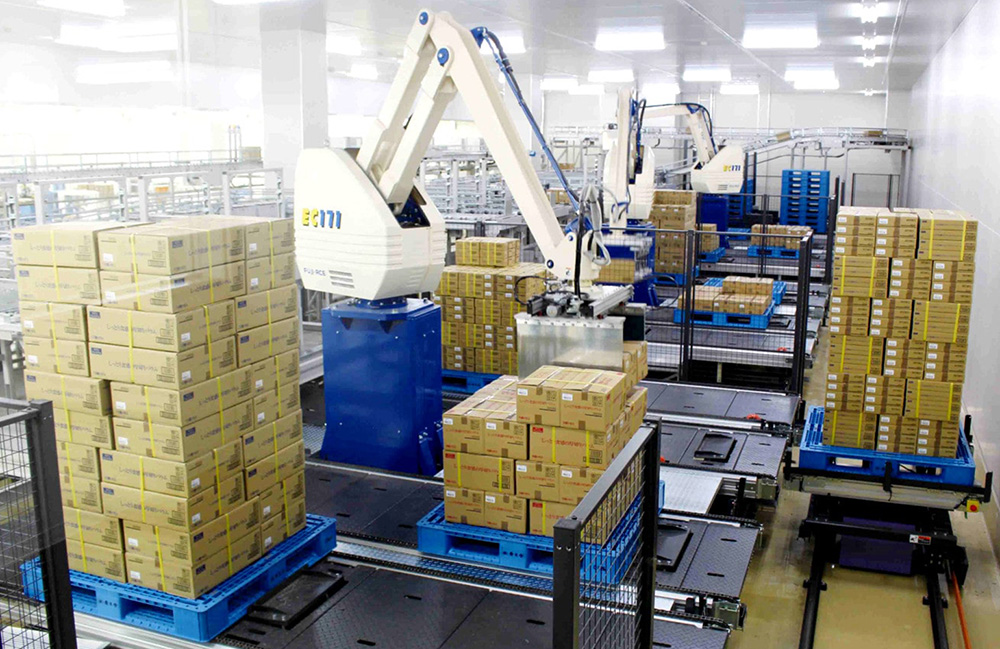
At the other end of the complexity spectrum, Cartesian robots and gantry systems prioritize cost-effectiveness and scalability. These platforms typically employ stepper or servo motors driving belt or leadscrew mechanisms along their linear axes. While they lack the dexterity of articulated arms, their straightforward motor requirements translate into lower purchase and maintenance costs, making them attractive for large-scale production environments where the motion profile is relatively simple.
Stepper motors remain popular in Cartesian systems for applications where absolute positioning is not critical, as they offer a compelling combination of torque, simplicity, and price. When higher performance is needed, servo motors with encoder feedback provide closed-loop control that can match or exceed the positioning accuracy of more complex robot types.

Collaborative Robots: Where Convergence Happens
Perhaps the most interesting motor design trend is the convergence between industrial and collaborative robot architectures. Collaborative robots, or cobots, were originally conceived as fundamentally different machines — lighter, slower, and inherently safer than their industrial counterparts. But as frameless motor technology has matured, the mechanical architecture of cobots has increasingly come to resemble that of industrial six-axis arms.
Modern cobots use the same frameless brushless motors and strain-wave gearing as industrial robots, but with additional sensors and compliance features that allow them to detect and respond to human contact. This convergence means that a cobot motor is essentially an industrial motor with enhanced sensing layered on top, rather than a fundamentally different type of actuator.
Emerging Motor Technologies
Looking forward, axial-flux and pancake-type motor constructions are gaining traction for lightweight applications. These designs offer exceptionally low profiles and reduced inertia, making them ideal for robotic wrist joints and end-effectors where every gram matters. Surgical robots and inspection systems are early adopters of these motor configurations.
The integration of machine learning with motor control systems represents another frontier. By applying adaptive algorithms to motor performance data, robots can learn to compensate for wear, temperature changes, and load variations in real time, extending motor life and maintaining performance over thousands of operating hours. This software-hardware integration is blurring the line between the motor itself and the intelligence that controls it, pointing toward a future where robotic actuators are as much computational devices as they are electromechanical ones.
This article is based on reporting by The Robot Report. Read the original article.

Originally published on therobotreport.com