Translation That Actually Understands
Google Translate has processed more than 100 billion words per day at various points in its history, making it one of the most used language tools in human history. Yet despite its enormous scale, users have consistently identified the same limitation: the tool translates words, but it often fails to translate meaning. Idioms come out literally, cultural references land awkwardly, and the register of text — formal, casual, professional, intimate — frequently gets lost in the transition between languages. A new set of AI-powered updates to Google Translate is designed to address these limitations directly, using large language model technology to add layers of contextual understanding that statistical translation never achieved.
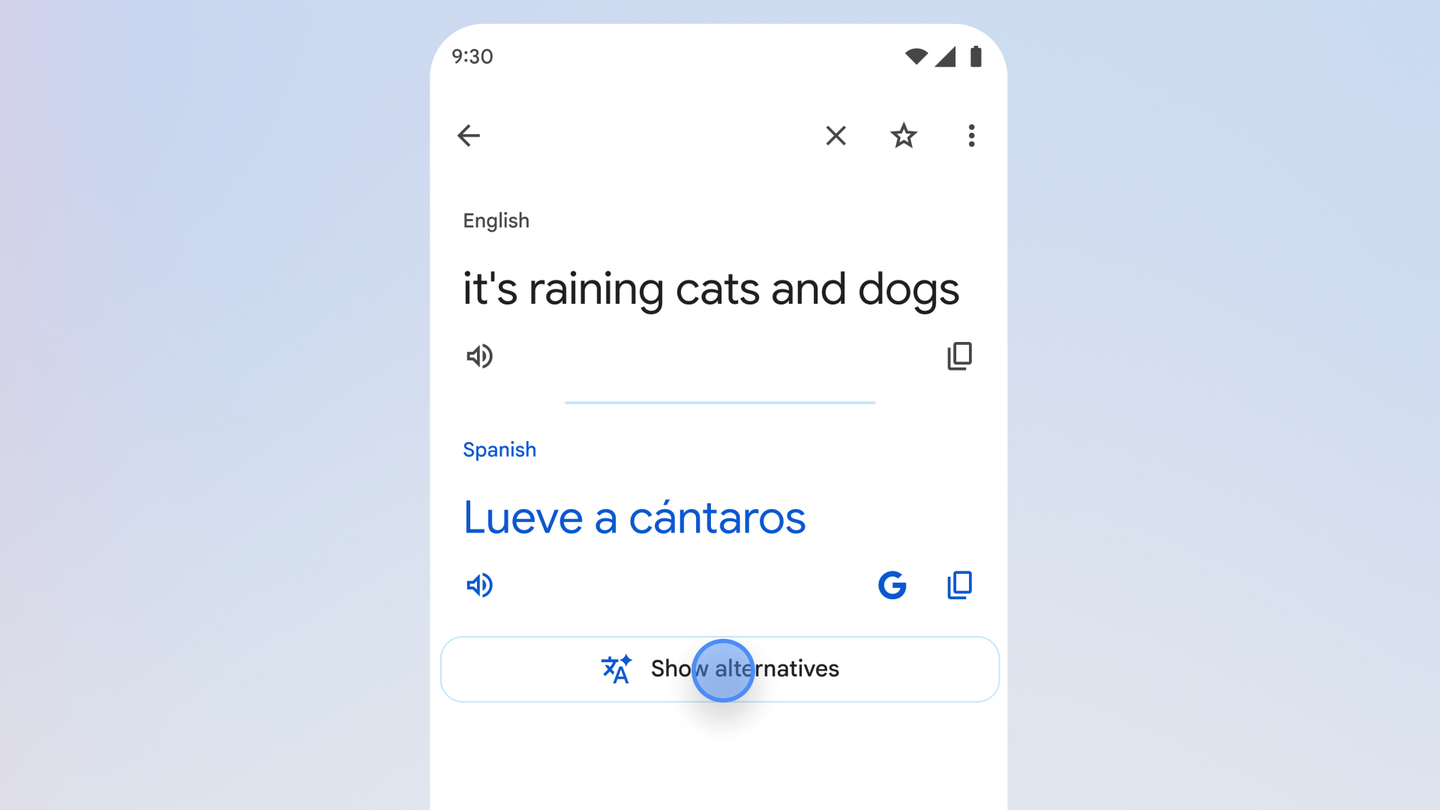
The updates, announced by Google, center on what the company calls context-aware translation — a mode in which Translate does not just map source text to target text word by word but attempts to understand the full meaning of a passage before rendering it in the destination language. This involves recognizing idioms and rendering them as their functional equivalents rather than their literal meanings, detecting the formality level of the source text and matching it in the translation, and flagging ambiguous passages where multiple valid translations exist with meaningfully different implications.
How the Technology Works
Traditional machine translation systems, including the neural machine translation models Google has used since 2016, operate fundamentally as sequence-to-sequence models: they learn statistical patterns between source and target language text from billions of aligned examples and use those patterns to generate translations token by token. This approach produces fluent output but has inherent limitations when the meaning of a word or phrase depends on context that extends beyond the immediate sentence.
The new contextual AI layer operates differently. Before generating the translation, it runs the source text through a large language model that builds a semantic representation of the passage — identifying the topic, the speaker's apparent intent, the emotional register, and the cultural context implied by specific references or phrasing choices. That semantic representation is then passed to the translation layer as an additional conditioning signal, steering the output toward translations that preserve meaning rather than just grammatical structure.
One specific capability is what Google calls translation memory with cultural adaptation. When a source text contains a reference that is culturally specific — a sports metaphor, a political allusion, a food reference — the system can either translate it directly with an explanatory note or adapt it to an equivalent reference that carries the same cultural resonance in the target language. The user can choose which mode they prefer, with the direct-with-note approach being more useful for formal or educational contexts and the cultural adaptation approach being more suitable for natural conversation.
Practical Applications
The improvements are likely to be most immediately impactful in a few specific use cases. Business communication across language barriers is one: professional emails and documents often carry register signals — levels of formality, deference, and directness — that are critical to how they are received, and getting those signals wrong can create misunderstandings that have real consequences. Legal and medical translation is another area where the distinction between a literal and a meaningful translation can be critically important.
For language learners, the updates offer a new dimension of utility. Rather than simply showing what a text says in another language, the contextual features can explain why a particular translation choice was made, what the idiom in the source text means, and what alternative translations were considered. This makes Translate a more effective learning tool, not just a lookup service.
The Competitive Context
Google's contextual AI updates come as the translation technology landscape has become increasingly competitive. DeepL, which has built a substantial user base among professionals who find its translations noticeably more natural than Google's, has also been integrating large language model technology into its products. Microsoft's Azure AI Translator and Amazon's Translate both have access to the same underlying transformer architectures that power contextual understanding. And general-purpose AI assistants like Claude, ChatGPT, and Gemini are increasingly being used for translation tasks, sometimes producing output that outperforms dedicated translation services for short passages.
Google's advantage in this competitive environment is scale — the company has access to an unmatched corpus of multilingual text from Search, Gmail, and its broader ecosystem, which can be used to train culturally grounded translation models. Whether that advantage translates into a meaningful quality differential as the AI translation field matures remains to be seen, but the contextual update represents a genuine step forward in Translate's ability to handle the kind of nuanced, high-stakes translation that has historically required a human expert.
This article is based on reporting by Google AI Blog. Read the original article.

Originally published on blog.google