Google is repositioning Search as an AI interface
Google has outlined a major expansion of AI inside Search, presenting the change as the next step in combining a traditional search engine with conversational and agentic capabilities. According to the supplied company source text, AI Mode has surpassed one billion monthly users, with queries more than doubling every quarter since launch. The company says it is now upgrading AI Mode globally by making Gemini 3.5 Flash the default model and by rolling out what it describes as the biggest overhaul of the Search box in more than 25 years.
The announcement matters because it treats AI not as a separate experimental layer, but as a primary interface for how users express intent. Google is not only adding model improvements behind the scenes. It is redesigning the front-end experience so users can ask more expansive questions, continue conversations more naturally, and submit multiple kinds of input including text, images, files, videos, and Chrome tabs.
That is a strategic shift. Search historically rewarded concise queries and keyword logic. The new framing assumes users increasingly expect a system that can interpret ambiguity, hold context, and help formulate the question itself.
A bigger role for AI Mode
The supplied source text says Gemini 3.5 Flash is becoming the new default model in AI Mode for users globally. Google characterizes the model as delivering strong performance for agents and coding, which signals where the company sees future demand. Rather than limiting Search to fact retrieval and summarization, Google is trying to turn it into a more active assistant that can reason across tasks and support deeper workflows.
The company also says users can move directly from an AI Overview into follow-up questions and a conversational back-and-forth with AI Mode, while preserving context and surfacing increasingly relevant links and supporting articles. That last detail is important. Google is still emphasizing that Search will continue to provide a range of results, not just a single generated response. The product challenge is to keep the open web visible while making the AI layer feel central and useful enough that people stay inside it for longer interactions.

The search box itself is being redefined
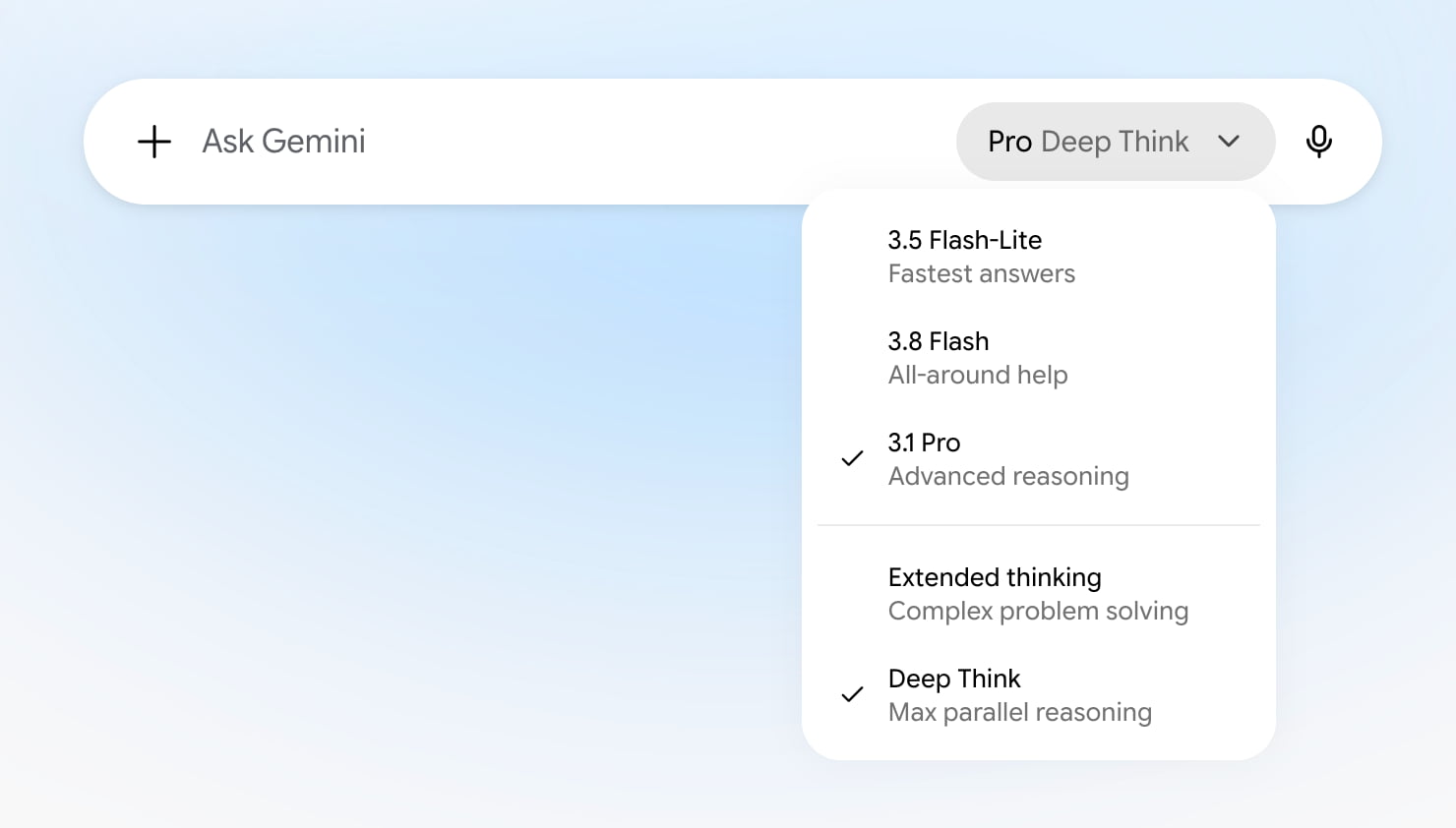
The redesigned Search box may be the most consequential part of the announcement because it changes user behavior at the point of entry. Google says the interface will dynamically expand to give users room to describe what they need and will offer AI-powered suggestions that go beyond classic autocomplete. In effect, the search field is becoming a prompt surface.
That matters because interface design strongly influences the kinds of questions people ask. A short static box nudges users toward compressed phrases. A flexible AI-oriented input invites exploratory or multi-step requests. By widening the aperture, Google is encouraging users to treat Search less like a lookup tool and more like a collaborative reasoning environment.
Multimodal input deepens that shift. The supplied text says users can search with images, files, videos, or Chrome tabs in addition to text. This suggests Google wants Search to function across contexts where the starting point is not a typed query at all, but a document, screenshot, browser state, or other artifact that needs interpretation.
Agents as the next competitive layer
The source text also highlights “powerful AI Search agents,” indicating that Google intends to let users invoke agent-like behavior simply by asking a question. While the supplied excerpt does not detail every task these agents will perform, the positioning is clear: Google sees the future of Search as more action-oriented. The system should not only return information, but also help organize, navigate, and potentially execute parts of a user’s intent.
That places Google in a more direct competition around agentic AI, where the question is no longer whose model can answer best, but whose interface can turn answering into doing. Search remains one of the world’s most valuable attention gateways. Embedding agents there gives Google an enormous distribution advantage if users accept the new interaction model.

What this means for the web and for Google
The announcement also reflects a balancing act. Google says users will continue to get a range of results “just like” they do today, yet every element of the redesign points toward a stronger AI mediation layer between users and publishers. As AI Mode grows, the company will face continued scrutiny over how it attributes sources, how it routes traffic, and how much of the web experience remains visible once conversational interaction becomes the default habit.
From Google’s perspective, the urgency is obvious. If search behavior is shifting from keyword retrieval toward AI-guided exploration, then preserving the old interface would mean ceding ground to standalone assistants and rival search products. By putting Gemini 3.5 Flash into AI Mode and rebuilding the search box around conversational, multimodal intent, Google is trying to update its core product before user expectations harden elsewhere.
The larger significance
The most important claim in the supplied source material is not any one feature, but the scale of adoption Google reports. If AI Mode truly exceeds one billion monthly users, then AI-enhanced search is already far beyond pilot phase. That gives the company room to make more aggressive interface changes because it can argue that users have already demonstrated appetite for a different kind of search experience.
Google’s latest move therefore looks less like an experiment and more like a platform transition. Search is being recast as an AI-native environment that can interpret richer input, carry context across exchanges, and increasingly act like an agent rather than a ranking page. Whether that improves the quality of discovery or narrows it behind one dominant interface will be the harder question. But the direction is clear: Google is making AI the front door, not the side panel.
This article is based on reporting by Google AI Blog. Read the original article.
Originally published on blog.google