Google is trying to shape the AI-and-work debate
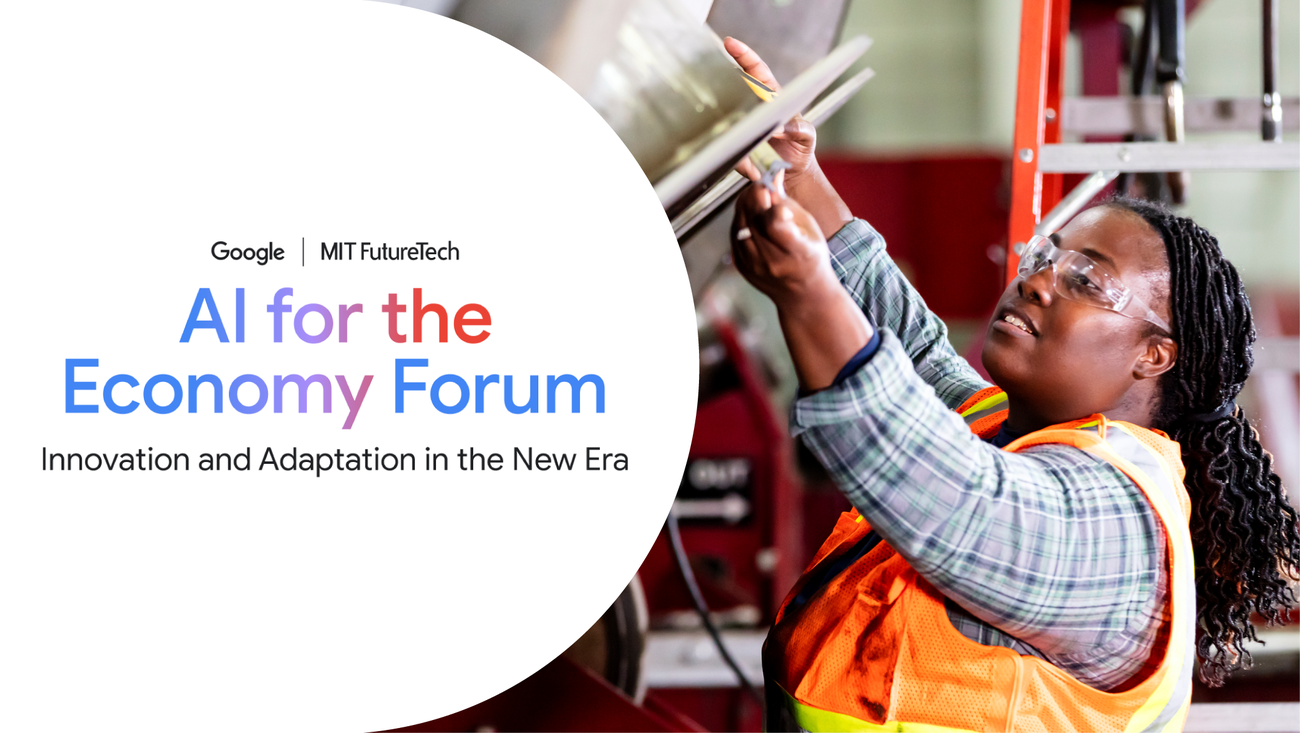
Google says it is convening economists, policymakers, industry leaders and researchers in Washington, D.C. for an inaugural AI for the Economy Forum, co-hosted with MIT FutureTech. The company’s stated premise is that the economic effects of artificial intelligence are not automatic and not predetermined. In Google’s framing, the way AI changes jobs, productivity and the wider economy will depend on choices made across companies, governments, researchers and workers.
That positioning is important because the current AI debate often swings between sweeping optimism and sweeping alarm. Google is instead presenting a more institutional answer: build research capacity, gather stakeholders and expand training so decisions are informed before labor-market changes harden into fact. The company says the forum is meant to identify information gaps and lay the groundwork for continuing collaboration rather than deliver a single policy answer in one day.
Two announced pillars: research and training
Google says it is advancing that approach in two ways. First, it is making new investments in research intended to help governments, companies, researchers and civil society better understand AI’s effects on the economy and work. Second, it says it will provide training opportunities so workers can build skills for an economy being reshaped by AI tools.
The company described the research side through its AI & Economy Research Program, which is meant to support collaboration with outside experts. Google highlighted a Visiting Fellows program and cited economist David Autor of MIT among the people involved in producing original research. It also pointed to the Digital Futures Project as part of the broader effort to support work examining technology, labor and economic change.
These details matter because one of the biggest weaknesses in current AI policymaking is the mismatch between the speed of product deployment and the slower pace of credible labor-market evidence. Companies can roll out new capabilities in months, while productivity, wages, job quality and task-level displacement often take far longer to measure. Google is effectively arguing that stronger research infrastructure is a practical necessity if public and private decision-makers want more than anecdotes.
Why the labor question is central
Google’s public message reflects a wider recognition in the technology sector that AI adoption cannot be discussed only in terms of model capability. The harder question is distribution: who benefits, who adapts, who loses leverage, and how quickly institutions respond. By saying neither risks nor benefits are guaranteed, Google is acknowledging that productivity gains alone do not settle the social and economic outcome. Training, access and governance will shape who captures the upside.
That is why the company is coupling research with workforce preparation rather than treating them as separate tracks. Training programs can help workers adjust only if they are aimed at the right kinds of transitions. Research can illuminate those transitions only if it is grounded enough to inform real choices by employers, educators and governments. Google’s forum appears designed to connect those two problems.
The company also says its training efforts include support for workers preparing for in-demand fields, including healthcare. That signals a broader interpretation of “AI economy” than one centered solely on software jobs. In practice, AI adoption is likely to affect workflows across sectors where the technology is used to augment planning, documentation, analysis and service delivery rather than replace an entire occupation outright.
What Google may be trying to accomplish
There is also a strategic layer to the announcement. Tech companies are under pressure to show they are not simply releasing powerful systems and leaving governments and workers to absorb the consequences. By foregrounding research partnerships and training, Google is positioning itself as a participant in institutional adaptation rather than just a vendor of increasingly capable AI products.
That does not, by itself, resolve the harder questions around bargaining power, job redesign or how gains from AI-driven productivity will be distributed. But it does indicate where the company thinks legitimacy will be won: not only through better models, but through a credible role in helping society respond to them. The fact that the forum is in Washington and co-hosted with an academic institution underscores that Google wants this to be read as part policy conversation, part evidence-building exercise.

The bigger signal for the AI sector
Google’s announcement is notable less for a single headline number than for the model it suggests. The company is arguing that AI’s economic impact should be managed through durable partnerships among business, government, academia and labor-market institutions. That is a more complex proposition than simply promising innovation or warning about disruption, but it is also more realistic. Economic transitions are usually shaped through many overlapping decisions, not one breakthrough product cycle.
If the forum leads to usable research and targeted training, it could help move discussion beyond broad speculation. If it becomes mostly a venue for consensus language without measurable follow-through, it will look like another corporate attempt to get ahead of regulation. For now, Google has made a clear bet: the next phase of AI competition will not be judged only by technical performance, but by whether major firms can show they are helping build the evidence and skills needed for a changing economy.
This article is based on reporting by Google AI Blog. Read the original article.
Originally published on blog.google