A New Generation of Legged Robots Built for Danger
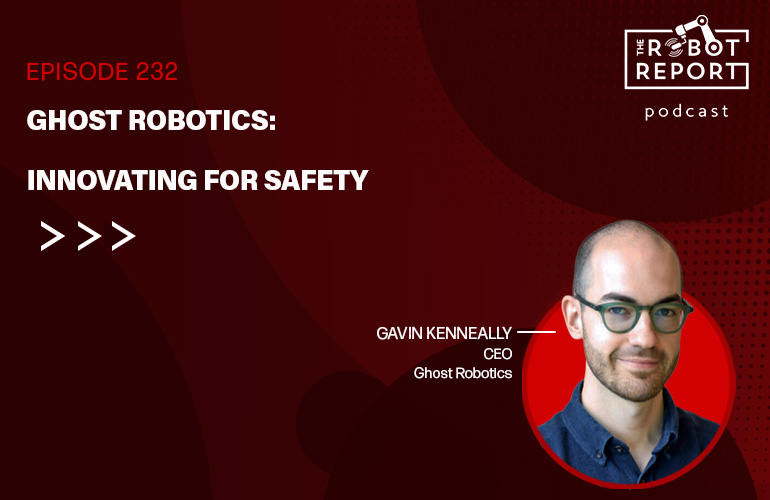
Ghost Robotics has been quietly establishing itself as one of the most consequential players in the legged robotics industry, and its co-founder and CEO Gavin Kenneally is eager to explain why. In a recent discussion about the company's flagship product, the Vision 60 quadruped robot, Kenneally laid out a vision for machines that can traverse environments too treacherous or unpredictable for human workers, from contaminated industrial sites to active military perimeters.
The Vision 60 is a four-legged autonomous platform that weighs roughly 100 pounds and is designed from the ground up to handle rough terrain, steep inclines, and unpredictable obstacles. Unlike wheeled or tracked robots, quadrupeds can step over debris, navigate stairs, and recover from stumbles in ways that more traditional platforms simply cannot. Ghost Robotics has leaned heavily into this advantage, positioning the Vision 60 as a versatile tool for defense, industrial inspection, and public safety applications.
Design Philosophy: Ruggedness Over Flash
Where some robotics companies have focused on consumer-friendly aesthetics or viral social media moments, Ghost Robotics has taken a different path. Kenneally emphasized that the company's design philosophy centers on durability, reliability, and the ability to operate in conditions that would destroy less robust machines. The Vision 60 is sealed against dust and water, built to withstand temperature extremes, and engineered to keep moving even after impacts that would disable competing platforms.
This approach reflects the company's core customer base. Ghost Robotics has secured contracts with branches of the United States military, allied defense forces, and industrial clients who need robots that function in genuinely hostile environments. The Vision 60 is not a laboratory curiosity or a research prototype. It is a production system that ships to customers who deploy it in the field, sometimes in conditions where failure is not merely inconvenient but dangerous.
Kenneally noted that every design decision flows from this principle. The leg mechanisms use a proprietary direct-drive architecture that reduces mechanical complexity, which in turn reduces the number of components that can break. The sensor suite is modular, allowing operators to swap payloads depending on the mission, whether that means thermal cameras for perimeter security, LIDAR for mapping, or chemical sensors for hazardous material detection.
Safety Applications Across Sectors
The "innovating for safety" framing is not merely a marketing tagline. Kenneally described several real-world deployment scenarios where the Vision 60 is actively keeping humans out of danger.
- Military perimeter security: The robot patrols base perimeters autonomously, alerting human operators to intrusions without requiring personnel to walk exposed routes.
- Industrial facility inspection: In chemical plants and refineries, the Vision 60 can enter areas with toxic gas concentrations that would require extensive protective equipment for human inspectors.
- Explosive ordnance disposal support: The platform can approach and inspect suspected explosive devices, providing video and sensor data to bomb disposal teams at a safe distance.
- Nuclear facility monitoring: In environments with elevated radiation levels, the robot can conduct routine inspections that would otherwise expose human workers to cumulative health risks.
Each of these applications shares a common thread: the robot goes where humans should not, or at least where humans should not go routinely. Kenneally argued that this is the most important near-term contribution legged robots can make, not replacing human workers but taking over the tasks that put them at greatest physical risk.
The Competitive Landscape and Ghost Robotics' Position
The quadruped robotics market has grown increasingly crowded, with Boston Dynamics, Unitree Robotics, and a host of smaller startups all competing for attention and contracts. Kenneally acknowledged the competition but expressed confidence that Ghost Robotics' focus on military and industrial applications gives it a distinct advantage in those sectors.
Boston Dynamics' Spot robot is perhaps the best-known quadruped in the world, but it was originally designed for a broader range of applications, including entertainment and research. Ghost Robotics, by contrast, has been laser-focused on defense and security from its earliest days, and Kenneally believes this specialization shows in the product. The Vision 60 is purpose-built for the harshest operating conditions, and its software stack reflects the security and reliability requirements of military customers.
On the other end of the spectrum, companies like Unitree have driven down the price of quadruped robots dramatically, making them accessible to hobbyists and academic researchers. Kenneally views this as complementary rather than competitive, arguing that wider adoption of legged robots raises awareness and accelerates the development of the entire ecosystem, from sensors and actuators to software frameworks and operator training programs.
What Comes Next for Ghost Robotics
Looking ahead, Kenneally outlined several areas of active development. The company is working on enhanced autonomy features that would allow the Vision 60 to conduct longer, more complex missions with less human oversight. Improved mapping and navigation algorithms are a priority, as is the ability to operate in GPS-denied environments where the robot must rely entirely on onboard sensors.
Ghost Robotics is also exploring payload integration partnerships, working with sensor and weapon system manufacturers to expand the range of missions the Vision 60 can support. This includes both lethal and non-lethal options, a sensitive topic that Kenneally addressed directly, noting that the company follows all applicable regulations and works closely with government customers to ensure responsible deployment.
The broader trajectory, according to Kenneally, is toward a world where legged robots are as commonplace in hazardous environments as drones are in aerial surveillance. The technology is maturing rapidly, costs are declining, and the operational case for keeping humans away from danger is only getting stronger. Ghost Robotics intends to be at the center of that transformation.
This article is based on reporting by The Robot Report. Read the original article.
Originally published on therobotreport.com