A small announcement with a large robotics implication
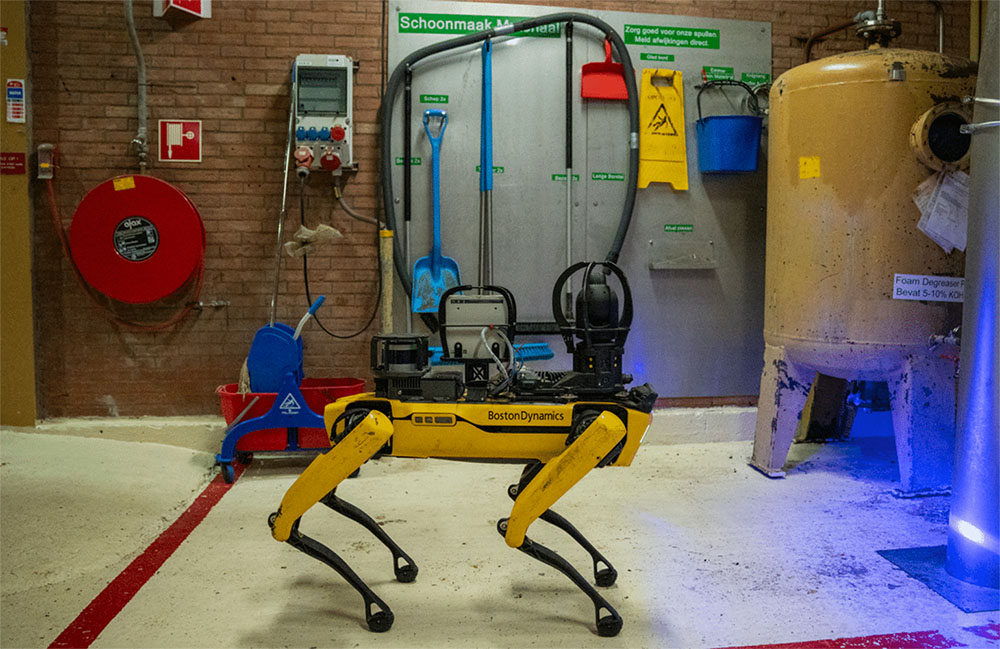
Boston Dynamics says it is using Google DeepMind’s Gemini to make Spot smarter, with the company describing the model as a way to bring better reasoning and adaptability to AIVI-Learning. The supplied source text is brief, but the strategic direction is clear. One of the most recognizable robotics companies is pushing beyond motion and control toward systems that can interpret situations more flexibly.
That matters because robotics has long excelled in structured tasks and struggled in messy ones. Robots can be extraordinarily reliable when the environment is predictable, the rules are fixed, and the range of possible actions is narrow. The challenge begins when conditions change, instructions become ambiguous, or a machine has to decide what to do next without following a tightly scripted sequence. “Reasoning” and “adaptability” are therefore not marketing extras in this context. They point to one of the field’s hardest unsolved engineering problems.
Spot is an especially useful platform for that transition. The quadruped robot is already associated with mobility in spaces that are difficult or unsafe for humans, and its value depends not just on walking well but on understanding what it is seeing and how it should respond. If Gemini improves AIVI-Learning in the way Boston Dynamics suggests, the gain would not be limited to more natural language interaction. It would be about making robotic behavior less brittle in real environments.
What “reasoning” means in practice
In robotics, better reasoning does not need to mean abstract intelligence in the human sense. It can mean linking perception to action more effectively. A robot may need to interpret a scene, infer what is relevant, decide among competing tasks, and adjust when the environment changes. Even modest advances in that chain can make a system much more useful because they reduce the need for constant human supervision and preprogrammed contingencies.
Adaptability is similarly practical. A robot that works only in carefully prepared settings has limited economic reach. A robot that can cope with variation in layout, lighting, obstacles, or instructions can move into more demanding industrial and field deployments. That is why the pairing described here is noteworthy. Boston Dynamics brings the hardware, movement, and deployment experience. Gemini is being positioned as a layer that can improve interpretation and decision-making.
The importance of AIVI-Learning in the announcement also hints at a broader trend. Robotics companies increasingly need systems that learn and generalize rather than simply execute. Traditional automation remains powerful, but it often depends on painstaking setup. AI-assisted approaches aim to shorten that setup time and allow robots to carry useful behavior from one scenario into another. That is the promise, at least, and it is a promise the industry has not fully delivered on yet.
Why this partnership fits the direction of the field
The robotics sector is moving toward tighter integration between physical systems and large AI models. The appeal is easy to understand. Foundation models have shown they can handle language, images, and pattern recognition at broad scale. Physical robots, meanwhile, still need better ways to convert that broad competence into reliable action. Bringing the two together is an obvious next step, even if the technical gap between understanding and execution remains large.
Boston Dynamics is not starting from zero. Its robots are already known for capable movement and polished demonstrations of autonomy. But mobility alone does not create a general-purpose machine. Useful autonomy requires judgment about goals, context, and exceptions. That is where a model described as improving reasoning and adaptability could have outsized impact if it performs well under real operating constraints.
The constraint side should not be ignored. Physical systems demand robustness in ways software products often do not. A chatbot can be forgiven for an awkward answer. A robot operating around people, equipment, or uneven terrain cannot be forgiven as easily for misreading a situation. That is why every advance in AI-enabled robotics has to be judged not just by novelty but by consistency, safety, and recoverability when things go wrong.
What to watch next
The main question now is not whether AI models will be connected to robots. That is already happening across the industry. The real question is how much practical capability the integration adds. Boston Dynamics says Gemini will improve Spot’s reasoning and adaptability through AIVI-Learning. The next proof point will be whether those improvements show up in tasks that matter outside demos: inspection, navigation, operator interaction, and operation in changing environments.
If they do, the announcement will look like part of a broader turning point in robotics. If they do not, it will still reflect an industry consensus that better perception and better language are not enough on their own. Robots need stronger decision-making in the loop. Either way, Boston Dynamics’ choice of Gemini highlights where competitive pressure is building: not only in building machines that move impressively, but in building machines that can decide more effectively what movement is actually required.
That is the difficult middle ground where modern robotics will likely be won or lost. Hardware capability gets a robot into the room. Reasoning and adaptability determine whether it can do something valuable once it is there.
This article is based on reporting by The Robot Report. Read the original article.
Originally published on therobotreport.com