Humanoid robotics moves from demos toward factory output
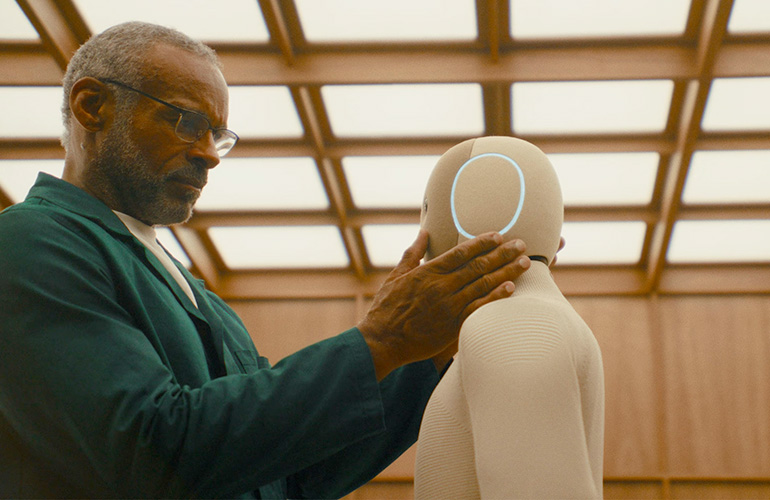
1X Technologies says it has begun full-scale production of its NEO humanoid robots at a new facility in Hayward, California. The 58,000-square-foot site is designed as the company’s primary manufacturing hub for NEO, a humanoid robot intended to operate quietly in domestic spaces while collecting real-world operating data that can improve its AI systems over time.
The announcement matters because it shifts the conversation from prototype capability to production readiness. Humanoid robotics has no shortage of carefully edited demo videos and ambitious timelines. What it lacks, in most cases, is evidence that companies can actually manufacture complex machines in repeatable volume. 1X is arguing that its new facility is a concrete answer to that problem.
A vertically integrated factory strategy
According to the supplied source text, 1X has built the site around what it calls a “machine park,” where raw materials are turned into specialized parts. Rather than relying entirely on a traditional supplier-heavy assembly model, the company says it uses a vertically integrated “factory OS” to manage each production stage in real time.
That approach is notable because humanoid robotics puts unusual pressure on manufacturing systems. These machines combine actuators, sensors, mechanical structures, control electronics, and AI computing in a tightly constrained form factor. If too much of the process is fragmented across outside vendors, companies can end up with slower iteration cycles and weaker control over quality and cost.
By contrast, a vertically integrated system promises tighter feedback between design changes, factory execution, and field performance. Whether that promise holds up at scale remains to be seen, but the strategy is consistent with how robotics startups are increasingly trying to compress development loops.
What the factory is doing now
The source text gives a more detailed look at the production process than many robotics announcements do. Automated lines spin copper coils to create custom motors. Dedicated labs subject hardware to more than 20 million cycles of stress testing. The floor includes separate zones for joint and limb assembly, final integration, and a reliability lab designed to “break things fast” so engineers can identify failures before systems reach customers.
That last detail is especially important. Reliability is one of the biggest barriers between an impressive lab robot and a useful commercial product. A humanoid intended for household operation cannot merely complete a task once under controlled conditions. It must perform repeatedly, quietly, safely, and predictably in cluttered, variable spaces that were never designed around robots.
1X says NEO operates at a decibel level lower than a modern refrigerator, a specification that signals how closely the company is targeting home use rather than warehouse or industrial deployment alone.
The robots are already working in the factory
Early versions of NEO are reportedly active on the factory floor, helping with internal logistics and stocking parts. That arrangement serves two functions. First, it offsets some labor inside the facility. Second, and likely more important, it gives 1X a stream of real-world operational data to improve the NEO Cortex brain.
This is a recurring theme in advanced robotics: the product is not just the body, and it is not just the model. It is the loop between deployment, data collection, training, testing, and redeployment. The more often a company can run that loop, the faster it may improve capabilities and reliability.
In 1X’s case, the source text says NEO Cortex is powered by NVIDIA’s Jetson Thor platform and trained using the NVIDIA Isaac robotics platform. That pairing places 1X inside a broader ecosystem of robotics developers building on NVIDIA hardware and simulation tools.

Why production scale matters for “physical AI”
Founder and CEO Bernt Børnich framed the factory launch as proof that humanoid robotics is moving from aspiration to industrial reality in the United States. He argued that more production means more robots, and more robots mean the fastest path to “physical AI.” That phrase reflects an industry view that embodied intelligence improves when systems repeatedly interact with the physical world rather than only with text, images, or simulation.
There is logic to that claim. A language model can absorb vast digital corpora, but a household robot must also learn balance, manipulation, timing, force control, and navigation in real spaces. Manufacturing more units can accelerate that learning process by expanding the amount of operational data available.
The challenge is that production also magnifies every unresolved weakness. More robots mean more opportunities to surface design flaws, safety concerns, maintenance burdens, and cost pressures. Scale is both validation and stress test.
A meaningful step, not the final proof
1X’s announcement should be treated as a meaningful milestone, but not yet as definitive proof that consumer humanoid robotics has arrived. Starting full-scale production is different from shipping large volumes into homes and sustaining those deployments economically. The gap between those stages is where many ambitious hardware programs struggle.
Still, the importance of the moment is hard to dismiss. The company is not only talking about future deployment. It is opening a substantial U.S. facility, emphasizing vertical integration, putting early units to work inside the plant, and tying manufacturing directly to data collection and model improvement.
If 1X can turn those ingredients into reliable output, it will strengthen the case that humanoid robots are entering a more mature phase of development. If not, the factory will stand as another reminder that sophisticated robotics is limited less by the excitement of the idea than by the difficulty of making the machines, maintaining them, and improving them fast enough to justify their cost.
For now, 1X has crossed an important threshold. The question is no longer whether it can show a humanoid robot. It is whether it can build enough of them, and build them well enough, to make the category commercially real.
This article is based on reporting by The Robot Report. Read the original article.

Originally published on therobotreport.com