The mystery letter at the end of PRNDL is not decorative
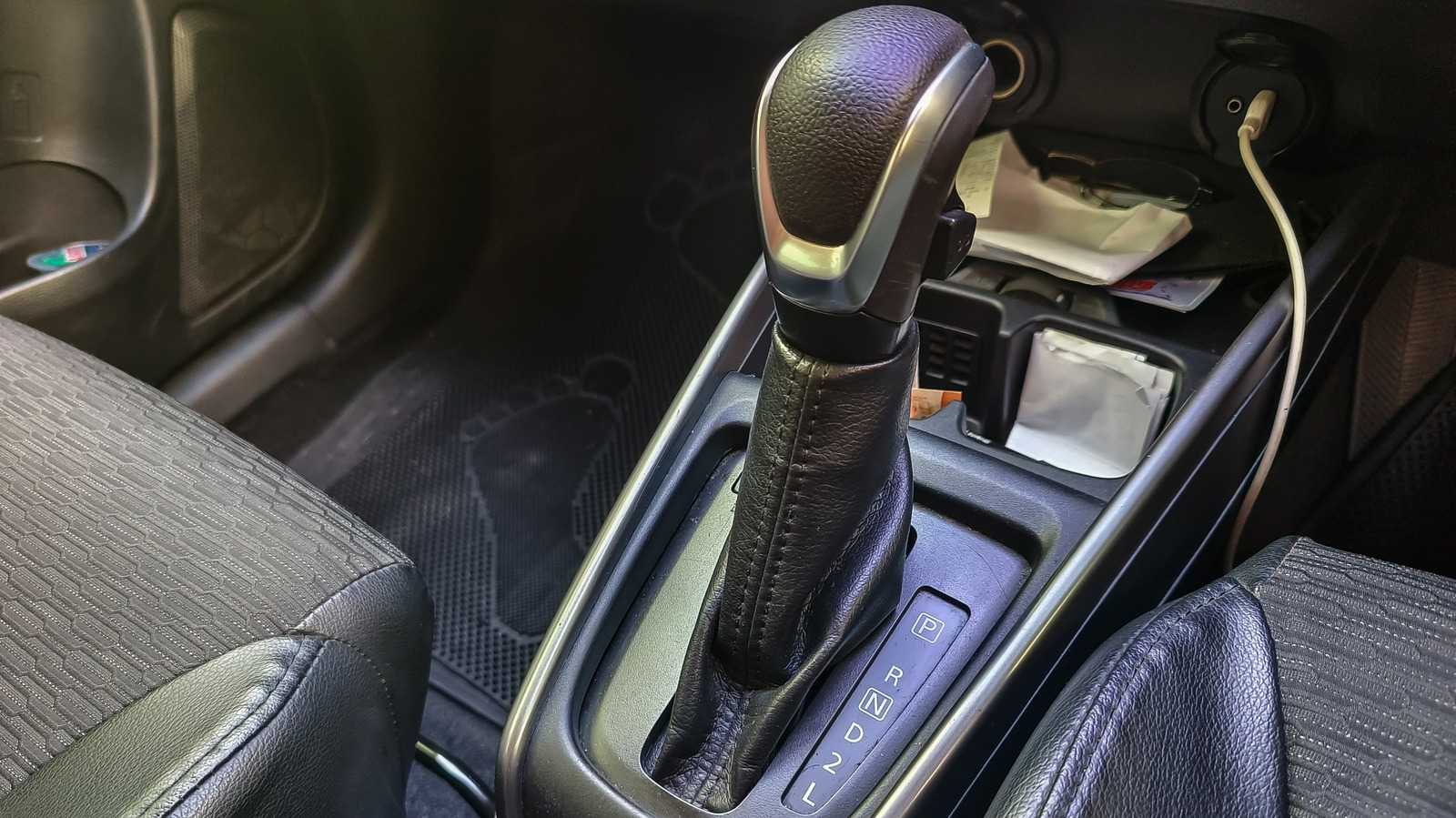
Drivers can usually decode the major labels on an automatic transmission without much trouble. Park, reverse, neutral, and drive are self-explanatory. The final position, often marked simply as “L,” is less intuitive. According to Jalopnik’s breakdown, it stands for “low,” as in low gear, and it exists to give drivers more control in situations where an automatic transmission might otherwise shift in unhelpful ways.
In practical terms, selecting low mode tells the vehicle to remain in lower gears rather than cycling up through its full range as it would in normal drive. In older cars with four- or five-speed automatics, that may restrict the transmission to first or second gear. In newer vehicles with nine- or ten-speed transmissions, the range may extend slightly higher, but the principle is the same: keep the engine working in a lower ratio where torque delivery and speed control are easier to manage.
Why low gear still matters in an automatic car
Automatic transmissions are designed for convenience, not for reading every road or load condition perfectly. Left alone, they shift according to programmed logic that balances efficiency, smoothness, and performance. Most of the time that works well. But in demanding scenarios, the transmission may upshift too early, hunt between gears, or fail to provide the level of engine braking a driver wants.
Low mode is a way of correcting that behavior without needing a manual gearbox. It narrows the transmission’s choices and effectively gives the driver more authority over how the vehicle responds. That is why the setting has persisted across decades of transmission design, even as many other controls have changed or disappeared.
Where it helps most
Towing is one of the clearest use cases. Pulling a trailer requires torque at low speeds, especially when starting from a stop or climbing an incline. By holding lower gears, the transmission can keep the engine in a stronger operating range and reduce unnecessary shifting. That matters not only for drivability but also for mechanical stress. Frequent up-and-down shifting under load can add wear to the transmission.
Steep climbs are another case where low mode helps even without a trailer attached. If a car tries to upshift too early on an incline, the engine can fall out of its useful torque band, making the vehicle feel strained or sluggish. Holding lower gears keeps more power available and can make ascents smoother and more predictable.
The same logic applies in reverse on steep descents. Low gears make engine braking more effective, helping keep vehicle speed down without forcing the driver to ride the brake pedal constantly. That can reduce brake wear and lower the chance of overheating the braking system during long downhill stretches.
Winter driving is another reason the setting exists
Low mode can also be useful on snow and ice, where sudden speed changes or poorly timed shifts can upset traction. Keeping the car in lower gears helps limit speed and can make the vehicle easier to control in slippery conditions. It is not a substitute for winter tires, careful throttle inputs, or proper driving technique, but it can provide another layer of predictability when grip is limited.
That said, the benefit depends on context. In some low-traction situations, overly aggressive torque delivery can be counterproductive, so drivers still need to use judgment. The setting is a tool, not a universal solution.
Useful does not mean always-on
One reason “L” confuses drivers is that it can look like an alternative everyday driving mode rather than a special-purpose one. It is not. Keeping a vehicle in low gears when it is unnecessary means higher engine speeds, more noise, reduced fuel economy, and potentially more wear if the car is driven that way for extended periods.
The point is selective use. Low mode is for conditions where maintaining lower gears provides a real functional advantage: towing, climbing, descending, or handling adverse road conditions. Outside those scenarios, standard drive is generally the correct setting because it allows the transmission to optimize efficiency and normal operation.
A small control with a practical purpose
Automotive interfaces have become increasingly abstract, with many vehicles replacing physical selectors and clear mechanical cues with buttons, dials, and layered digital settings. The “L” position is a reminder that some older-seeming controls continue to serve a practical purpose. It is a simple shorthand for telling the transmission to prioritize control over convenience.
For drivers who have never used it, the setting may seem obscure. But its continued presence across generations of vehicles reflects a real need. There are moments when an automatic gearbox benefits from firmer guidance, and low mode provides it without requiring a manual transmission or a more complicated control system.
In other words, the letter is easy to miss, but the function is not trivial. “L” exists because there are times when keeping a car in low gears makes the vehicle safer, steadier, and easier to manage.
This article is based on reporting by Jalopnik. Read the original article.
Originally published on jalopnik.com