Titan’s case for human exploration is getting stronger
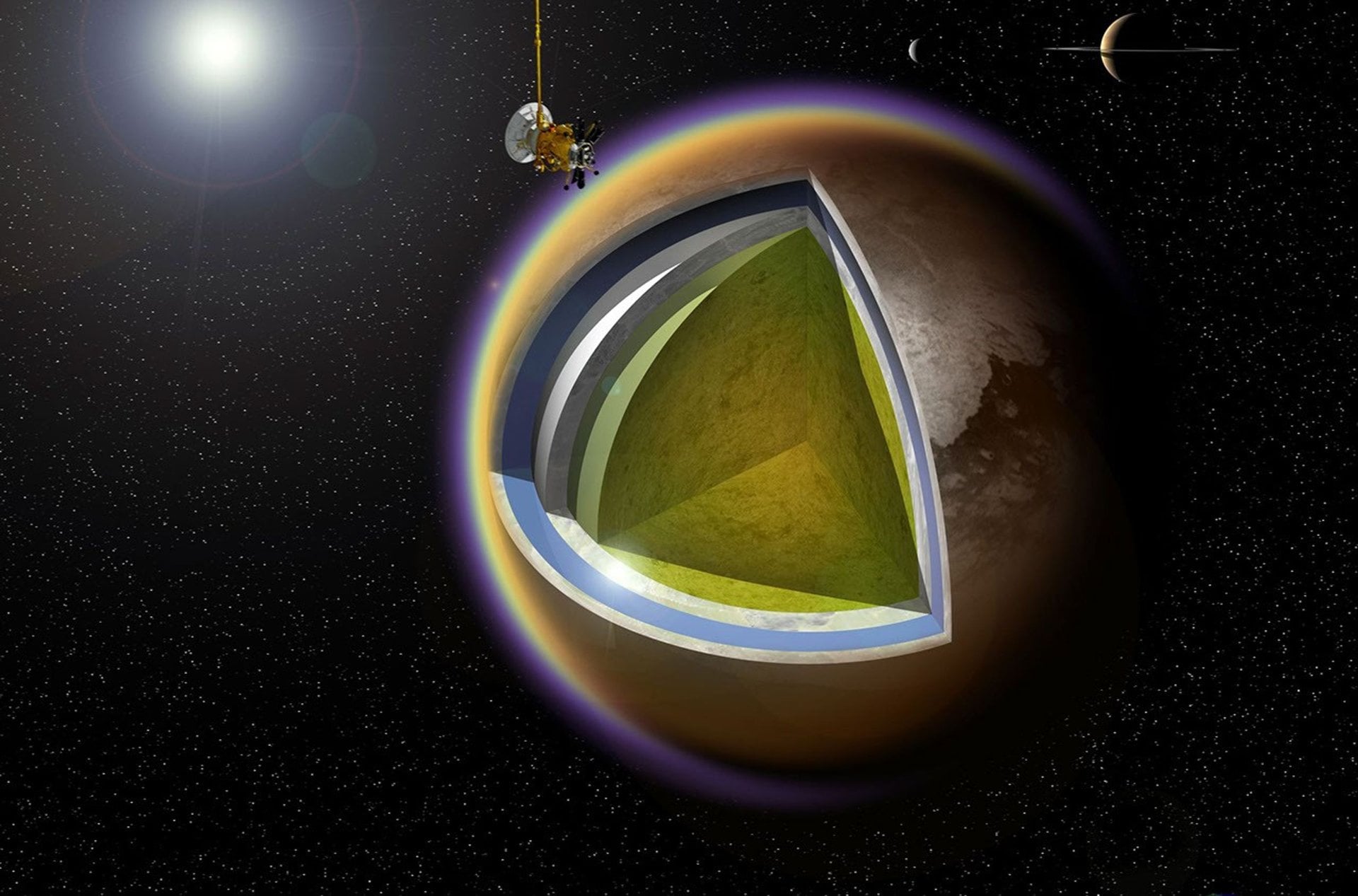
Saturn’s moon Titan has long attracted attention for its thick atmosphere, hydrocarbon chemistry, and astrobiological potential. A new NASA-supported study now pushes the conversation further, arguing that Titan may also be one of the most practical destinations in the outer Solar System for future human activity. According to the supplied source material, the researchers compiled an inventory of Titan’s resources and examined how those assets could support in-situ resource utilization, or ISRU, for long-duration missions and eventual settlement.
The idea is notable because most ISRU planning has focused on the Moon and Mars. Those destinations remain central to near-term human exploration strategies because they are closer and easier to reach. Titan, by contrast, sits in the outer Solar System and has received far less operational attention. But the new study suggests that once distance is set aside, Titan compares surprisingly well on the fundamentals that matter for sustained presence: atmosphere, accessible raw materials, and the potential to support a wide range of industrial processes.
Why Titan stands apart
Titan is unique among moons and, beyond Earth, among known bodies in the Solar System because of its dense, nitrogen-rich atmosphere. It also has an active methane cycle that resembles Earth’s hydrological cycle in structure, with evaporation, cloud formation, and precipitation. That alone makes Titan scientifically exceptional. For mission planners, however, the practical value lies in what such an environment might provide.
The study described in the source text treats Titan not simply as an object of curiosity, but as a place with exploitable resources. Its atmosphere, surface chemistry, and stores of hydrocarbons and other materials could help support habitats, fuels, manufacturing, and logistics. The authors conclude that Titan offers several potential advantages for human settlement when compared with other destinations often discussed in space development planning.
That does not mean Titan is easy. Distance, travel time, communications delay, and extreme cold remain daunting barriers. But the study reframes the tradeoff: a harder trip may lead to a destination with richer local support for long-term operations.
ISRU beyond the Moon and Mars
In-situ resource utilization has become a foundational idea in serious plans for human expansion beyond Earth. Carrying every kilogram of fuel, water, building material, and life-support consumable from Earth is too expensive for durable off-world activity. The Moon and Mars dominate ISRU discussions because they are the most immediate targets for crewed exploration, and because harvesting local resources there is seen as essential to sustainable operations.
The new Titan study widens that lens. According to the supplied reporting, the researchers argue that Titan’s resources could support long-term habitats and potentially turn the moon into a staging point for missions moving through the outer Solar System. In that framework, Titan is not just a destination. It becomes an infrastructure node.
That possibility matters because outer Solar System exploration currently suffers from a logistics problem. Missions to Saturn and beyond are expensive, infrequent, and mostly robotic. A well-supplied base on Titan could, in theory, help support exploration of nearby Saturnian moons, especially the so-called ocean worlds that are of high scientific interest.
Scientific appeal and settlement logic overlap
One reason Titan stands out is that its scientific value and settlement value overlap more than they do in many other places. The moon’s rich organic chemistry and prebiotic surface environment already make it a priority target for astrobiology. NASA’s Dragonfly mission, cited in the source text as scheduled to launch no earlier than July 2028, is designed to investigate that environment directly.
The new study suggests that the same characteristics that make Titan scientifically compelling could also make it materially useful. A dense atmosphere can help with aerobraking, entry systems, and possibly some forms of industrial processing. Chemical complexity can provide feedstocks. Local resources could reduce dependence on Earth for consumables or construction inputs. Those features do not erase Titan’s remoteness, but they do improve the case that human presence there could eventually be functional rather than purely symbolic.
In practical terms, that shifts Titan from the edge of speculative settlement discussions toward the center of a longer-range conversation about where humans might actually build resilient outposts beyond Mars.
From concept paper to strategic thought experiment
The study remains an early-stage research effort, with the source text noting that the paper is available as a preprint and is under review. No one is claiming that Titan missions are imminent. What the paper does provide is a more systematic framework for comparing Titan with other exploration targets on the basis of resource availability and potential utility.
That is valuable because strategic planning in space often gets trapped between near-term realism and long-term imagination. The Moon and Mars dominate because they are the obvious next steps. But a serious spacefaring civilization, if it emerges, will eventually need to think beyond the inner Solar System. Studies like this help identify which distant worlds might justify the enormous effort required.
The source reporting invokes an old idea from Robert Zubrin, who argued that Saturn’s moons could one day become a kind of resource frontier for the Solar System. Whether or not that vision proves accurate, Titan clearly deserves renewed attention as both a scientific prize and a practical candidate for future infrastructure.
The immediate significance of the study is not that Titan settlement is around the corner. It is that the moon now has a better-defined role in the architecture of possible futures. For the first time in a while, Titan looks less like a faraway curiosity and more like a place planners may need to take seriously.
This article is based on reporting by Universe Today. Read the original article.
Originally published on universetoday.com