SpaceX prepares another major rideshare flight
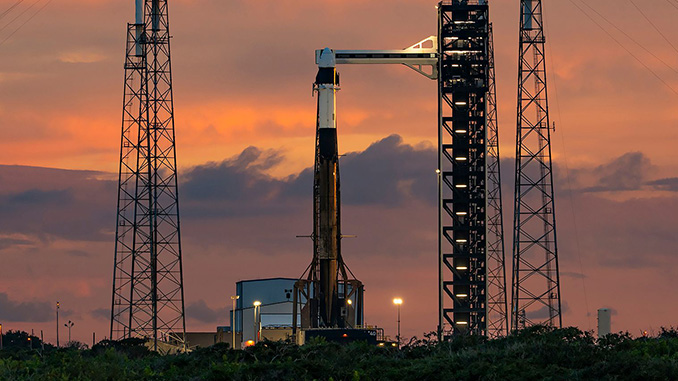
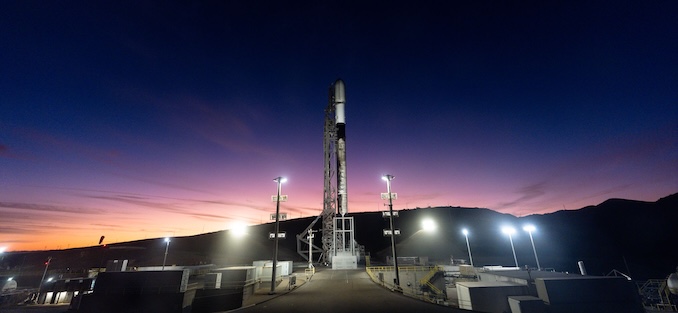
SpaceX is set to launch 119 payloads on its Transporter-16 mission from Vandenberg Space Force Base in California, adding another large installment to the company’s smallsat rideshare program. According to mission details provided ahead of liftoff, the payloads will head to a Sun-synchronous low Earth orbit aboard a Falcon 9 rocket, continuing a launch model that has become increasingly important for smaller satellite operators that cannot justify a dedicated mission on their own.
The launch window listed for the mission was 4:02 a.m. PDT on March 30, 2026. Spaceflight Now described Transporter-16 as the 21st mission in SpaceX’s rideshare program and one of its largest. The scale alone shows how shared-launch services have evolved from opportunistic add-ons into a structured market segment with dedicated manifests, repeat customers, and a broad mix of commercial and public-sector users.
A launch built around aggregation
Transporter missions are designed around a simple idea: many satellite customers share one rocket and split the cost of reaching orbit. In practice, that has turned SpaceX into an aggregator for a global customer base. For this flight, Exolaunch was handling 57 payloads and Seops Space 19 more, according to statements cited in the source material. Those payloads come from commercial, institutional, and government customers spanning multiple countries.
That international spread is one of the clearest signals of where the smallsat market now stands. Instead of a handful of large national programs dominating access to orbit, launch manifests increasingly bundle satellites from startups, universities, national space efforts, and specialized service providers. The mission description references payloads originating from the United States, the United Kingdom, Bulgaria, France, Finland, Greece, Italy, Spain, South Korea, Taiwan, Turkey, Canada, Malaysia, Nepal, Norway, Romania, Scotland, Switzerland, Vietnam, and others.
The rideshare format does impose compromises. Customers accept a common target orbit and work within the mission’s shared timeline. But for many operators, especially those deploying CubeSats and PocketQubes, that tradeoff is worth it if it lowers cost and shortens the path to space.
What is flying on Transporter-16
The mission includes a mix of satellite sizes and use cases. Seops Space’s portion of the manifest includes 14 CubeSats and five PocketQubes, with some of the latter linked to Alba Orbital and Earth observation work. Exolaunch, meanwhile, is providing access for more than 25 customers, illustrating how mission integrators now play a major role in packaging and coordinating demand before launch day even arrives.
Several payloads stand out because they point to where satellite ambitions are heading. One is Varda Space’s sixth reentry satellite bus, tied to the company’s work on on-orbit manufacturing. Another is Gravitas, the so-called “cake topper” satellite from K2 Space. The source text says Gravitas will weigh about two metric tons, stretch to a 40-meter wingspan with solar panels deployed, and generate about 20 kilowatts of electricity. That combination signals a push toward larger, more power-hungry spacecraft even within a launch built around many smaller passengers.
In other words, rideshare is no longer only about tiny experimental spacecraft. It is also becoming a place where companies test business models, deploy early production systems, and prove out larger hardware that may feed future constellations or specialty platforms.
The booster and the cadence story
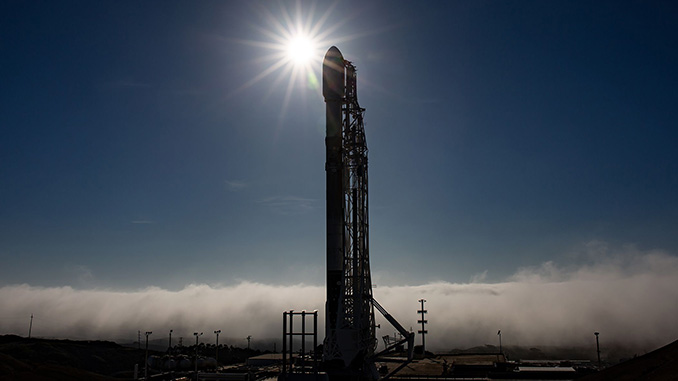
The Falcon 9 first stage assigned to this mission, tail number B1093, is making its 12th flight. Its previous work included missions for the Space Development Agency and multiple batches of Starlink satellites. That reuse record matters because it helps explain why launches like Transporter-16 can exist at all. A rideshare market depends not only on customer demand but on predictable, repeatable access to orbit at prices the payload operators can bear.
About 8.5 minutes after liftoff, the booster was expected to attempt a landing on the droneship Of Course I Still Love You in the Pacific. If successful, it would mark the 187th landing on that vessel and the 592nd booster landing for SpaceX overall, according to the prelaunch mission report. Those cumulative counts underline how reusability has shifted from a technical spectacle to routine infrastructure.
That routine is strategically important. Small satellite companies, national programs, and venture-backed space manufacturers plan around schedule certainty. The more frequently a launch provider can fly and recover hardware, the more it can support a market built on iterative deployment instead of one-off missions.
Why this mission matters beyond the manifest
Transporter-16 is significant not just because of how many satellites are aboard, but because of what the mission represents for the broader space economy. Launch access has become a platform service. Instead of every organization negotiating bespoke paths to orbit, a growing share of the market plugs into standardized opportunities with known interfaces and recurring mission profiles.
That approach lowers barriers for emerging space actors. It also intensifies competition after launch. If getting to orbit becomes easier, the differentiators shift toward satellite capability, data products, communications services, manufacturing, and constellation operations. In that sense, rideshare missions do not simply move hardware into space. They reshape which business models are viable once those spacecraft arrive.
Transporter-16 also shows the range of missions now coexisting on a single rocket: Earth observation, government payloads, academic satellites, experimental manufacturing platforms, and larger spacecraft aiming for more ambitious power and scale. The mission compresses the modern orbital economy into one stack.
If the launch proceeds as planned, it will reinforce an already clear trend. Shared-launch missions are no longer peripheral to the industry. They are one of the main ways the next generation of space activity gets off the ground.
This article is based on reporting by Spaceflight Now. Read the original article.
Originally published on spaceflightnow.com