Ground Software Becomes Part of the Spacecraft Story
Portal Space Systems has selected Quindar to provide mission management services for upcoming missions involving its maneuverable spacecraft, according to the supplied source text from SpaceNews. The agreement covers multiple missions, including operations support for Portal’s Starburst and Supernova vehicles.
At first glance, the deal looks like a standard space-industry vendor agreement. In practice, it points to a larger shift in how emerging spacecraft companies are being built. Increasingly, the differentiator is not only the vehicle itself, but the software stack and operational tooling that allow it to move, adapt, and scale across missions.
Why Maneuverability Is Drawing Defense Interest
Portal is developing spacecraft designed for in-space mobility, the ability to move satellites and payloads between orbits rather than remain fixed after deployment. The company’s Starburst spacecraft is described as a maneuverable satellite bus, while Supernova is being developed as an orbital transfer vehicle using solar thermal propulsion to move between orbital regimes.
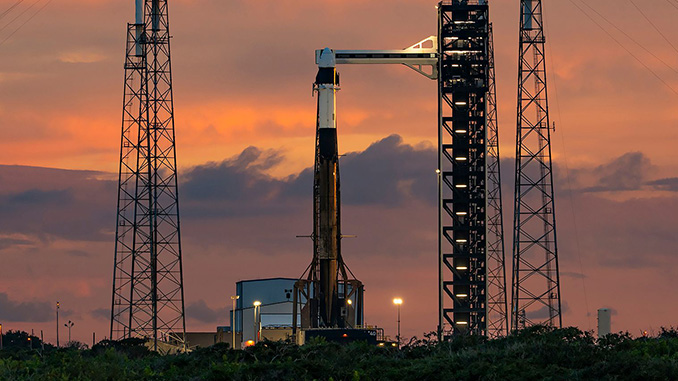
The timing is notable. Portal plans to launch its first Starburst spacecraft later this year on SpaceX’s Transporter-18 rideshare mission, with the first Supernova mission scheduled for 2027. That puts the company near an important transition point from development to operational demonstration.
The source text also makes clear why defense customers are watching this category closely. Interest in maneuverable spacecraft has grown as the Pentagon pushes for more agile space architectures capable of repositioning assets, conducting inspections, and supporting responsive missions in orbit. Portal has aligned its offering with national security uses such as rapid-response missions, space domain awareness, and tactical mobility across orbital regimes.
Mission Control Is Now a Competitive Layer
Quindar’s role is to provide cloud-hosted mission operations software that automates satellite command, planning, and ground operations. The company is explicitly seeking to replace traditional bespoke mission control systems with commercial platforms that can scale across multiple spacecraft and missions.
That proposition fits the needs of newer spacecraft operators. If a vehicle is designed to be highly mobile, its operational complexity rises. It needs more than telemetry dashboards and manual command pipelines. It needs planning tools, automation, and mission management software that can support dynamic operations without turning every mission into a custom engineering exercise.
Portal chief executive Jeff Thornburg said Quindar’s software allows the company to field capability faster by simplifying and automating mission control. That statement captures why these software vendors matter. For startups racing to validate hardware in a defense-sensitive market, time to operational readiness is often as important as the underlying vehicle design.
A Commercial Stack for National Security Missions
The agreement also reflects a broader pattern in defense-adjacent space. Startups are increasingly assembling national-security capabilities from commercial components rather than building every layer internally. Portal brings the spacecraft and mobility concept. Quindar supplies the mission-management layer. SpaceX provides launch. The result is a more modular ecosystem than the older contractor model most closely associated with military space programs.
That does not make the missions simple. Maneuverable spacecraft intended for rapid-response or inspection roles will likely face demanding operational requirements. But the stack is becoming more productized, and that may be one reason investors and defense customers are paying attention.
The source text notes that both Quindar and Portal are portfolio investments of Booz Allen Ventures. That shared backer does not define the deal, but it does suggest that strategic investors see the two companies as complementary pieces of a future space architecture.
What to Watch Next
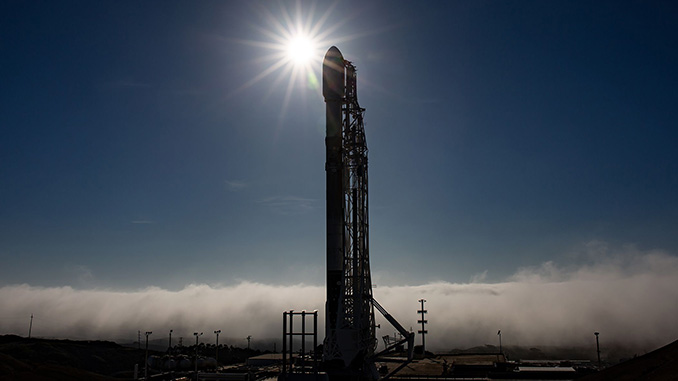
The near-term milestone is Starburst’s planned launch later this year. Demonstrating that a maneuverable spacecraft can operate effectively is one challenge. Proving that its ground systems can support those operations at speed and with reasonable automation is another. If the combined approach works, it may strengthen the case for commercial mission-control platforms as a standard part of next-generation satellite operations.
Longer term, Supernova will be the more ambitious test. An orbital transfer vehicle using solar thermal propulsion suggests a higher-value mobility proposition, especially if customers want payloads repositioned across different orbital regimes. But those missions will depend heavily on reliable planning and command software, which is why the ground segment is not a side note in this story.
Portal’s agreement with Quindar is therefore more than a procurement detail. It is a sign that operational software is moving closer to the center of spacecraft design, especially in markets where maneuverability and responsiveness matter. As space systems become more dynamic, the companies that control mission operations may become just as strategically important as the companies building the vehicles themselves.
This article is based on reporting by SpaceNews. Read the original article.
Originally published on spacenews.com