NASA hands Blue Origin a central role in its Mars communications strategy
NASA has selected Blue Origin to develop what it describes as the Mars Telecommunications Network, a purpose-built communications and navigation system designed to support a growing number of missions at the Red Planet. The award gives Blue Origin responsibility for delivering a high-performance telecommunications orbiter to Mars under a firm-fixed-price contract with a maximum potential value of about $700 million.
According to NASA, the spacecraft must be delivered to the agency no later than Dec. 31, 2028. Blue Origin will design, develop, integrate, launch, and operate the orbiter as part of NASA’s wider space communications and navigation infrastructure. The network is expected to be operational at Mars by 2030.
The selection is significant because it pushes NASA’s commercial-partnership model farther into deep space. The agency has already relied increasingly on private companies for launch, cargo, crew transportation, and parts of its lunar architecture. With this award, it is extending that logic to interplanetary communications, treating connectivity and navigation not simply as mission-specific hardware, but as infrastructure that can serve many spacecraft over time.
Why Mars needs a dedicated network
NASA’s case for a new Mars communications system rests on scale. Robotic exploration of Mars has historically depended on a patchwork of assets, with orbiters often carrying both science payloads and relay responsibilities. That model works when mission traffic is relatively limited. It becomes less efficient as more landers, rovers, orbiters, and eventually human missions need steady, high-capacity links for commands, telemetry, navigation, imagery, and science data.
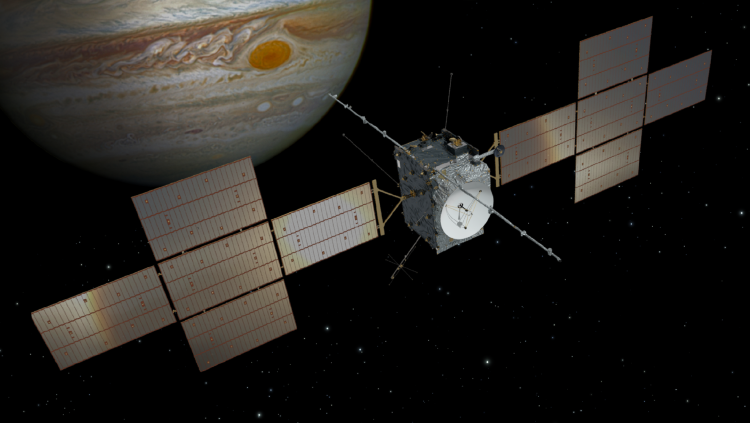
The agency said the Blue Origin-built spacecraft will orbit Mars and transmit science data, imagery, navigation information, and critical mission communications for spacecraft operating on and around the planet. In practical terms, that means the orbiter is meant to function as a backbone node, reducing the burden on individual missions to solve connectivity on their own.
NASA also tied the effort directly to its long-term exploration roadmap. Under Artemis, the agency is using lunar missions to prepare for eventual crewed expeditions to Mars. Even before astronauts travel there, robotic missions are expected to expand in number and complexity. As that happens, data demand rises sharply. A single network asset with higher capacity and more operational flexibility could simplify mission planning while enabling richer science returns.

A commercial build for a public exploration agenda
NASA’s award language makes clear that this is more than a conventional spacecraft procurement. Blue Origin is being asked not just to build hardware, but to deliver and operate a service-oriented element of NASA’s future Mars architecture. That places the company in a role closer to infrastructure provider than simple contractor.
The agency said the initiative follows a request for proposals issued in May and fits a broader strategy of using commercial capabilities so NASA can concentrate more of its effort on exploration and scientific discovery. That framing matters. It suggests NASA sees communications around Mars as a domain where commercial execution can shoulder technical and operational complexity, while the government sets requirements and integrates the network into a larger exploration system.
For Blue Origin, the award is strategically important. Mars infrastructure is a much different category from launch competition in Earth orbit or cislunar transport. Winning this contract places the company inside a critical future mission layer: the digital and navigational plumbing that later missions may depend on. If the program remains on schedule, Blue Origin would be helping define how NASA and its partners move information across interplanetary space in the next decade.
Schedule pressure and technical stakes
The timeline is ambitious. NASA wants delivery by the end of 2028 and operations at Mars by 2030. That leaves limited margin for a spacecraft that must combine high performance with deep-space reliability and sustained operations in Martian orbit. Communications systems are mission-critical by definition, but in this case the stakes are amplified because the orbiter is intended to support multiple future users rather than a single science campaign.
The architecture NASA described points to several core requirements:
- High-bandwidth communications for larger data volumes
- Reliable relay support for missions on the surface and in orbit
- Navigation services that improve spacecraft operations around Mars
- Operational flexibility for an expanding mix of missions
Each of those functions becomes more consequential as Mars exploration moves from episodic missions to a more persistent presence. Delays or performance shortfalls would not only affect one program, but could ripple across other planned users of the network.
At the same time, the contract structure may reflect NASA’s desire for cost discipline. A firm-fixed-price deal places greater execution risk on the contractor and aligns with the agency’s broader preference for commercially managed development where feasible. The tradeoff is that success depends heavily on the contractor’s ability to hold schedule, control integration risk, and operate a dependable system far from Earth.

What this means for the next phase of Mars exploration
The larger importance of the award is architectural. Mars missions are often discussed in terms of launch vehicles, habitats, entry systems, or surface hardware. Communications networks receive less public attention, even though they are fundamental to everything else. A mission cannot return science, receive updated instructions, or coordinate navigation without robust links.
NASA’s decision indicates that it is beginning to treat Mars support systems as long-lived infrastructure that should be built ahead of demand, not improvised as each mission arrives. That is a notable shift in planning maturity. It signals an expectation that Mars activity will intensify enough to justify dedicated orbital communications capacity.
If Blue Origin delivers on time, the result could become one of the enabling systems behind the next generation of Mars exploration. The orbiter would not be the most visible spacecraft in NASA’s portfolio, but it could become one of the most important. Reliable, higher-capacity communications are the connective tissue for a future in which Mars hosts more orbiters, more surface assets, and eventually missions preparing for human arrival.
NASA’s award therefore stands as both a contract announcement and a marker of intent. The agency is no longer planning only for isolated Mars missions. It is beginning to build the infrastructure needed for sustained operations there.
This article is based on reporting by NASA. Read the original article.
Originally published on nasa.gov