两颗邻近系外行星交出了迄今最清晰的气候画像
天文学家首次为两颗绕另一颗恒星运行、大小与地球相近的系外行星绘制了温度图。他们利用詹姆斯·韦布空间望远镜对 TRAPPIST-1b 和 TRAPPIST-1c 进行了完整轨道周期的研究。结果相当鲜明:这两个世界看起来都像是没有大气层的岩石行星,气候极端不均衡,朝向恒星的一面被加热到极高温度,而永久黑夜的一面则降至远低于冰点。
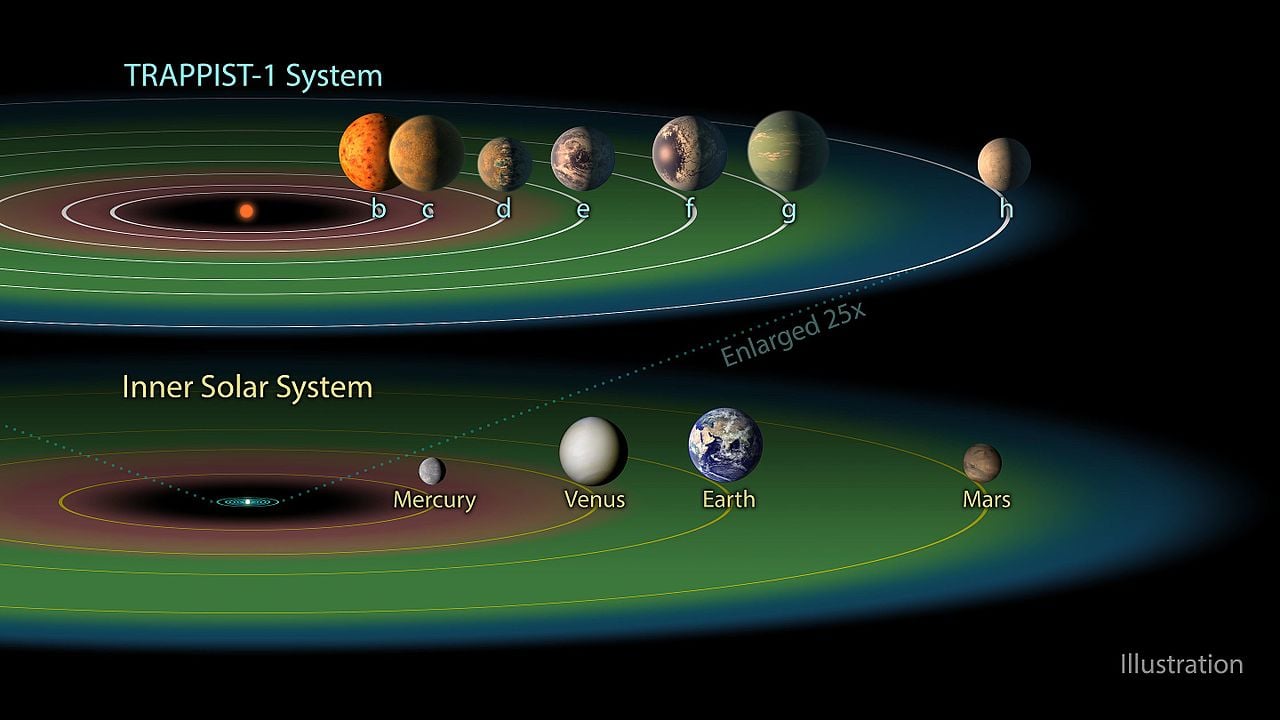
这些观测聚焦于 TRAPPIST-1 系统中最内侧的两颗行星。TRAPPIST-1 是一个由七颗行星组成的紧凑系统,围绕一颗距离地球约 40 光年的红矮星运行。自从被发现以来,这一系统一直是系外行星研究的重要目标,部分原因在于其中几颗行星位于恒星的宜居带内或附近,部分原因则在于红矮星是银河系中最常见的恒星。了解这些行星能够保留何种大气层,因此对更广泛的太阳系外潜在宜居环境搜索至关重要。
在这项新研究中,来自日内瓦大学和伯尔尼大学的一个国际团队利用韦布望远镜以红外波段连续观测 TRAPPIST-1b 和 1c,总时长 60 小时。研究人员通过测量行星在绕恒星运行时发出的热辐射,重建了其昼侧和夜侧释放了多少热量。这样,他们得以绘制详细的温度图,而不是仅凭更有限的观测快照推断气候状况。
潮汐锁定的世界,没有大气热量输送的迹象
这两颗行星的决定性特征是潮汐锁定。就像月球与地球的关系一样,它们的自转与公转同步,也就是说,永远只有同一面朝向恒星。在这样的世界里,不存在普通意义上的昼夜交替。一个半球永久处于白昼,另一个半球则永远陷于黑暗。如果存在较为可观的大气层,它可以在两侧之间输送热量,从而缓和温差;如果没有大气层,热量分裂就会极为剧烈。
这基本上就是韦布所看到的情况。TRAPPIST-1b 的昼侧温度超过 200 摄氏度,而夜侧则低于零下 200 摄氏度。TRAPPIST-1c 也呈现出类似模式。这种巨大的反差是关键科学结果,因为它意味着热量并没有在两颗行星表面被有效重新分配。换句话说,这些观测没有显示出足以在两半球之间平衡环境的大气层存在证据。
这一发现缩小了对这两颗行星的可能解释范围。最简单的判断是,它们都是裸露的岩石世界。它们距离母恒星很近,受到强烈辐照,无法维持那种能够调节气候、或使表面环境与地球有任何接近之处的大气层。这并不意味着这个系统不再有趣,恰恰相反,它变得更容易理解。系外行星科学往往通过排除看似合理的世界来推进研究,而不只是识别有前景的目标。
为什么 TRAPPIST-1 仍然对寻找生命意义重大
TRAPPIST-1 仍是研究红矮星周围行星多样性最引人关注的近邻实验室之一。它的七颗行星在尺度上都大致接近地球,而其紧凑的系统结构使得重复观测相对高效。最内侧的世界原本就被认为是最严酷的环境,但该系统中更温和的行星仍然备受关注,因为它们围绕在一个在合适大气条件下理论上可能存在液态水的区域运行。
这也是为什么新的温度图不仅对 TRAPPIST-1b 和 1c 本身重要。红矮星主导着银河系的恒星人口。如果环绕它们的行星在轨道过近时普遍失去大气层,这将有助于界定科学家下一步应重点寻找哪里,以及应优先关注哪些信号。该结果也展示了韦布望远镜的能力:它不仅能探测行星,还能直接刻画其气候,即便这些行星体型很小、以岩石为主。
为地球大小的系外行星绘制温度图长期以来一直是一个雄心勃勃的目标,因为信号非常微弱,测量又要求极高的稳定性。韦布的红外灵敏度如今正在让这类分析成为可能。在这次案例中,望远镜能够追踪两颗行星穿过完整轨道周期,并提取出足以判断其大气状态的热差异。即使被研究的行星本身相当恶劣,这对该领域来说依然是一个重要的方法学进步。
建立在严酷答案上的里程碑
系外行星报道往往倾向于把每一次新测量都视为对宜居性的裁决。实际上,这些观测更重要、也更细微的启示在于:宜居性并不是唯一的科学收获。了解 TRAPPIST-1b 和 1c 很可能是无大气层、潮汐锁定的岩石世界,可以让研究人员获得关于大气存续、行星演化,以及小恒星周围世界环境极限的具体认识。
它也进一步明确了未来观测的方向。如果内侧行星实际上已经被剥离到只剩岩石,那么下一个问题就是,同一系统中更远处的条件会如何变化。较冷的 TRAPPIST-1 行星是否更能成功保留大气层?韦布或未来的观测设备能否在这些世界上探测到气体?这种模式在其他红矮星系统中有多常见?
就目前而言,TRAPPIST-1b 和 1c 是迄今最清晰的例子之一,展示了当永昼与无尽黑夜之间没有大气缓冲时,一颗潮汐锁定的类地行星会是什么样子。科学之所以令人印象深刻,恰恰因为答案如此严酷。韦布并未在这些世界上揭示出隐藏的温和环境,而是揭示了它们暴露在外的表面、极端的热差异,以及人类试图读取遥远恒星周围行星气候时所达到的全新精度。
本文基于 Universe Today 的报道。阅读原文。

Originally published on universetoday.com