The Crawler Moves Again
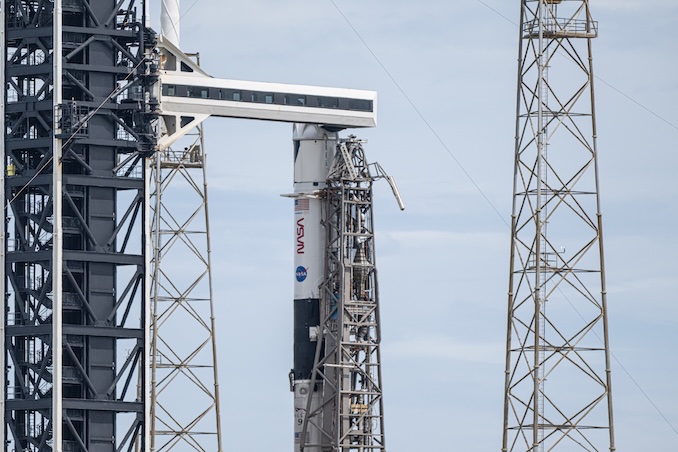
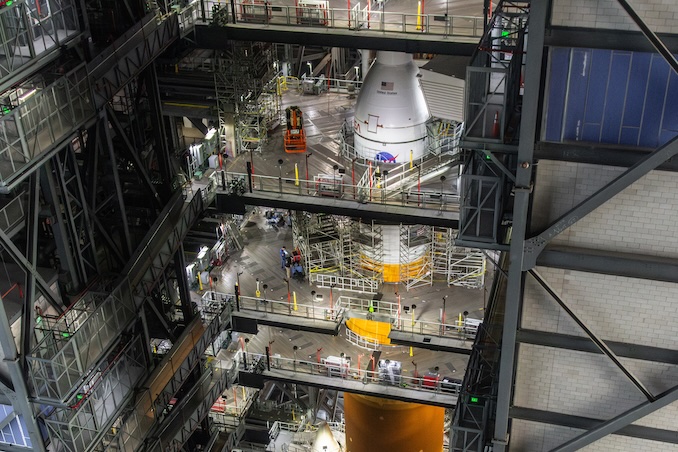
NASA's 322-foot Space Launch System rocket and Orion spacecraft are rolling back to Launch Complex 39B at Kennedy Space Center after several weeks of repairs inside the Vehicle Assembly Building. The crawler-transporter began its slow four-mile journey to the pad late Thursday evening — a trek expected to take roughly 12 hours — setting up a launch attempt no earlier than April 1 for the Artemis 2 mission.
Artemis 2 will be the first crewed Artemis mission, sending four astronauts on a trajectory around the Moon before returning to Earth. The crew — NASA astronauts Reid Wiseman, Victor Glover, and Christina Koch, along with Canadian Space Agency astronaut Jeremy Hansen — has been training for years for what will be the first human voyage beyond Earth orbit since Apollo 17 in 1972.
What Caused the Delay
The return to the launch pad follows a frustrating detour. During a successful fueling test at pad 39B in February, engineers discovered an anomaly in the helium flow system on the rocket's upper stage — the Interim Cryogenic Propulsion Stage that provides the final push to send Orion toward the Moon. The discovery forced NASA to cancel a planned March launch attempt and return the stack to the Vehicle Assembly Building.
While the helium issue was resolved, technicians conducted additional work including replacing the batteries connected to the flight termination system on the solid rocket boosters, core stage, and upper stage. Flight termination systems are the safety mechanisms that can destroy a malfunctioning rocket during ascent, protecting populated areas below the flight path.
What Artemis 2 Will Accomplish
The mission profile calls for the crew to fly a free-return trajectory around the Moon and return to Earth after approximately 10 days in space. Unlike the Apollo lunar missions, Artemis 2 will not attempt a landing — instead, it serves as a deep-space demonstration of Orion's life support systems, crew interfaces, and the SLS rocket's performance with humans aboard.
A crewed shakedown of this kind is essential before Artemis 3, which NASA Administrator Jared Isaacman recently redesigned to serve as an Earth-orbital demonstration of docking between Orion and a lunar lander. The first actual Moon landing has been moved to Artemis 4, currently targeted for 2028.
International Stakes
The rollout coincided with remarks from European Space Agency Director General Josef Aschbacher about an upcoming meeting in Washington where NASA will present its revised Artemis architecture to international partners. Europe has contributed the European Service Module to every Orion spacecraft, and ESA member states want clarity on how the program's changes affect their commitments to Gateway, the planned lunar orbital station.
For now, attention returns to the launch pad. If all systems check out during final preparations, April 1 would mark the beginning of a new era of human deep-space exploration — and the latest chapter in humanity's long journey back to the Moon.
This article is based on reporting by Spaceflight Now. Read the original article.