Artemis 2 completes its most dramatic milestone yet

NASA’s Artemis 2 mission reached a landmark moment on April 6, 2026, when its four-person crew looped around the far side of the moon and began the trip back toward Earth. According to the supplied report, the flyby lasted nearly seven hours and delivered a set of achievements that place the mission among the most significant crewed deep-space flights in history.

The mission’s biggest milestone was distance. During the lunar pass, the Artemis 2 astronauts traveled farther from Earth than any humans had before, setting a new record for crewed spaceflight range. That record is more than a symbolic achievement. It marks the first time in the Artemis era that a crew has pushed beyond all prior human spaceflight distance benchmarks while operating in the lunar environment.

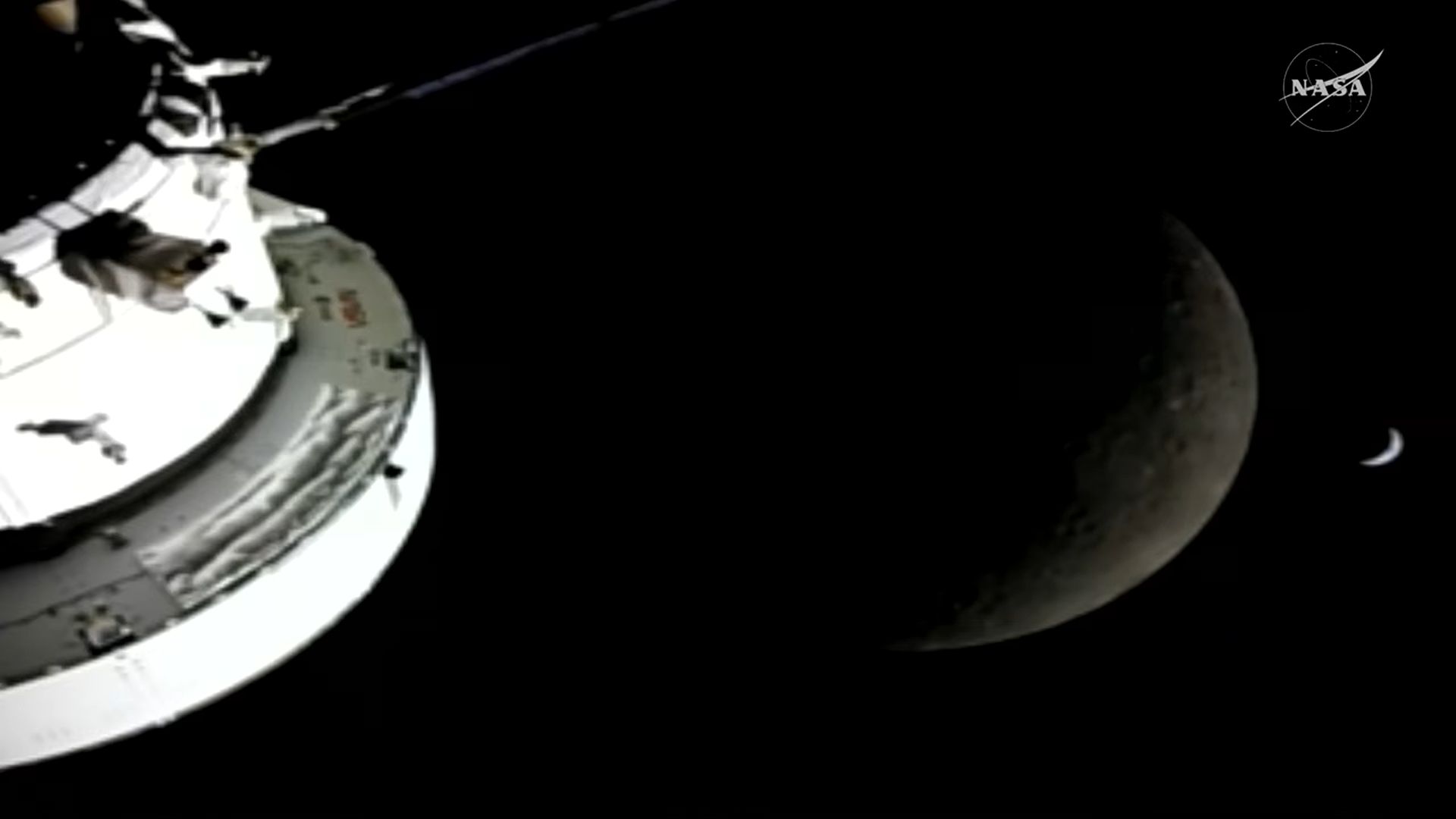
The report also says the astronauts observed parts of the moon that human eyes had never seen before during their flyby. That matters because Artemis 2 is not simply repeating Apollo-style operations for nostalgia. It is demonstrating modern crewed lunar navigation, spacecraft performance, and mission operations in conditions that will underpin later moon missions.

A flyby built for operations, not only spectacle

Artemis 2’s lunar encounter was action-packed for scientific, operational, and public reasons. The crew traveled around the moon’s far side and captured views of the lunar surface during a phase of the mission unavailable from Earth. The article notes that the crew also observed a total solar eclipse from beyond the moon, giving the mission a rare visual event alongside its engineering milestones.

Those moments are compelling on their own, but the larger significance is operational. A crewed lunar flyby is a test of navigation, spacecraft systems, communications handling, crew procedures, and endurance at distances well beyond low Earth orbit. Every hour spent safely executing such a profile reduces uncertainty for future Artemis missions.

That is especially important because Artemis is intended to reestablish sustained human operations around and on the moon, not just send a crew on a one-off demonstration. A successful lunar loop shows that the architecture can carry astronauts out, around the moon, and back while managing the realities of deep-space travel.

Why the record matters

Records can sometimes distract from the more practical substance of a mission, but this one is directly tied to capability. Human spaceflight beyond low Earth orbit remains hard, expensive, and unforgiving. Extending the range of a crewed mission means proving that spacecraft systems, onboard procedures, and mission control coordination can function at greater distances and under more demanding conditions.

In that sense, Artemis 2’s distance record is a measure of operational reach. It shows that NASA’s current lunar campaign is moving from theory and hardware development into actual crewed performance. The farther the crew travels and returns safely, the stronger the case that later missions can add more ambitious objectives.

The reported observations of the moon’s far side add another dimension. Even in an era saturated with planetary imagery, a human mission still offers a different combination of direct observation, contextual awareness, and public impact. Artemis 2’s flyby reinforces the value of sending people, not just instruments, into deep space when the goal is to build enduring exploration capability.

Artemis after the flyby

The supplied report frames the flyby as a completed milestone rather than the end of the mission. With the lunar loop in the books, the crew’s return toward Earth becomes the next crucial phase. A successful trip home is what converts a historic outbound passage into a full mission success.

That broader framing matters because Artemis 2 is part of a sequence. The mission is designed to validate systems and procedures that future Artemis flights will depend on. Each successful phase increases confidence in the next: launch, outbound transit, lunar encounter, return trajectory, and eventual recovery.

NASA’s lunar strategy depends on that cumulative logic. Artemis 2 does not need to accomplish every future goal at once. It needs to show that crewed deep-space operations can be performed reliably enough to support more complex missions later. By looping around the moon, setting a distance record, and keeping the mission on track for return, the crew has already advanced that objective substantially.

A visible turning point in the lunar program

The Artemis program has always been judged partly on whether it could convert years of planning, delays, and hardware preparation into undeniable crewed milestones. A record-setting lunar flyby is that kind of moment. It is concrete, easy to understand, and operationally meaningful.

The mission’s imagery and eclipse viewing will draw public attention, but the lasting significance lies in execution. Artemis 2 has now shown that NASA can send astronauts around the moon in the modern era and do so on a trajectory that breaks prior human distance records. That does not settle every question facing the program, but it does mark tangible progress.

If the mission’s return proceeds as planned, Artemis 2 will stand as a defining proof point for the program’s next phase. The supplied report makes clear that this was more than a sightseeing pass. It was a high-stakes demonstration of human deep-space capability, and by that measure, the lunar loop already counts as a major success.

This article is based on reporting by Space.com. Read the original article.

Originally published on space.com