A rare alignment seen from a rarer place

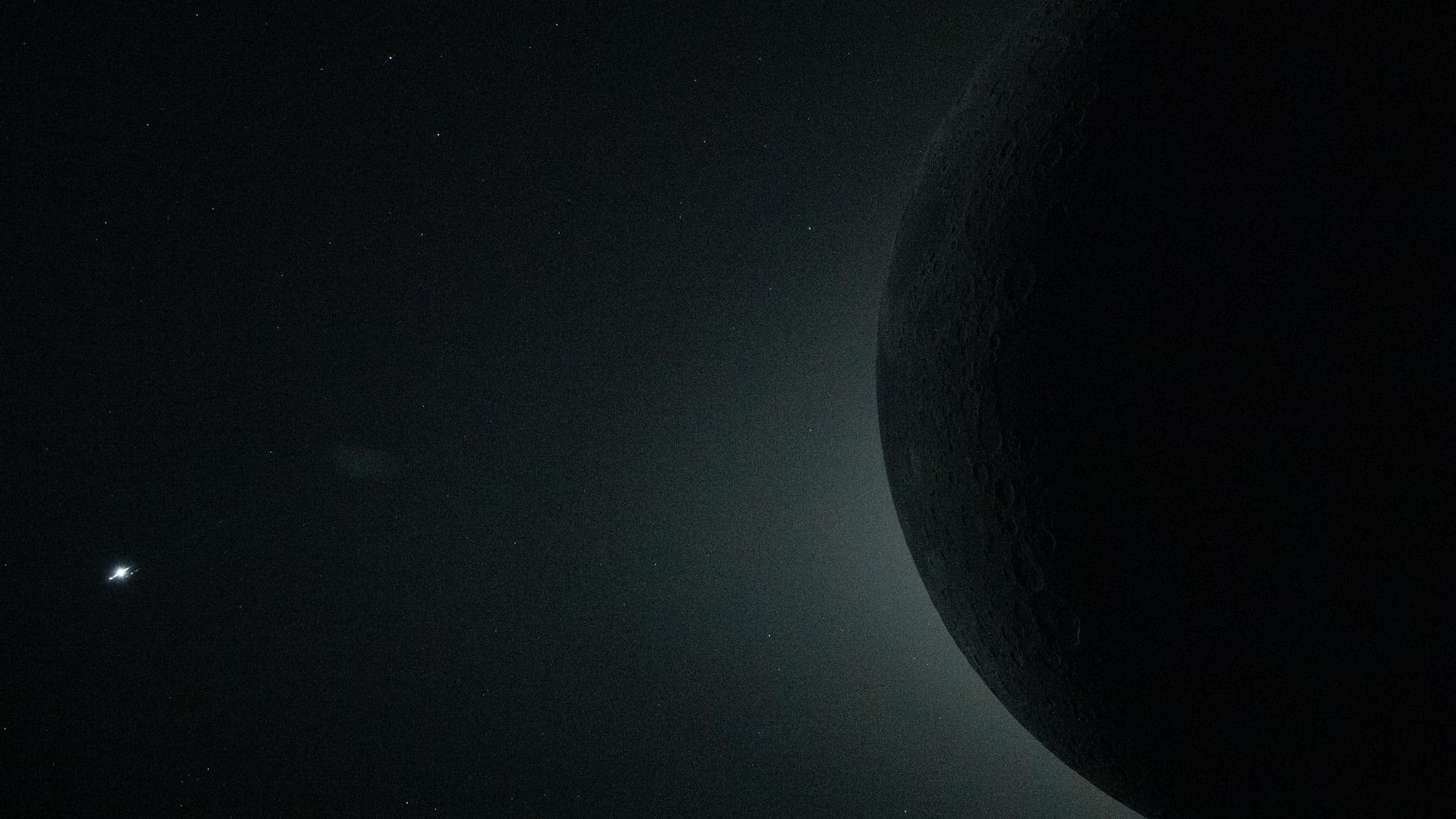
NASA has released a timelapse showing the Artemis 2 crew watching the moon fully obscure the sun during the mission’s far-side lunar flyby on April 6. Total solar eclipses are remarkable enough from Earth. Seen from deep space, beyond the moon and from a crewed spacecraft circling the lunar far side, the event becomes something more unusual still: a scientific observation, a visual landmark, and a reminder of what human exploration enables when it goes farther than low Earth orbit.

The video compresses nearly an hour of totality into a short sequence. In that time, the sun vanishes behind the lunar disk and a glowing halo becomes visible around it. NASA said science team members are investigating whether the visible effect is caused by the solar corona, zodiacal light, or some combination of the two. That uncertainty is part of what makes the footage valuable. It is not only beautiful imagery; it is also data from a geometry of observation that humans rarely occupy.

Why the view is so unusual

Eclipses depend on alignment, but the Artemis 2 case depended on more than that. The spacecraft had to be in the right place relative to the moon and sun during a crewed lunar mission. Human spaceflight history has included only a tiny number of opportunities for that kind of vantage point.

From Earth, eclipses are fleeting and location-dependent. From Artemis 2’s position, the event stretched into an extended period of totality, producing a different observational experience. The moon did not just cross part of the sun for a few dramatic moments. It fully blocked it while the spacecraft continued along its trajectory beyond the lunar far side.

That matters because perspective shapes both science and public understanding. Images from deep space change the scale of events people think they know. A solar eclipse is familiar on Earth. From near the moon, it becomes a three-body alignment in motion, framed by mission hardware and human presence.

Science, symbolism, and mission identity

NASA’s own description of the glowing halo points to the scientific interest. The corona, the sun’s outer atmosphere, is typically difficult to observe because the sun’s brightness overwhelms it. Eclipses create rare opportunities to study features otherwise washed out by direct glare. If zodiacal light also contributed, that opens another layer of interpretation about dust-scattered sunlight in the inner solar system.

But the significance is not just technical. Artemis 2 is the first crewed lunar mission in more than half a century, and moments like this help define what the mission means publicly. Exploration programs depend on imagery as well as engineering. A launch proves capability. A deep-space eclipse gives that capability cultural force.

The event also reinforces why sending humans can matter even when robotic systems are highly capable. Human missions generate shared moments that are hard to replicate through instruments alone. The same alignment could have been meaningful for science without astronauts aboard, but the human presence changes how the world receives it.

A mission that keeps producing firsts

The Artemis 2 flight has already been notable for distance and symbolism, and this eclipse adds another dimension. It illustrates the mission’s dual role as both operational test and public reintroduction of human deep-space travel. Every striking image from Orion helps build the case that returning crews to the moon is not merely a repeat of Apollo, but a different era with different tools, goals, and audiences.

There is also a practical communications lesson here. NASA did not just describe the event; it released a timelapse, allowing the public to watch the alignment unfold. In the modern space era, mission support is partly built through the circulation of evidence. Seeing the eclipse helps people feel the distance, the timing, and the fragility of the spacecraft’s path.

What the supplied source establishes

  • NASA released a timelapse showing the moon fully obscuring the sun during Artemis 2’s far-side lunar flyby on April 6.
  • The sequence compresses nearly an hour of totality.
  • NASA said scientists are examining whether the visible halo is due to the corona, zodiacal light, or both.
  • The eclipse was observed from deep space during a crewed lunar mission, making it an unusually rare human spaceflight sight.

The image sequence will endure because it joins scientific curiosity with narrative power. Artemis 2 did not just carry astronauts around the moon. For a short stretch of deep-space time, it placed them in one of the rarest viewing galleries human beings have ever occupied.

This article is based on reporting by Space.com. Read the original article.