Venus’s strangest surface rings are becoming a window into the planet’s interior
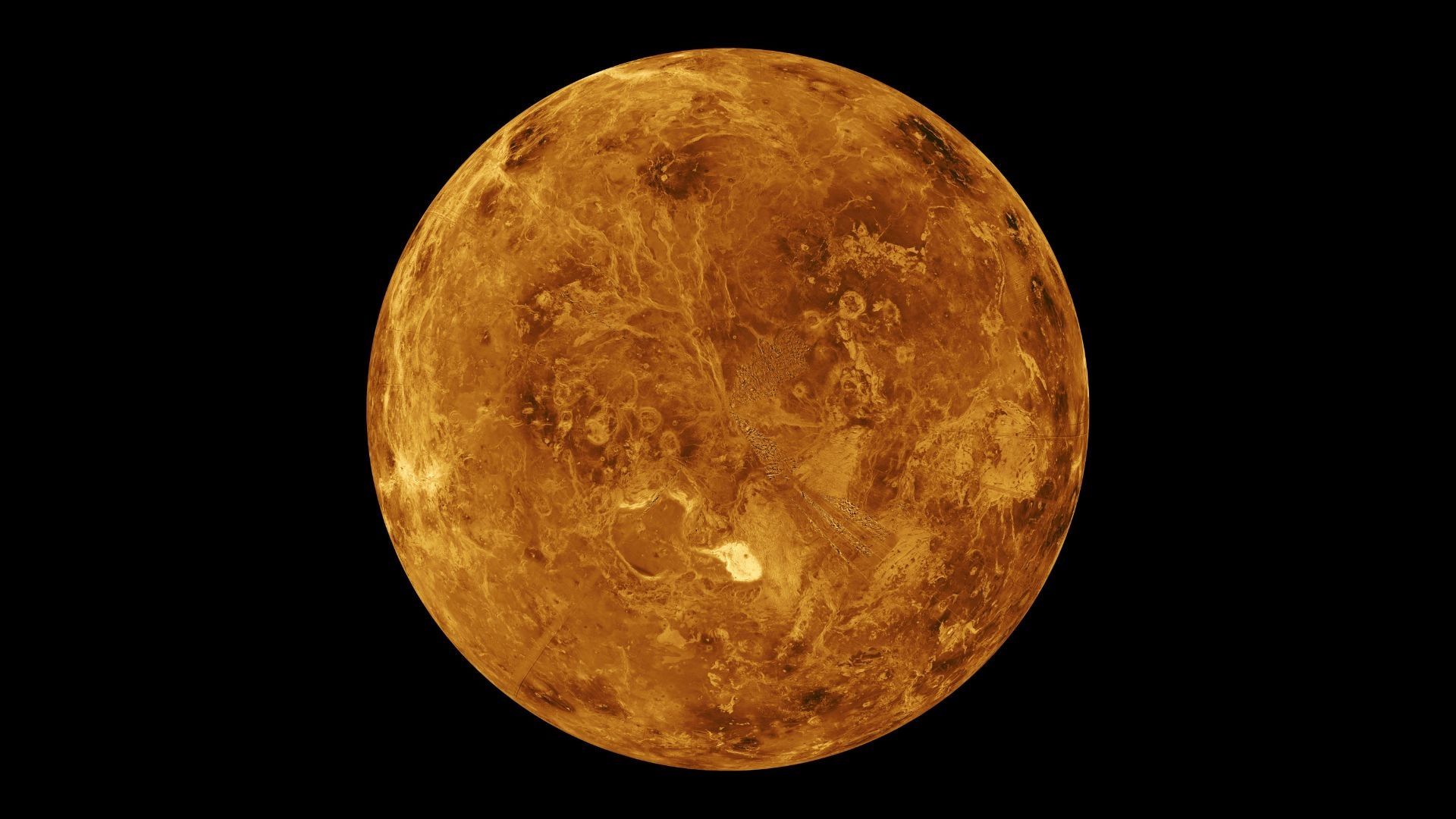
Scientists studying Venus have taken a fresh look at one of the planet’s most puzzling features: vast circular formations known as coronae. Using radar, topographic and gravity information gathered by NASA’s Magellan spacecraft, a research team led by Anna Gulcher of the University of Freiburg has built new 3D models of the largest examples, revealing a far more varied and dynamic picture of Venusian geology than a single explanation can capture.
The work was presented at the European Geosciences Union’s 2026 General Assembly in Vienna. It draws on Magellan data collected before the spacecraft’s radar mission ended in 1994, showing how archival planetary datasets can still produce new science when they are reanalyzed with modern methods.
What coronae are and why they matter
Coronae are enormous circular systems of fractures and deformed terrain spread across the surface of Venus. Researchers think they are linked to hot material rising from inside the planet. In that sense, they may represent one of the clearest surface expressions of the processes operating deep below Venus’s crust.
According to the researchers, the updated database now includes 741 coronae across the planet. That scale alone makes them important. But the real significance lies in how different they appear from one another. The team reports extraordinary diversity in their size, morphology, topography, gravity signatures and tectonic setting.
That variation argues against a one-size-fits-all origin story. Instead of being produced by a single mechanism, the coronae appear to reflect a spectrum of dynamic processes. That is a critical distinction for scientists trying to reconstruct how Venus loses heat, deforms its crust and circulates material through its mantle.
Evidence for active mantle upwellings
By combining gravity and topographic data with geodynamic simulations, the researchers identified possible warm mantle upwellings beneath 52 coronae. Gulcher described these structures as the likely surface expression of plumes of hot material moving upward from the planet’s interior.
If that interpretation holds up, the result strengthens the case that plume-related tectonic activity on Venus is not isolated to one setting or one stage of evolution. Instead, different kinds of plume-driven processes may be operating in different regions, producing the broad range of corona shapes and structural signatures now seen in the data.
The researchers say this may be some of the strongest evidence yet that multiple plume-related tectonic processes occur on Venus. That matters because the planet remains one of the most difficult worlds in the solar system to interpret. Venus is often called Earth’s twin because of its similar size, but its geology, climate history and present-day surface conditions are profoundly different.
Why gravity data may be underselling Venusian activity
One of the study’s more consequential conclusions is methodological. The team reports that current gravity data can miss active tectonic signals. In practical terms, that means Venus may be more geologically active than existing measurements alone suggest.
That point is important because debates over present-day activity on Venus have been shaped by limited visibility into the planet’s crust and mantle. If some active signatures are too subtle or too incomplete to register clearly in current gravity datasets, then apparent quiet may partly reflect the limitations of detection rather than the true state of the planet.
Seen that way, the new corona work is not just a cataloging exercise. It is a warning that Venus could still be changing in ways researchers have not yet fully captured.

What this could mean beyond Venus
The team also argues that understanding coronae is important for more than Venus alone. Similar processes may have operated on the early Earth, when our own planet’s internal heat flow and tectonic behavior were different from what they are today.
Because Earth’s earliest surface record has been heavily recycled, Venus may preserve clues to geodynamic regimes that are difficult to study directly at home. Coronae could therefore help researchers think about how hot interior material interacts with a rigid outer shell in worlds that do not behave like modern plate-tectonic Earth.
That does not make Venus a simple analog. But it does make the planet a useful comparison case, especially for questions about mantle plumes, crustal deformation and the range of ways rocky planets can evolve.
An old mission still driving new planetary science
Magellan ended more than three decades ago, but this study is a reminder of how much scientific value remains in legacy mission archives. By revisiting radar, gravity and topographic records with improved modeling tools, researchers can extract new patterns from familiar terrain.
For Venus, that is especially valuable. High surface temperatures and crushing atmospheric pressure have made long-lived surface exploration extraordinarily difficult, leaving orbital datasets as a primary foundation for interpretation. Every improved reconstruction of the terrain helps narrow the gap between surface features and the hidden processes below them.
The new 3D modeling of coronae does not solve Venus’s geologic mystery in one stroke. What it does offer is a more nuanced map of that mystery: a planet whose signature circular features are not copies of one another, but records of varied and possibly still-active internal processes.
For a world long described as inscrutable, that is real progress. The biggest lesson from the new corona database may be that Venus is not merely resurfaced and static, but complex, heterogeneous and potentially more active than current detection methods can easily prove.
This article is based on reporting by Live Science. Read the original article.

Originally published on livescience.com