Coral records point to a sharper El Niño era
New research based on coral records from the Galápagos Islands suggests that El Niño events have become markedly stronger in the modern warming era than they were before industrialization. The study, reported Aug. 27, 2026, concludes that El Niño has intensified by nearly 40% over the past four decades compared with its preindustrial baseline, adding weight to concerns that climate change is amplifying one of Earth’s most disruptive natural climate patterns.
That matters because El Niño is not a local curiosity confined to the Pacific. It is one half of the El Niño-Southern Oscillation cycle, a recurring shift between warmer El Niño conditions and cooler La Niña conditions in the Pacific Ocean. When El Niño strengthens, it can reshape rainfall, temperatures and storm patterns across large parts of the world. The result can be drought in some regions, flooding in others, and broader stress on food systems, infrastructure and public health.
The new work argues that today’s strongest El Niño events are not simply part of the normal range visible over the last millennium. Instead, the researchers say, the signal of modern warming is now evident in the strength of these events. In practical terms, that means policymakers and forecasters may need to prepare for a future in which extreme El Niño episodes are not rare outliers, but increasingly plausible features of the climate system.
Why coral can reveal climate history
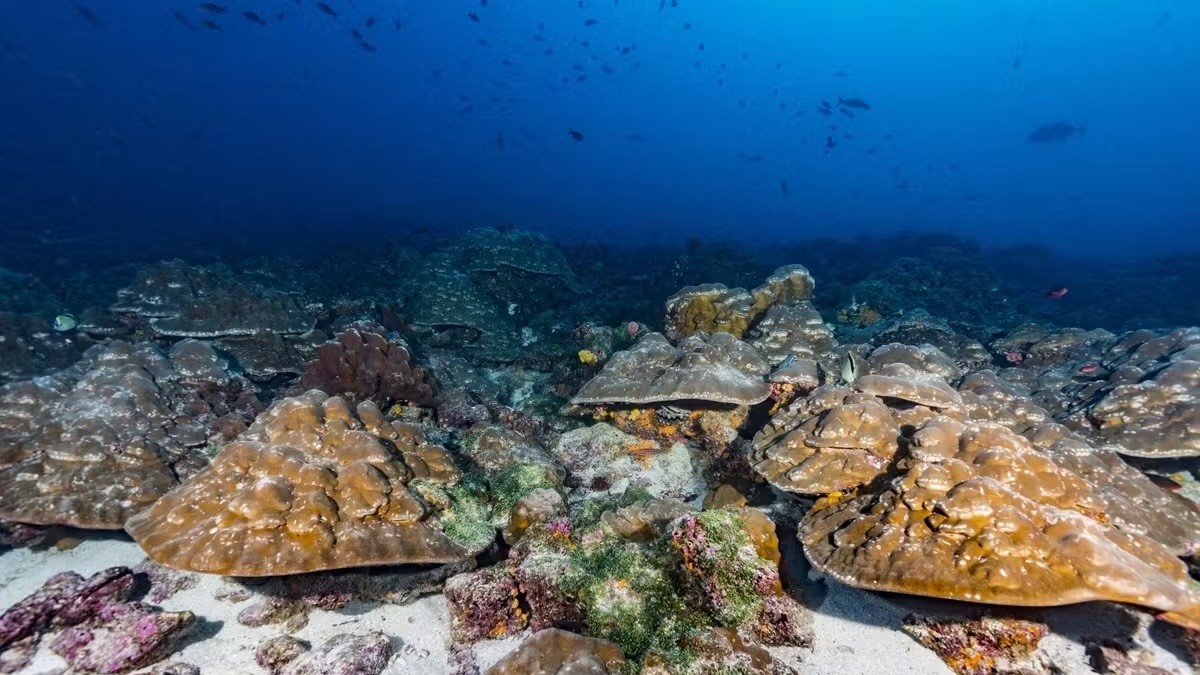
The study relies on coral because corals preserve environmental information as they grow. Around the Galápagos, coral records can capture changes linked to sea-surface temperatures and ocean conditions in the eastern Pacific, a crucial region for tracking El Niño behavior. By comparing those long records with more recent observations, researchers can estimate how unusual current conditions are relative to earlier centuries.
According to the report, the team found no comparable period in the past where El Niño events appeared as strong as they do today. The researchers also found that the intensity of El Niño changed in parallel with global temperature increases, reinforcing the case that the trend is tied to broader planetary warming rather than ordinary background variability alone.
That conclusion is especially notable because El Niño is often described as a natural oscillation. The new finding does not eliminate that natural cycle. Instead, it suggests the cycle itself is now operating in a warmer climate state that can load the dice toward more intense warm-phase events. For climate science, that is a meaningful distinction: natural variability still exists, but it may now be unfolding on top of a changed baseline.
A warning arriving during another major event
The timing of the study adds to its significance. The world is already facing what forecasters increasingly describe as a historic 2026 to 2027 El Niño, with unusually high sea-surface temperatures helping drive expectations of an exceptional event. The report says forecasters have grown close to certain that this El Niño could set a record.
That raises the stakes of any evidence showing that the strongest modern El Niño events differ from those of earlier eras. El Niño already has a track record of magnifying social and economic stress. Strong events can alter monsoons, reduce agricultural output, push up disaster losses and strain emergency response systems. In a warmer world, those cascading effects may become harder to manage because heat extremes, wildfire risk, water scarcity and ecological stress are already elevated before El Niño enters the picture.

The study therefore lands less as an abstract argument about paleoclimate reconstruction and more as a near-term risk signal. If the relationship between warming and El Niño intensity is as strong as the researchers describe, then future climate planning has to account not just for rising average temperatures, but for amplified swings in the ocean-atmosphere system that can bring abrupt global consequences.
What the findings do and do not say
The article’s reporting focuses on a central claim: recent El Niño events are much stronger than their preindustrial counterparts, and that change tracks with human-driven warming. Within the evidence described, the researchers are not saying every El Niño will become identical, nor that natural climate variability has disappeared. The cycle still shifts between El Niño, La Niña and neutral conditions every few years.
What the study does suggest is that the upper end of El Niño strength has changed. That is important because the most damaging consequences are often concentrated in the biggest events. A moderate shift in the average climate can translate into much larger changes at the extremes, where infrastructure, food systems and public institutions are most vulnerable.
The work also underscores how climate archives such as coral can help settle disputes about what counts as “normal.” Instrument records cover only a limited slice of time. Coral records extend the comparison much further back, giving scientists a way to test whether recent decades truly stand apart. In this case, the answer appears to be yes.
Why this matters beyond climate science
For governments and industries, a stronger El Niño regime has operational consequences. Water managers, crop planners, insurers, shipping operators and disaster agencies all depend on seasonal outlooks shaped by Pacific conditions. If warming is pushing the strongest El Niño events into new territory, then risk models built on older assumptions may underestimate future disruption.
The broader message is that climate change is not only about slow-moving averages. It can also reshape the behavior of major natural systems that determine where rain falls, where drought deepens and how heat spreads across continents. El Niño sits at the center of that equation because it is one of the world’s most consequential climate pattern drivers.
The study does not offer a simple timeline for how fast intensification will continue, but it does sharpen the evidence that modern climate change is already altering the character of a familiar global phenomenon. If that finding holds up under further study, the world may need to stop thinking of extreme El Niño as a rare historical anomaly and start treating it as a more routine feature of the climate risks ahead.
This article is based on reporting by Live Science. Read the original article.
Originally published on livescience.com