A cleaner fuel may be hiding in old rock
Scientists working in Canada say some of Earth’s oldest rocks are naturally producing and releasing hydrogen gas in quantities large enough to force a serious rethink of hydrogen exploration. The new measurements, taken from boreholes in an active mine near Timmins, Ontario, provide direct evidence that ancient crustal rocks can accumulate and discharge hydrogen over long periods rather than generating only trace, short-lived amounts.
The finding strengthens the case for “white hydrogen,” a term used for naturally occurring hydrogen found underground, as a potential energy resource rather than a geochemical curiosity. If the processes identified in Ontario prove common in similar rock formations elsewhere, the discovery could open a new front in the clean-energy search.
What the researchers found underground
The study was led by researchers from the University of Toronto and the University of Ottawa, who examined the Canadian Shield, one of the oldest geological regions on the planet. For the first time, the team directly measured hydrogen escaping from billion-year-old rocks, tracked how it accumulated over time, and mapped areas where the gas was concentrated.
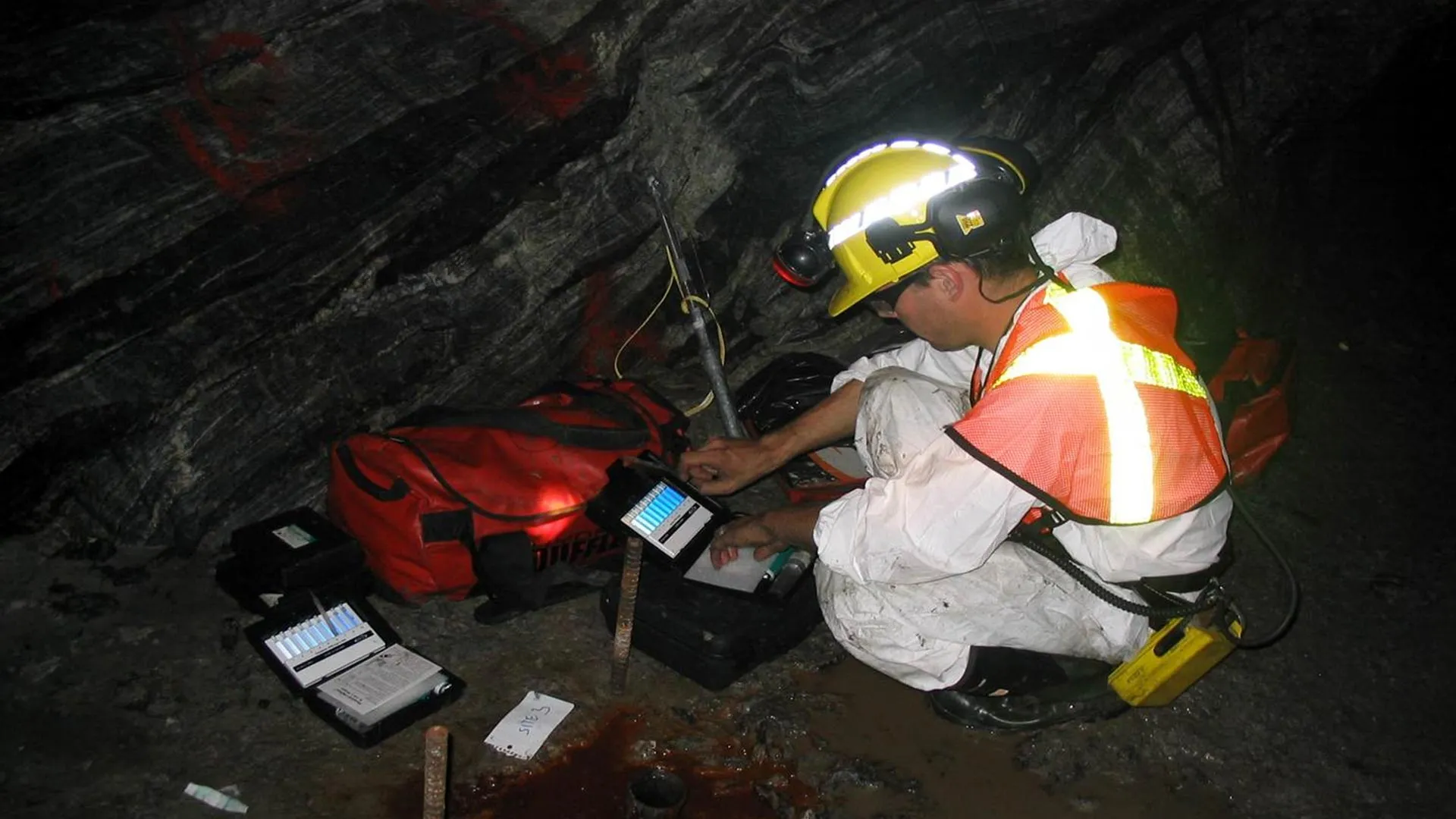
The data came from an active mine in northern Ontario. According to the researchers, boreholes drilled into the rock released an average of 0.008 tonnes of hydrogen per year, or about 8 kilograms, and the gas flow could continue for at least a decade. Across nearly 15,000 boreholes at the site, the study estimated annual output above 140 tonnes of hydrogen.
The researchers further calculated that the energy represented by that output from a single location could meet the annual needs of more than 400 homes. Even if those numbers eventually require refinement through additional field work, the implication is already clear: natural hydrogen systems may be substantial enough to matter economically, not just scientifically.

Why this matters for energy
Hydrogen has long been promoted as a potentially valuable industrial fuel and energy carrier, especially for sectors that are difficult to electrify directly. The problem is that most hydrogen today is not clean. Conventional production often relies on fossil fuels, which means the climate benefit can be limited or erased unless carbon capture is added successfully and affordably.
Natural hydrogen changes that discussion. If usable hydrogen is generated underground by geological processes and can be tapped without carbon-intensive manufacturing, it could become a lower-emissions source for remote communities, heavy industry, or niche energy applications. It would not solve every hydrogen challenge, but it could reduce one of the hardest ones: how to make the fuel cleanly in the first place.
From theory to direct measurement
Researchers have long suspected that some rock formations generate hydrogen through chemical reactions involving water and iron-rich minerals. But identifying a plausible mechanism is not the same as proving a sustained, exploitable flow in the field. The Ontario work matters because it moves the conversation from hypothesis and indirect indicators to direct measurement in a real subsurface environment.
The study, published in the Proceedings of the National Academy of Sciences, also proposes a new exploration strategy for finding similar resources. That may prove as important as the initial measurements themselves. In resource development, knowing what exists is only the first step. Knowing where to look next is what turns a scientific discovery into a potential industry.
How big could this become?
That is the central unanswered question. One productive site does not guarantee a globally scalable energy source. Geological hydrogen systems are likely to vary widely in chemistry, flow behavior, accessibility, and economics. Some may be too diffuse to exploit. Others may lie too deep or in places where extraction is impractical.
Still, the Canadian Shield is not an isolated geological oddity. Ancient cratonic rocks are widespread across the planet. If similar processes are active in other regions, the Ontario measurements could represent an early glimpse of a much larger resource class.
The study’s authors argue that the data point to “critical untapped opportunities” for accessing domestic, cost-effective energy from the rocks beneath our feet. That is an ambitious framing, but not an unreasonable one. Energy transitions often depend on recognizing value in resources that were previously overlooked because no one had measured them carefully enough.

The practical hurdles ahead
Even if natural hydrogen proves abundant, turning it into a useful industry will require much more than exciting geology. Developers would need better methods to identify the best reservoirs, understand recharge rates, design extraction systems, and manage safety. Infrastructure for processing, transport, and end use would also matter, especially if production emerges far from existing industrial demand centers.
There is also the question of competition. White hydrogen would enter an energy landscape already crowded with solar, wind, batteries, nuclear, conventional hydrogen projects, and fossil fuels. Its role will depend not just on geology, but on cost, reliability, and how well it fits specific applications.
Still, the appeal is obvious. A domestic fuel generated naturally underground, available without conventional hydrocarbon reforming, would be an attractive option for countries looking to cut emissions while improving energy security.
A discovery worth watching closely
Some science stories announce future possibilities that remain abstract for years. This one is different because it combines a long-theorized mechanism with concrete field measurements and a plausible path toward exploration. That does not mean a natural hydrogen boom is imminent. It means the idea has advanced from speculative promise to something the energy sector can no longer ignore.
If follow-up studies confirm similar flows in other ancient rock systems, the discovery in Ontario could end up reshaping how hydrogen is sourced, how subsurface resources are valued, and how countries think about energy hidden in deep geology rather than on the surface. For a fuel often discussed as part of the future, that would be a notably old place to find it.
This article is based on reporting by Science Daily. Read the original article.

Originally published on sciencedaily.com