The X-59 is moving from concept toward public testing
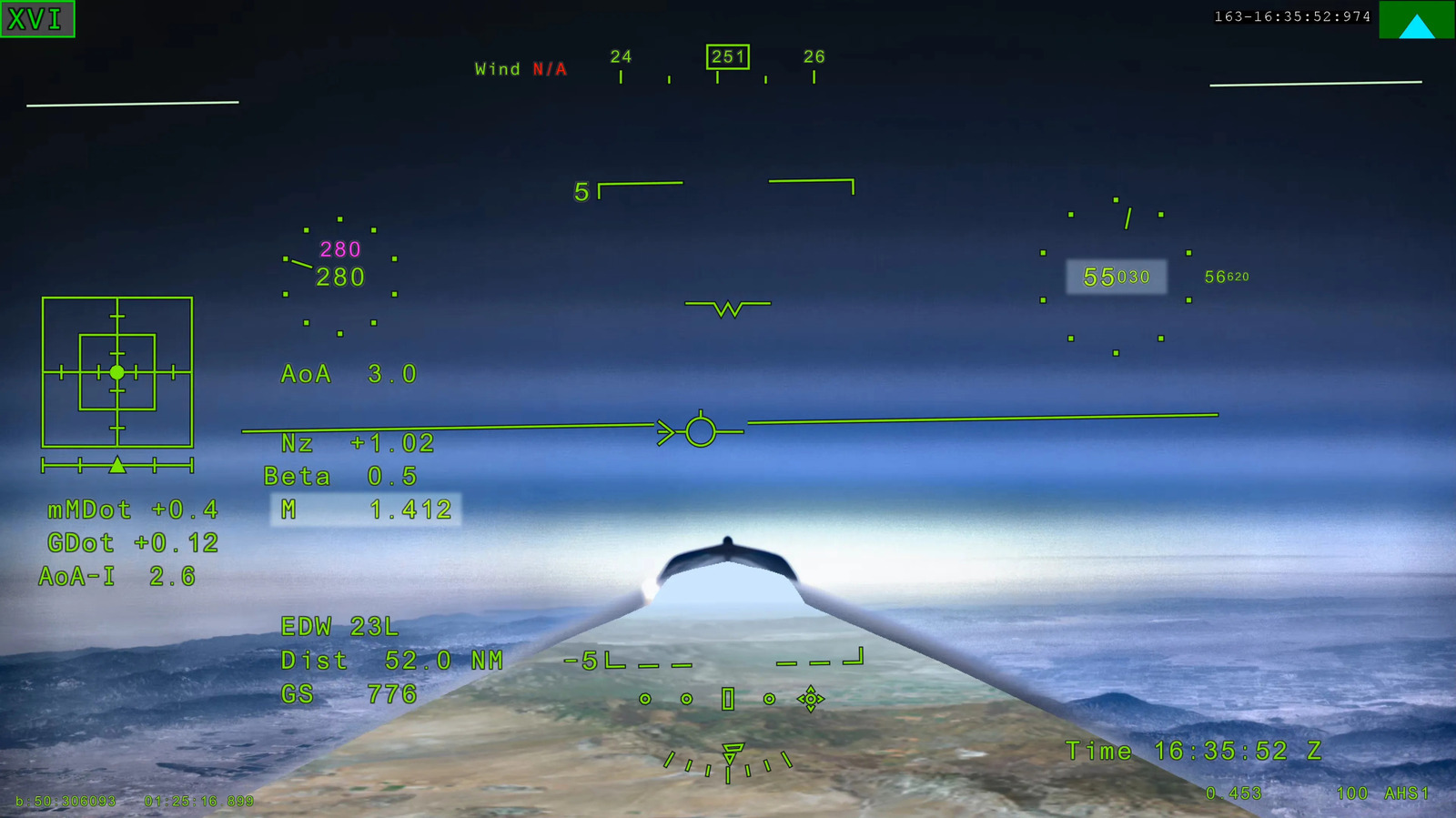
NASA’s X-59 experimental aircraft has reached another major milestone in its long path toward redefining supersonic flight over land. In a recent test, the aircraft flew at Mach 1.4 and climbed to 55,000 feet, hitting the speed and altitude conditions the agency says are necessary for the mission profile it plans to use in future testing.
Those numbers are important not because they set a raw performance record, but because they move the aircraft closer to its central goal: proving that a plane can break the sound barrier without creating the disruptive sonic boom that has long restricted supersonic travel over populated areas. NASA’s target is a far softer acoustic footprint, described as a quiet sonic thump rather than the sharp, thunder-like boom associated with earlier supersonic jets.
That goal sits at the center of the Quesst mission, one of NASA’s most closely watched aeronautics programs. The aircraft’s job is not merely to fly fast. It is to generate real-world evidence that quieter supersonic design can work reliably enough to inform future regulation and, potentially, a new commercial market.
Why this flight was a meaningful step
The source text notes that the X-59 had already completed its first supersonic flight earlier in June, reaching Mach 1.1 on June 5. The newer test went further, both literally and programmatically. NASA described the latest run as a more critical step because it reproduced the conditions the aircraft will need during upcoming mission phases.
Test campaigns for experimental aircraft often progress through narrow gates. Reaching certain thresholds is less about publicity than about reducing uncertainty before the next stage begins. In this case, the aircraft must demonstrate it can consistently operate in the envelope where NASA intends to gather the acoustic data needed for the rest of the program.
That data is especially sensitive because the X-59’s value depends on what people hear on the ground. If the aircraft cannot reliably produce the intended sound signature, the larger objective of community response testing becomes much less meaningful.
The noise problem NASA is trying to solve
Supersonic flight has always carried a tradeoff. Traveling faster than sound cuts long-distance travel times, but the shock waves generated by aircraft have historically produced loud sonic booms that can rattle windows, disturb communities, and trigger strict regulatory limits. In the United States and other countries, those effects helped make routine overland supersonic travel commercially impractical.
The X-59 is part of an effort to challenge that old constraint through aerodynamic design. Rather than allowing shock waves to merge into a single explosive boom, the aircraft is shaped to distribute pressure changes in a way that produces a much less intrusive noise event at ground level.
If that works in operational testing, the implications extend beyond one research plane. Regulators could eventually have better evidence for reconsidering rules that currently restrict overland supersonic operations. Manufacturers, in turn, would have stronger grounds for pursuing future aircraft designed around quiet supersonic travel.
What happens before it flies over communities
The headline milestone does not mean the public testing phase begins immediately. Before NASA starts flying the X-59 over populated areas, the aircraft will go through an acoustic validation stage. During that phase, the team will measure the plane’s supersonic acoustic signature to confirm that it is in fact breaking the sound barrier without producing a conventional sonic boom.
That step is essential because community-response studies only matter if the test aircraft is delivering the sound profile the mission claims to study. The source text also says that during current testing the X-59 is flying alongside another research aircraft that does produce a sonic boom, helping obscure the X-59’s own sound as testing continues. That arrangement underlines how controlled and incremental the process still is.
The Quesst mission itself remains months away, according to the source. When it begins, NASA plans to fly the aircraft over US communities and gather public feedback on what people actually hear from the ground. That social-response component is unusual and strategically important. The agency is not only measuring noise in a technical sense; it is also building the evidence base for how acceptable that noise may be to the public.
Why the aerospace sector is watching closely
The X-59 program matters because it links research, regulation, and market possibility in a direct way. A successful aircraft demonstration alone would not restore commercial supersonic travel, but it could remove one of the biggest policy barriers that has constrained the field for decades.
That is why even modest-seeming test updates are closely watched. Every time the aircraft proves a new part of its expected flight envelope, NASA gets closer to answering a question that has persisted since the end of Concorde-era ambitions: can supersonic aviation return in a form that is compatible with ordinary life on the ground?
The answer will depend on more than acoustics. Economics, emissions, certification, and demand all remain part of the equation. But noise has long been the hardest regulatory bottleneck for overland use. If NASA can show that sonic disturbance can be dramatically reduced, it changes the conversation from whether supersonic flight is tolerable to where and how it might be allowed.
A research plane with policy consequences
The X-59 is easy to frame as a technical curiosity, but the project’s real significance is institutional. NASA is trying to generate the evidence needed for future rulemaking, not just to achieve a one-off engineering feat. That makes the aircraft part testbed, part policy instrument.
In that sense, the latest milestone is less about speed than about credibility. Mach 1.4 and 55,000 feet show the plane is reaching the conditions required for the next phases of evaluation. That strengthens the case that the program can deliver the acoustic measurements and community data it was built to gather.
For now, the X-59 remains in the validation stage, not the public-proof stage. But its progress is tangible. The aircraft has moved past theoretical promise and into the kind of measured testing that could eventually inform how a new generation of faster aircraft is designed, certified, and accepted. If NASA’s quiet-supersonic bet holds, the path back to routine overland supersonic flight may begin not with a dramatic boom, but with a sound quiet enough for communities to live with.
This article is based on reporting by Engadget. Read the original article.
Originally published on engadget.com


