Fresh Military Tension at a Strategic Chokepoint
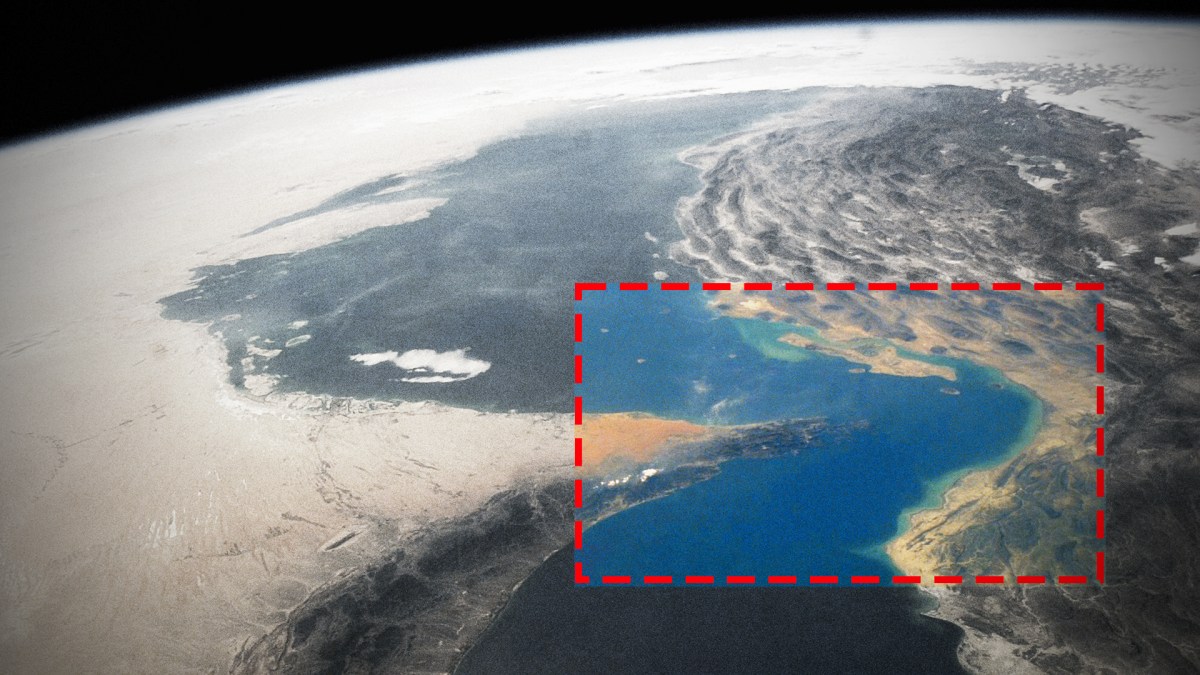
The United States says its forces shot down at least four Iranian drones launched toward the Strait of Hormuz, marking another escalation in a region already strained by recent exchanges between Washington and Tehran.
According to The War Zone, a U.S. official said Iran launched multiple drones toward the strait and that American forces destroyed at least four of them. The official spoke on condition of anonymity because of the operational sensitivity of the incident. Later in the day, U.S. Central Command also confirmed that American forces attacked Iranian facilities and shot down Iranian drones, according to the report’s update.
The event matters because the Strait of Hormuz is one of the world’s most sensitive maritime corridors, linking Gulf energy producers to global markets and concentrating naval traffic in a narrow passage that has repeatedly served as a flashpoint. Any exchange there carries military, economic, and diplomatic consequences beyond the immediate tactical encounter.
A Ceasefire That Looks Increasingly Fragile
The drone engagement comes amid what the report describes as a shaky ceasefire and sputtering peace talks. Rather than signaling a durable pause, recent weeks appear to have produced a pattern of limited but dangerous military actions around the Gulf.
The article situates the latest incident within a wider sequence of violence. It notes that the United States previously struck Iranian targets, while Iran launched missiles and drones at Kuwait and Bahrain in an exchange that reportedly damaged Kuwait International Airport, killed several people, and injured many more. Other encounters have also unfolded around the strait, including incidents in which U.S. Navy ships said vessels, including their own, were fired upon, prompting reprisal attacks on shore targets.
That history gives the latest drone launch added significance. Even if the immediate military outcome favored the United States, the episode suggests that deterrence remains unstable and that both sides continue to test boundaries under conditions that could produce rapid escalation.
Kharg Island Reports Raise the Stakes
Complicating the picture were unconfirmed online reports of explosions on Iran’s Kharg Island, which the article says is the country’s main oil export facility. The U.S. official cited by The War Zone declined to comment on those claims.
Although the explosions were not confirmed in the report, their location is notable. Kharg Island is not just another military site. It is central to Iranian oil exports, meaning any attack there would blur the line between military signaling and strategic economic warfare. Damage to the facility, or even credible reports of an attack, can heighten market anxiety and deepen fears that regional conflict is moving toward infrastructure with global relevance.
The article also notes that Kharg Island had been attacked before during a campaign referred to as Epic Fury. That background reinforces the sense that the island remains a sensitive target whose vulnerability has implications well beyond Iran’s immediate military posture.
The Tactical Picture and the Strategic Risk
On a narrow tactical level, the U.S. interception demonstrates continued American readiness to engage drones over the Gulf and to respond quickly to airborne threats. It also reflects how unmanned systems remain central to the regional contest, offering deniability, reach, and escalation options short of a larger direct confrontation.
Strategically, however, the exchange underscores how little margin for error exists in the current environment. The Strait of Hormuz is crowded with commercial shipping, military vessels, surveillance systems, and national prestige. Incidents can unfold quickly, and their interpretation often matters as much as their military scale. A drone interception may be framed as routine defense, but it can also be read as a warning shot in a larger contest over influence, deterrence, and access.
The present danger lies less in any single drone than in the cumulative effect of repeated clashes. Each episode builds pressure on decision-makers, increases the chance of misreading intent, and narrows off-ramps for diplomacy. When talks are already fragile, small kinetic actions can become politically difficult to absorb.
What to Watch Next
The immediate questions are whether Iran responds, whether more details emerge about the drones’ launch point and intended targets, and whether the reports around Kharg Island gain confirmation. Just as important is whether Washington and regional partners treat this as an isolated engagement or as evidence that the ceasefire framework is no longer functioning in practice.
The regional pattern described in the report suggests that the confrontation is no longer defined by a single exchange but by a chain of rolling incidents across air, sea, and shore. That makes crisis management harder. It also means every new development near the Strait of Hormuz is likely to be judged for what it says about the next one.
For now, the strongest confirmed point is also the simplest: the United States says Iran launched multiple drones toward one of the world’s most strategically important waterways, and U.S. forces shot down at least four of them. In a tense Gulf already marked by recent strikes and reprisals, that is enough to keep the risk of wider escalation very much alive.
This article is based on reporting by twz.com. Read the original article.
Originally published on twz.com