Another Loss for Russia’s Long-Range Aviation Fleet
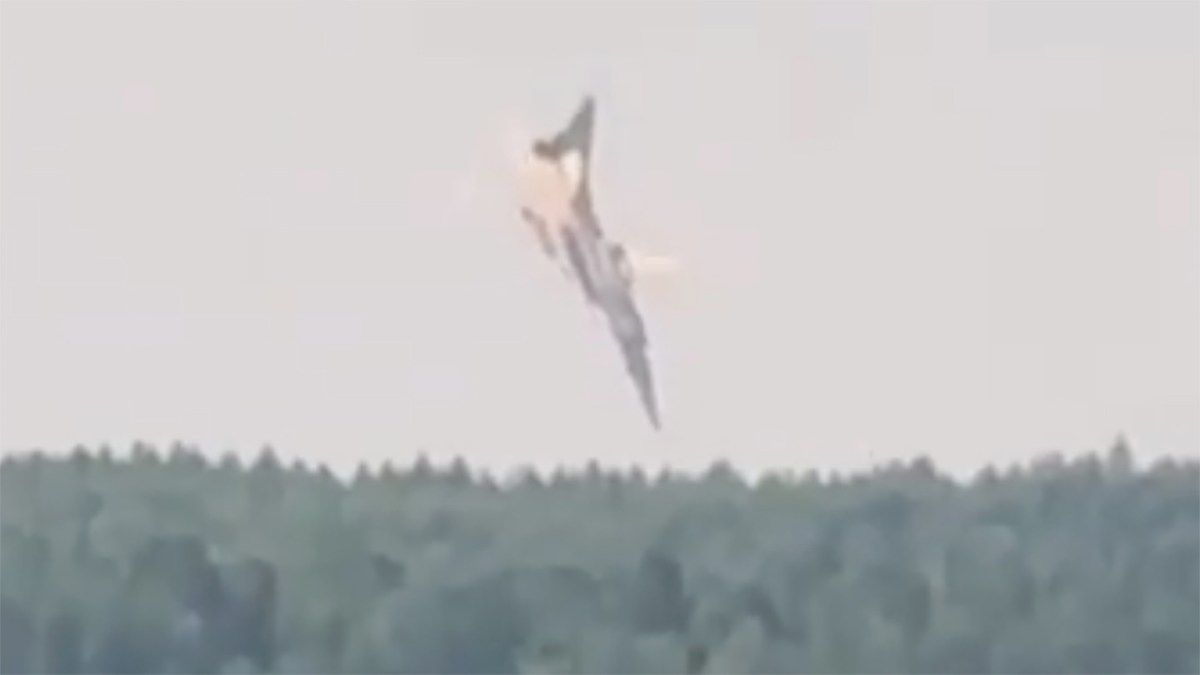
Russia has confirmed the loss of a Tu-22M3 Backfire-C bomber after dramatic videos circulating on social media showed the aircraft descending in a steep nose-down dive and crashing in the Irkutsk region of southeastern Siberia. According to the Russian Ministry of Defense, the bomber went down while approaching to land during what it described as a routine training flight.
While the social media footage had not been independently verified in the source text, the official confirmation is enough to establish the broad facts: a Tu-22M3 was lost on June 15, it was not carrying a combat load, all crew members ejected and an investigation is now underway. Regional governor Igor Kobzev said the aircraft crashed in the Bokhansky district near the village of Kamenka and that local residents found the crew after they parachuted down.
A Crash With Strategic Weight
The Tu-22M3 remains an important part of Russia’s Long-Range Aviation force, and every loss matters because the fleet is finite, specialized and already under wartime pressure. Even though this particular crash happened outside direct combat, it still removes another aircraft from a force that Russia has used extensively in its war against Ukraine.
The bomber has been closely associated with standoff strikes using Kh-22 and Kh-32 missiles, weapons originally designed for anti-ship roles but repurposed in the conflict for attacks against ground targets. That means the type still carries significant operational value despite its Cold War origins and despite the attrition pressures the Russian aerospace force has faced.
Why the Location Matters
The crash occurred near Irkutsk, a region tied to Belaya air base, home to the 200th Heavy Bomber Aviation Regiment. That base is a key Tu-22M3 operating location, so the incident happened close to one of the aircraft’s core support hubs. Losing a bomber during landing approach at or near a major operating area raises obvious questions about maintenance, training, mechanical reliability and operational tempo.
The source text does not provide a cause, and any firm conclusion on that point would be speculative. But a nose-down dive on approach is consistent with the kind of dramatic failure event that investigators will have to examine carefully, especially for an aging swing-wing bomber fleet that remains heavily tasked.
Attrition Beyond Combat
Military air forces often measure losses in combat terms, but non-combat crashes can be strategically significant when fleets are old, production lines are gone and replacement options are limited. For Russia, that is especially true in long-range aviation. The Tu-22M3 is not an easily replaceable platform, and modernization does not erase the basic constraints imposed by age, maintenance burden and wartime usage.
That is why an accident like this resonates beyond the immediate event. It speaks to the cumulative strain on an air arm that has to keep legacy bombers flying for demanding missions while also absorbing the broader stresses of prolonged conflict. A confirmed safe crew ejection avoids the worst human outcome, but it does not change the operational cost of losing the aircraft itself.
The Next Question Is Cause
Russia’s Ministry of Defense has opened an investigation, but the source text offers no official explanation for the crash. Until one emerges, the event stands mainly as a reminder of how vulnerable even strategic aviation assets are during routine phases of flight. Takeoff and landing remain among the most dangerous moments for military aircraft, especially large and aging ones.
For outside observers, the significance lies in fleet arithmetic as much as accident details. Russia has one fewer Tu-22M3 available, and the long-range aviation force has again lost a scarce airframe. In the middle of a sustained war and broader military competition, even a training-flight accident can carry strategic consequences.
This article is based on reporting by twz.com. Read the original article.
Originally published on twz.com