The Pentagon wants volume, speed, and lower unit costs
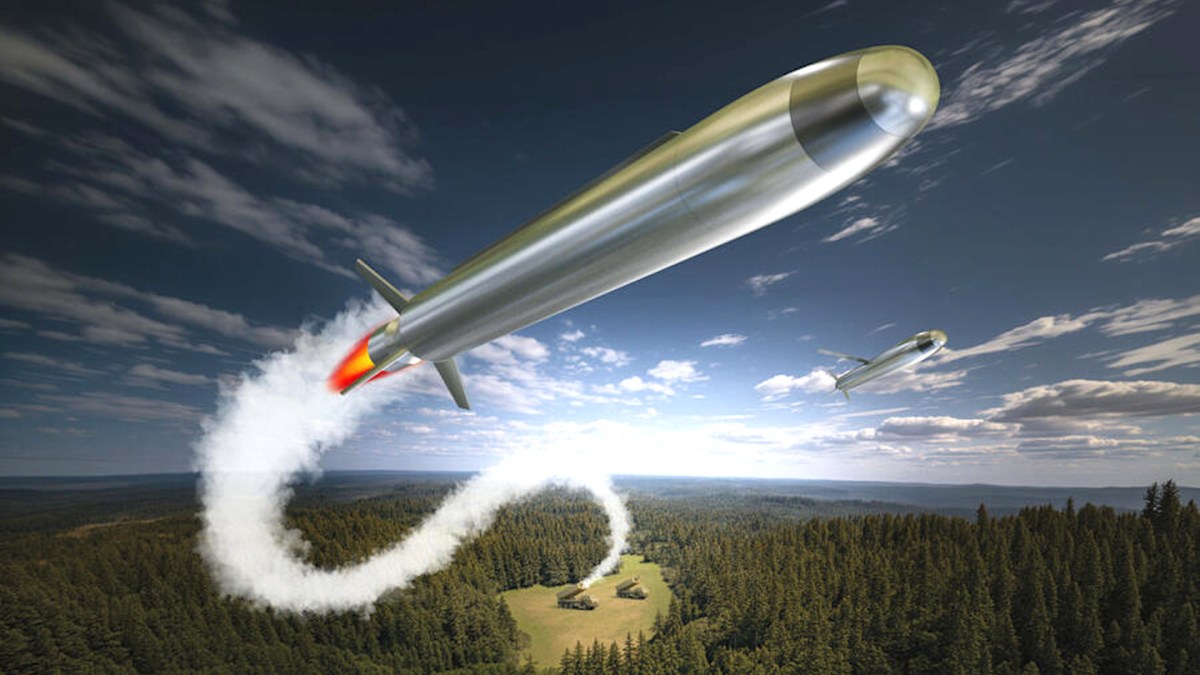
The U.S. military is moving to dramatically expand its stockpiles of standoff weapons with a new procurement framework centered on cheaper, more scalable missiles. According to a Pentagon announcement reported by The War Zone, the department aims to create a pathway to buy more than 10,000 low-cost cruise missiles over the next three years, beginning in 2027. A parallel arrangement is also intended to scale relatively inexpensive hypersonic weapons, including what the report describes as 12,000 “cheap” hypersonic missiles.
The shift is about more than raw numbers. It signals a deliberate attempt to align missile acquisition with the demands of a high-end conflict in which inventories could be consumed quickly and replenishment capacity would matter almost as much as performance. In that environment, exquisite weapons that are too expensive or too slow to build are less strategically useful than systems available in large volume at predictable cost.
Framework agreements with new entrants
The Pentagon said it had reached new framework agreements with a mix of “disruptive new entrants and commercial innovators.” For the Low-Cost Containerized Missiles program, or LCCM, the named companies are Anduril, CoAspire, Leidos, and Zone 5. A separate agreement with Castelion is intended to advance low-cost hypersonic solutions.
The department described the agreements as a way to move at the speed of commercial industry while setting the terms for future firm-fixed-price production contracts. That structure is important. Rather than treating missile procurement as a slow, bespoke process, the Pentagon appears to be trying to lock in production pathways and pricing discipline early enough to enable rapid ordering once systems clear military assessment.
Why the emphasis on “low-cost” matters
The strategic rationale is explicit. The Pentagon says the effort is designed to bolster American stockpiles of standoff strike munitions and strengthen the industrial base needed to sustain them. Future conflicts, particularly a high-end fight in the Pacific against China, are expected to place intense demand on long-range strike inventories. Cost therefore becomes a central operational variable.
A missile that is cheaper to buy and easier to manufacture can be fielded in larger numbers, distributed more widely, and replaced faster after use. That does not eliminate the need for highly sophisticated systems, but it does acknowledge that quantity has strategic value of its own. In a war where large salvos, dispersed forces, and long-range logistics dominate planning, mass matters.
Containerized cruise missiles point to flexible deployment
The LCCM label also suggests a concept broader than a standard air-launched munition. Containerized missiles can imply flexible basing and transport options, potentially allowing launch systems to be deployed from different locations or platforms. The report does not spell out the final operational design, but the emphasis on experimentation indicates the Pentagon is still assessing how these weapons will be integrated and employed.
The announced framework includes a “fast-paced experimentation and assessment campaign” that will end in a Military Utility Assessment by sponsoring service components. That means the procurement drive is tied not only to industrial expansion but to validation of operational relevance. The department wants large numbers, but it also wants to confirm how these weapons fit into force design and combat concepts.
Industrial policy is part of the story
There is another dimension here that extends beyond battlefield planning. By working with newer companies and emphasizing firm-fixed material-unit costs, the Pentagon is using procurement to shape its supplier base. The defense industrial sector has long struggled with concentration, long lead times, and limited surge capacity. Bringing in additional vendors and rewarding scalable manufacturing could be an attempt to diversify risk while increasing throughput.
The presence of companies like Anduril also reflects a continued opening for nontraditional defense firms that promise faster iteration and closer ties to commercial production methods. If the agreements translate into real output, they may become a test case for whether the Pentagon can meaningfully change how it buys at scale.
What comes next
The announcement does not mean 10,000 missiles are arriving immediately. It establishes the framework for experimentation, assessment, and future production contracting. But the scale of the ambition is itself significant. Pentagon messaging is no longer focused only on small-batch advanced procurement. It is also centered on creating deep inventories and repeatable production for weapons expected to be consumed in large numbers.
That is a notable shift in mindset. For years, U.S. procurement debates often revolved around maximizing capability per platform or per munition. The new plan places equal weight on affordability, speed, and industrial resilience. Those priorities are consistent with a military preparing for prolonged, high-intensity operations where attrition and resupply are unavoidable realities.
If the program succeeds, it could mark an important change in how the United States thinks about missile power: not just as a function of technological sophistication, but as a balance between reach, lethality, price, and production scale. The Pentagon’s new framework suggests it believes that balance must now tilt much more heavily toward mass.
This article is based on reporting by twz.com. Read the original article.
Originally published on twz.com