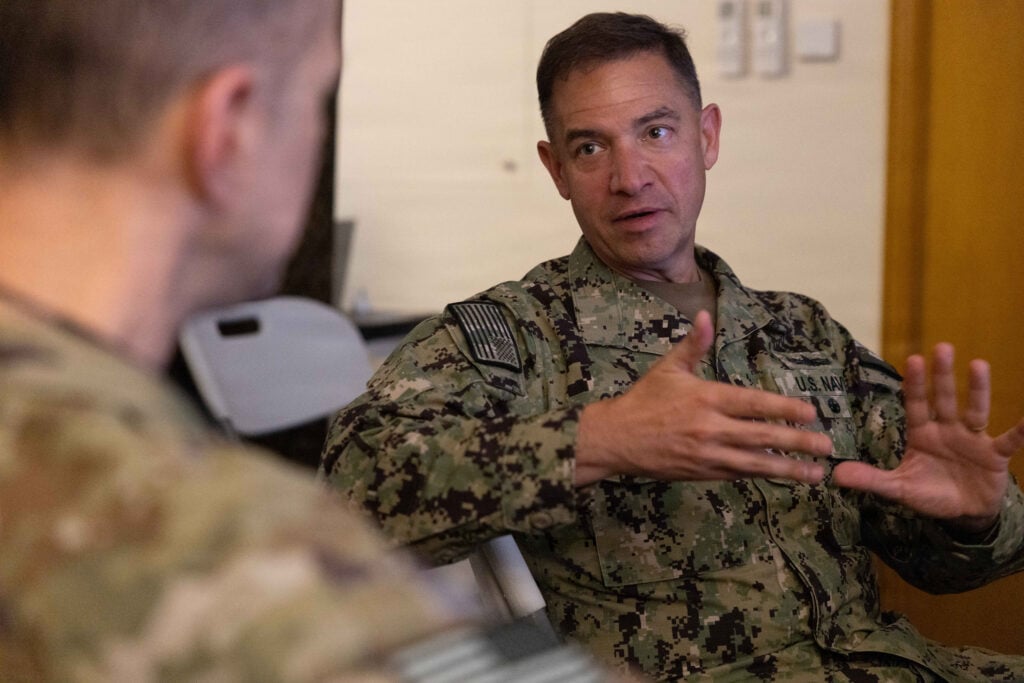
The commander of U.S. Central Command has offered a striking assessment of Iran’s maritime position: after sustained U.S. operations, Tehran’s navy has been degraded so heavily that it may not begin rebuilding for five to ten years. In testimony described in the supplied report, Adm. Brad Cooper told lawmakers that Iran’s naval power and the industrial capacity supporting it have been cut to a small fraction of what they were before Operation Epic Fury.
If accurate, that assessment marks a substantial change in the regional balance. Iran has long depended on a combination of conventional assets, asymmetric tactics, naval mines, missile programs, drones, and proxy relationships to complicate U.S. and allied operations. The new testimony argues that several of those pillars have been badly weakened at once.
A severe military assessment
Cooper told members of the Senate Armed Services Committee that Iran’s drone, missile, and naval industrial rates had been degraded by about 90%, while his written testimony put the figure at 85%. He also said U.S. operations had eliminated more than 90% of Iran’s once-large inventory of over 8,000 naval mines and involved more than 700 airstrikes on naval mine targets.
The clearest operational conclusion in the supplied reporting is geographic. In Cooper’s written testimony, Iran’s navy is described as no longer able to claim maritime-power status or project into the Gulf of Oman or the Indian Ocean. That is a major statement because Iran’s ability to menace shipping lanes and hold nearby waters at risk has long been a core element of its deterrent posture.
The admiral’s account does not suggest Iran has become harmless. Instead, he says the country retains what he calls nuisance capability, including harassment, low-end drone and rocket attacks, and residual proxy support. But in this telling, Iran no longer has the means to threaten large regional operations or to deter U.S. freedom of action in maritime and air domains the way it once could.
More than a naval story
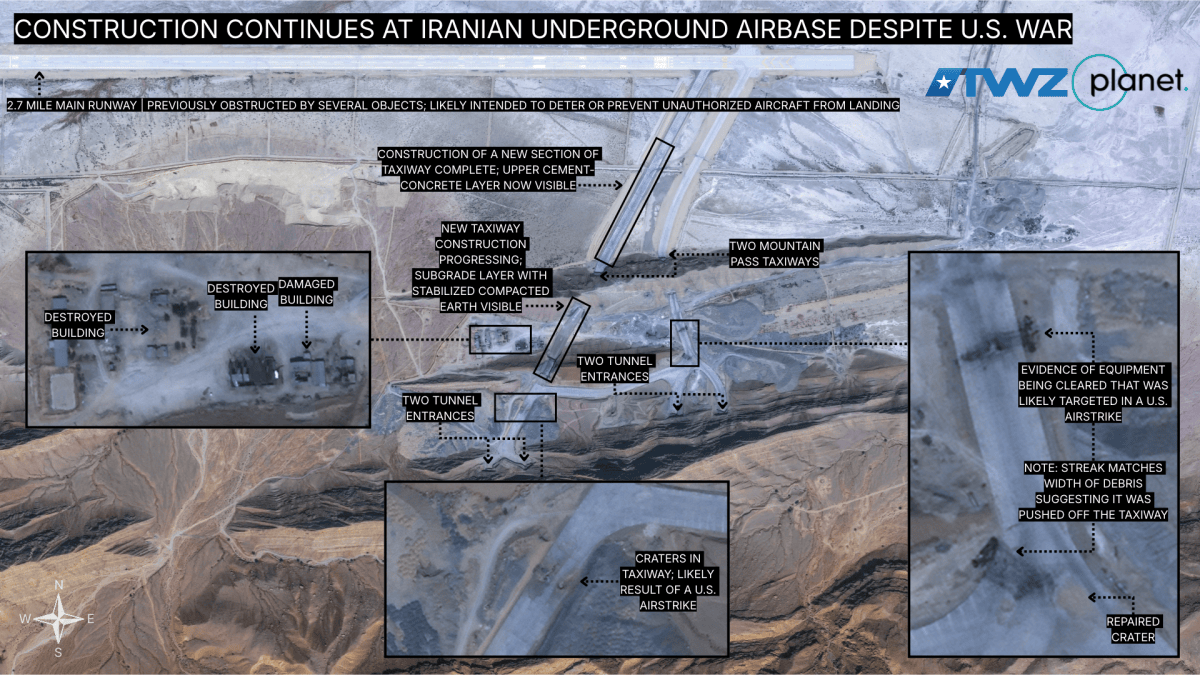
The report makes clear that the campaign’s objectives extended beyond ships. Cooper said Operation Epic Fury was designed around three goals: degrading Iran’s ballistic missile capability and its supporting industrial base, degrading drone capacity and its industrial base, and degrading the navy alongside the industrial network that sustains it. He told lawmakers those goals had been met in each category.
That broader framing matters because it suggests the United States was targeting not only visible platforms but the production machinery behind them. Degrading an inventory is one thing; degrading the industrial base that replenishes it can change the timeline of recovery far more dramatically. That is what makes the five-to-ten-year rebuilding estimate so consequential. It implies not just battlefield loss, but prolonged difficulty regenerating capability.
It also helps explain Cooper’s other claim in the hearing: that Iran has effectively been cut off from meaningfully supplying proxy partners including Hamas, Hezbollah, and the Houthis. The logic is straightforward. If drone, missile, and naval capacity are all sharply reduced, Iran’s ability to move matériel, project support, and sustain regional partners becomes much weaker.
What this means for the region
If the assessment holds, the immediate implication is a narrower Iranian threat envelope at sea. Maritime mine warfare, harassment in strategic waterways, and longer-range naval influence have all been central concerns for regional militaries and commercial shipping. A diminished Iranian navy would reduce, though not eliminate, that pressure.
It could also alter calculations among Iran’s proxies and rivals. Groups that relied on Iranian support may face tighter supply constraints, while neighboring states may see a larger window to strengthen maritime security arrangements without the same level of Iranian interference. At the same time, a state that loses conventional leverage may double down on irregular or lower-cost tactics, which fits Cooper’s warning that nuisance capability remains.
That caveat is important. Military degradation does not automatically produce strategic quiet. A weaker force can still harass shipping, launch drones, or support limited proxy activity. The difference is scale, persistence, and deterrent credibility. The testimony described in the article argues those larger capabilities have been broken down to an extent that changes the operating environment for years rather than months.
A claim with strategic weight
The supplied report presents these statements as U.S. military testimony, not as independently verified battlefield accounting. That distinction matters, especially with assessments as sweeping as a decade-long naval recovery horizon. But even with that caveat, the testimony is important because it signals how CENTCOM wants lawmakers and the broader policy community to understand the outcome of recent operations.
The message is that Operation Epic Fury did more than blunt a threat. It reset it. By linking platform losses to industrial degradation, and by tying maritime setbacks to reduced proxy support, the testimony frames the campaign as a strategic rollback of Iranian regional power projection.
Whether that picture holds over time will depend on Iran’s capacity to improvise, reconstitute production, and substitute irregular methods for lost hardware. For now, though, the assessment given to Congress is unusually blunt: Iran’s navy has been pushed so far back that rebuilding may not even begin for years, and the wider deterrence structure around it has been weakened along with it.
This article is based on reporting by Breaking Defense. Read the original article.
Originally published on breakingdefense.com