The MQ-28 is moving from Australian program to European contender
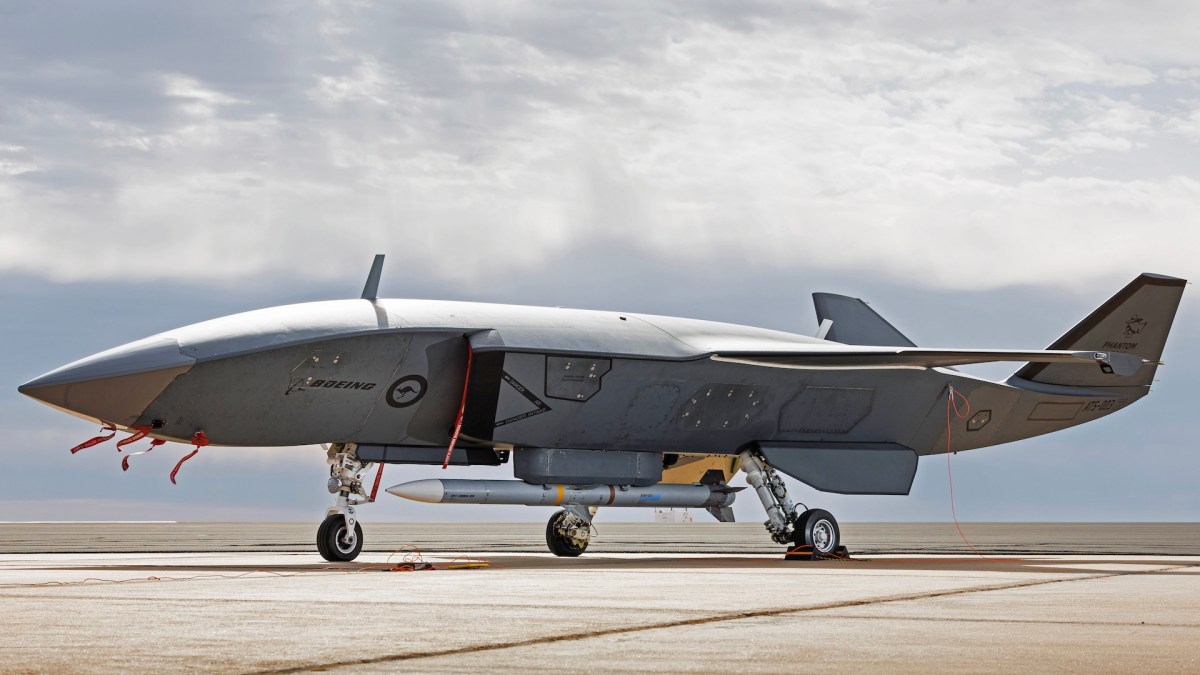
Boeing Australia and Rheinmetall have formally joined forces to offer the MQ-28 Ghost Bat drone to the German military, giving the collaborative combat aircraft a major opening into Europe. According to The War Zone, the two companies are positioning the aircraft as a mature option for a Bundeswehr requirement that could be fielded in Germany by 2029.
The partnership matters because Germany is not just a national customer. It is one of the most important potential gateways into a wider European market for collaborative combat aircraft, sometimes referred to as CCAs or loyal wingmen. Those aircraft are designed to work alongside crewed fighters and other platforms, extending sensing, survivability, and mission flexibility while reducing risk to pilots.
Rheinmetall said the Ghost Bat can be adapted to Germany’s sovereign requirements, an important phrase in European defense procurement. Buyers increasingly want local control over systems integration, support, and future upgrades rather than a fixed off-the-shelf import. Under the plan described in the source, Rheinmetall would become the system manager for the aircraft in Germany, responsible for integration with command and weapon systems as well as maintenance and logistics support.
Why Ghost Bat enters the race with an advantage
The central appeal of the MQ-28 is maturity. The War Zone notes that much of the drone’s development has already been funded by Australia, which gives the platform an advantage over less-developed European offerings. In a market where militaries want capability this decade, not years of additional concept work, that matters.
The aircraft is also described as highly modular, a feature that has been a core part of the Ghost Bat’s design. That modularity could make it easier to tailor the system for German needs and potentially for other European operators later on. For Rheinmetall, that creates more than a sales opportunity. It creates a role in the sustainment and industrial ecosystem around a future combat-aircraft family.
The company’s leadership made the commercial stakes plain. Rheinmetall CEO Armin Papperger said the arrangement could strengthen industrial value creation through a hub in Germany and Europe. That suggests the partnership is being framed not only as a procurement bid but also as an industrial policy offer, which is often critical in major European defense decisions.

Germany’s choice could shape Europe’s CCA landscape
The Ghost Bat is not entering an empty field. The War Zone says the aircraft is likely to compete against the XQ-58A Valkyrie and potentially the Airbus Wingman, a domestic European alternative. That means Germany’s eventual decision may become a referendum on speed versus sovereignty, proven development versus local control, and imported platform versus homegrown industrial base.
If Germany selects the MQ-28, it would give Boeing and Rheinmetall a foothold in one of Europe’s most significant defense markets and potentially accelerate adoption elsewhere. A German win would also reinforce the idea that the first wave of CCAs in Europe may come from rapidly adaptable existing designs rather than entirely new domestic programs.
Even if the bid does not succeed, the partnership itself is revealing. It shows major defense firms are now treating collaborative combat aircraft as a near-term procurement category rather than a distant concept. Germany’s 2029 timeline, cited in the source, further underlines the pace now expected.
The bigger point is that the competition is no longer about whether air forces will acquire such drones. It is increasingly about which industrial teams can deliver credible systems, integrate them into national architectures, and do so quickly enough to matter. With Rheinmetall now backing the MQ-28, Europe’s CCA race has become significantly more concrete.
This article is based on reporting by twz.com. Read the original article.
Originally published on twz.com