A New Zealand Parrot Found an Unexpected Competitive Edge
Animal behavior studies often show adaptation in response to injury or environmental pressure, but sometimes an observation is striking enough to force a second look at what flexibility really means. That appears to be the case with Bruce, a disabled kea in New Zealand that researchers say became the undefeated alpha male of his group by developing an unusual combat technique.
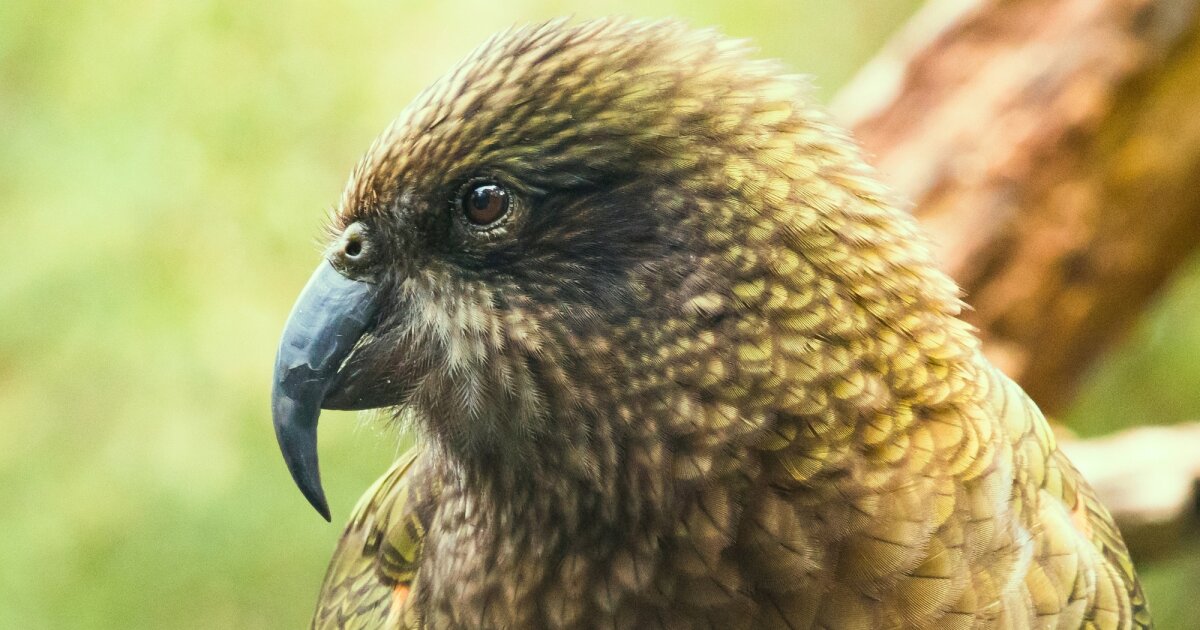
Bruce is missing his upper beak. For a kea, that should be a substantial disadvantage. These alpine parrots rely heavily on the two-part structure of the beak for climbing, foraging, eating, and preening. Yet according to an international study led by the University of Canterbury, Bruce used his exposed lower beak as a kind of small striking “sword” to joust with rival males.
The finding is remarkable not because kea are already famous for intelligence, but because the behavior appears to show something more specific: inventive physical problem-solving in a social contest where conventional expectations would predict the disabled bird should lose.
Why Bruce Was Not Expected to Win
The source text stresses just how central the beak is to kea life. It is not only a feeding tool. It functions as a kind of all-purpose instrument that helps these parrots manipulate objects, climb, care for their feathers, and explore their surroundings. Kea are known in New Zealand for their curiosity and destructiveness, including peeling apart rubber trim, tearing at exterior car parts, and even puncturing tires.
That reputation underscores the point: a healthy kea’s beak is a major asset. Losing the upper portion should create obvious functional limits. In social conflict, where size and weaponry typically shape outcomes, Bruce would appear to be operating at a severe disadvantage.
Lead author Alex Grabham, a postdoctoral researcher at the University of Canterbury, framed the finding against that background. The supplied text notes that existing knowledge about animal contests would ordinarily suggest that the bigger and better-armed individual should prevail. Bruce’s success therefore stands out as a challenge to the usual prediction.

Innovation Under Pressure
What makes the behavior so compelling is that Bruce did not simply cope with his injury. He appears to have transformed it into a different technique. Rather than trying and failing to behave like an intact bird, he used the remaining lower beak in a way that let him compete effectively.
That shift from compensation to innovation is why the story resonates beyond a single unusual bird. Many animals adjust after injury, but not all adjustments reveal a novel tactic that changes social outcomes. Bruce’s “jousting” behavior suggests a level of behavioral flexibility that researchers found notable even in a species already celebrated for intelligence.
Kea are often cited among the world’s most curious and cognitively sophisticated parrots. Their playful investigation of objects and surroundings has made them scientific favorites and tourist legends. But playful curiosity is not the same as strategic success in dominance contests. Bruce appears to bridge those domains by showing how flexible cognition can become a tool for social advantage.
What the Study Adds to Animal Cognition Research
The case is important because it sits at the intersection of injury, adaptation, and social competition. If a disabled individual can remain dominant by inventing a functional substitute for a lost trait, that has implications for how researchers think about contest behavior and the limits of animal innovation.
The source article emphasizes Bruce’s status as the undefeated alpha male of his circus, the collective noun used for kea. That outcome alone makes the observation noteworthy. Dominance is not a trivial or one-off measure. It affects access, status, and interactions within a group. Bruce’s ability to maintain that status implies that his adaptation was not merely symbolic or occasional. It worked repeatedly in real encounters.
That also makes the finding useful as a counterexample to simple physical determinism. Anatomy still matters, but Bruce’s case suggests that behavior can sometimes alter how anatomy is used strongly enough to change expected outcomes. For cognitive and behavioral ecology, that is an important reminder that traits do not act alone; how an animal deploys them can be decisive.

The Kea Context Matters
Kea are especially compelling subjects for this kind of observation because they are already known for exploratory behavior. The supplied text describes them rolling snowballs, tossing objects back and forth, and enthusiastically investigating tourists’ cars. Their reputation for “playful chaos” has long hinted at a species willing to test possibilities.
Bruce’s adaptation can therefore be read as an extreme example of a broader species tendency: the readiness to experiment. But it would be a mistake to reduce the finding to “clever parrots being clever.” The key detail is not just that Bruce used an unusual movement. It is that the behavior appears to have delivered a durable competitive advantage in a context that should have punished his disability.
That is why the study stands out. It shows not only intelligence in the abstract, but intelligence translated into a social and physical strategy with observable consequences.
A Small Story With Big Scientific Appeal
Stories like Bruce’s attract attention because they are vivid. A parrot “jousting” rivals with a lower beak is memorable on its face. But the scientific value lies in what the image represents: an animal adapting to a major physical loss by generating a novel way to compete.
For researchers, that raises questions worth pursuing. How often do individuals invent such tactics? Are species known for play and curiosity more likely to do so? Under what conditions does compensation become innovation rather than simple work-around behavior? Bruce does not answer all of those questions, but he gives scientists a concrete case that makes them harder to ignore.
In the end, the significance of the finding is straightforward. A disabled kea that should have been disadvantaged instead became dominant, and it did so by changing how it fought. That is not merely a charming anecdote. It is a sharp example of how intelligence, improvisation, and survival can intersect in the natural world.
This article is based on reporting by refractor.io. Read the original article.

Originally published on refractor.io