BYU-Hawaii expands a campus energy project with a full-coverage goal
Brigham Young University-Hawaii is moving into the second phase of a solar and battery project that is intended to supply essentially all of the campus's electricity demand with solar generation. According to the supplied source material, the new buildout is designed not only to cover the university's needs, but also to send excess electricity to the Polynesian Cultural Center and the Laie Hawaii Temple. That makes the project a campus decarbonization effort with a broader community footprint, rather than a narrow facilities upgrade.
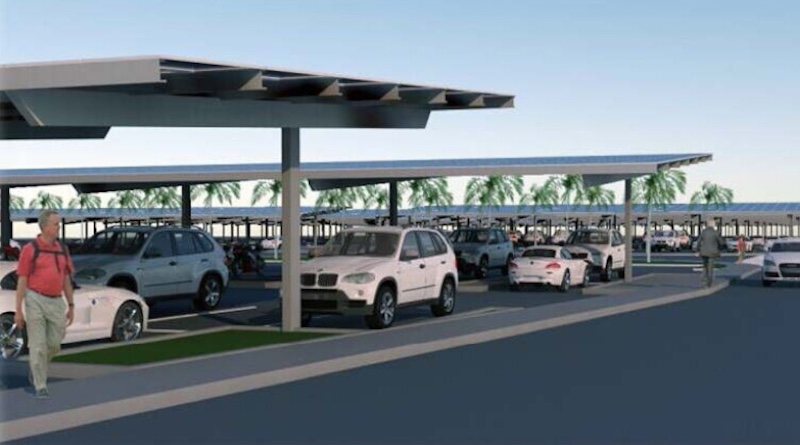
The next construction phase shifts the project beyond rooftop installations. The university is adding a ground-mount solar system southwest of campus and solar canopies in a parking area near the PCC Pacific Theater. The design matters because it shows how institutions with limited rooftop capacity can still pursue high penetration solar strategies by using open land and parking infrastructure. For campuses, hospitals, and civic sites, that mix of ground arrays and canopies is increasingly important as power demand rises and resilience planning becomes more urgent.
The project also includes a battery backup system sized for emergency coverage. The supplied report says the system is expected to provide necessary electricity for five days in an outage scenario. In practical terms, that moves the installation beyond a standard cost-saving solar array and into the realm of continuity planning. On island grids, where fuel imports and weather disruptions can complicate power reliability, long-duration backup can be as strategically important as the renewable generation itself.
Phase two builds on work that began in 2022. The first phase installed three rooftop solar systems, five solar carports, and 7 megawatt-hours of battery backup. That earlier deployment already covered 39 percent of the university's electricity needs, according to the source text. The follow-on phase therefore represents a substantial jump, taking the campus from a large but partial renewable contribution toward near-complete self-supply.
The project also reflects a wider energy reality in Hawaii. The state has long been an early and visible adopter of distributed renewables because it faces high electricity costs and strong incentives to reduce dependence on imported fuels. A campus that can run primarily on locally generated solar power demonstrates how institutions in high-cost power markets may be able to move faster than many mainland peers. It also offers a test case for combining decarbonization, resilience, and visible public-facing infrastructure in one program.
What stands out most is that the project is framed around operational coverage, not symbolism. The goal is not simply to add another clean-energy installation to a sustainability brochure. It is to meet all of the campus's electricity demand, provide overflow power to nearby institutions, and maintain critical service through battery storage when the grid is under strain. That is a more demanding standard, and it is the one that increasingly defines serious institutional energy transitions.
Why this matters
- The second phase is meant to take the campus from partial solar use to effectively full electricity coverage.
- Ground-mounted arrays and parking canopies expand solar capacity beyond rooftops.
- Battery backup is positioned as a resilience tool, with the project expected to support operations for up to five days in an emergency.
- Excess generation is expected to serve nearby community institutions, extending the project's impact beyond the campus boundary.
If the buildout performs as described, BYU-Hawaii will offer a clear example of how a relatively compact institution can pair generation, storage, and site design to approach full renewable electricity coverage. That is a notable milestone for campus energy strategy, and a useful signal for other organizations trying to turn climate goals into infrastructure that actually changes how power is produced and used day to day.
This article is based on reporting by CleanTechnica. Read the original article.
Originally published on cleantechnica.com




