Pushing Rooftop Solar to New Heights
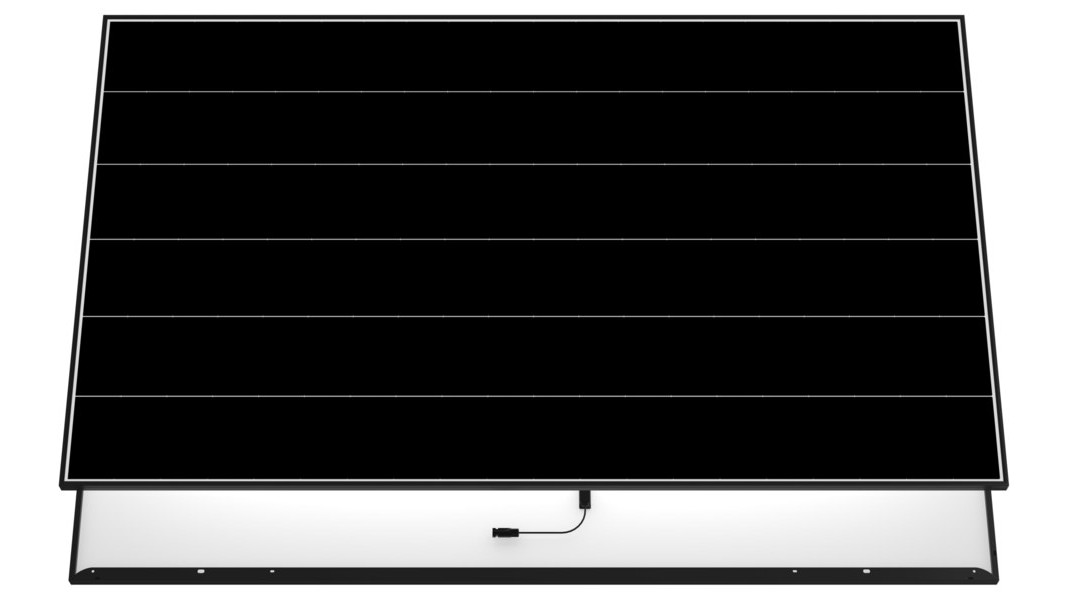
Chinese photovoltaic manufacturer Aiko has launched its third-generation all-back-contact (ABC) solar module, a 60-cell panel that delivers up to 545 watts of power at module efficiencies exceeding 25 percent. The launch, initially targeting the Australian market, positions the technology as a significant step forward for residential and commercial rooftop solar installations where maximizing power output per square meter is critical.
The new module measures 1,954 mm by 1,134 mm by 30 mm — a compact rooftop format — and produces roughly 30 watts more per panel than comparable TOPCon (tunnel oxide passivated contact) products that currently dominate the market. Aiko claims approximately 15 percent higher lifetime energy yield per square meter compared to conventional panels, a meaningful advantage when roof space is limited.
What Makes Back-Contact Different
Conventional solar cells collect current through metallic busbars and gridlines printed on the cell's front surface — the side facing the sun. These metallic elements are necessary to carry electrical current out of the cell, but they also block a small percentage of incoming sunlight, reducing the cell's overall efficiency. The more busbars and gridlines, the lower the shading loss but the higher the manufacturing complexity.
All-back-contact cells eliminate this tradeoff entirely by moving all electrical contacts to the rear of the cell. The front surface is completely clear of any metallic elements, allowing maximum light absorption. This design also produces a uniform, all-black appearance that many homeowners and architects prefer aesthetically.
Aiko's ABC design combines the grid-free front surface with what the company calls a zero-gap cell layout and invisible ribbon interconnection. These manufacturing innovations minimize the inactive areas between cells within the module, further increasing the proportion of the module area that actively generates electricity.

Performance in Real-World Conditions
Laboratory efficiency figures are important, but real-world performance depends heavily on how panels behave under non-ideal conditions — high temperatures, partial shading, and long-term degradation. Aiko's specifications suggest the new module performs well on all three fronts.
The temperature coefficient — which measures how much output drops as the panel heats up — is rated at -0.26 percent per degree Celsius, compared with -0.29 percent for standard TOPCon modules. This may sound like a small difference, but on hot Australian rooftops where panel temperatures routinely exceed 60 degrees Celsius, the cumulative effect over a year is significant. Panels with better temperature coefficients produce more energy precisely when solar irradiance is highest.
Long-term degradation is rated at 1 percent in the first year and 0.35 percent annually thereafter, implying 90.6 percent of original output retained after 30 years. This is competitive with the best panels on the market and represents a meaningful improvement over earlier-generation back-contact designs that sometimes suffered from faster degradation.
Hot-spot temperatures — localized heating that can damage cells when part of a panel is shaded — were found to be more than 30 percent lower than comparable TOPCon modules in testing. Hot spots are a reliability concern that can reduce panel lifespan and in extreme cases pose fire risks, so lower hot-spot temperatures represent both a performance and safety advantage.
Commercial and Industrial Applications
While the 60-cell format is primarily aimed at residential rooftops, Aiko is also targeting commercial and industrial installations. On a typical 660-square-meter commercial roof using 196 modules, replacing standard 510W TOPCon panels with the new 545W modules would increase total system capacity from 100 kilowatts to 107 kilowatts without changing the physical footprint. For businesses where roof space is fixed but electricity demand is growing due to EV charging, heat pumps, and other electrification loads, this extra capacity can be the difference between meeting energy needs and falling short.
For off-grid and remote installations, Aiko offers mono-glass variants with 3.2mm front glass certified for 35mm hail impact under TUV and PVEL standards. Dual-glass versions carry IEC Fire Class A certification, making them suitable for bushfire-prone regions — a significant consideration in the Australian market where wildfire risk shapes building codes and insurance requirements.
Market Context and Availability
The solar industry is in the midst of a technology transition from PERC cells, which dominated the market for the past decade, to next-generation designs including TOPCon, heterojunction, and back-contact architectures. TOPCon has gained market share rapidly over the past two years, but back-contact designs like Aiko's ABC promise the next step in efficiency gains.
Models rated 535W to 540W are expected to be generally available from late April, with the flagship 545W version available in limited quantities initially. Additional dual-glass and full-black aesthetic variants will follow later in the year. The modules have received Australia's Clean Energy Council approval, enabling installation under the country's renewable energy incentive programs.
As electricity prices rise and homeowners increasingly pair solar with batteries, EVs, and heat pumps, the demand for maximum rooftop output per square meter will only intensify. Panels that deliver 545 watts in a standard residential format represent the new benchmark that competitors will need to match.
This article is based on reporting by PV Magazine. Read the original article.
Originally published on pv-magazine.com




