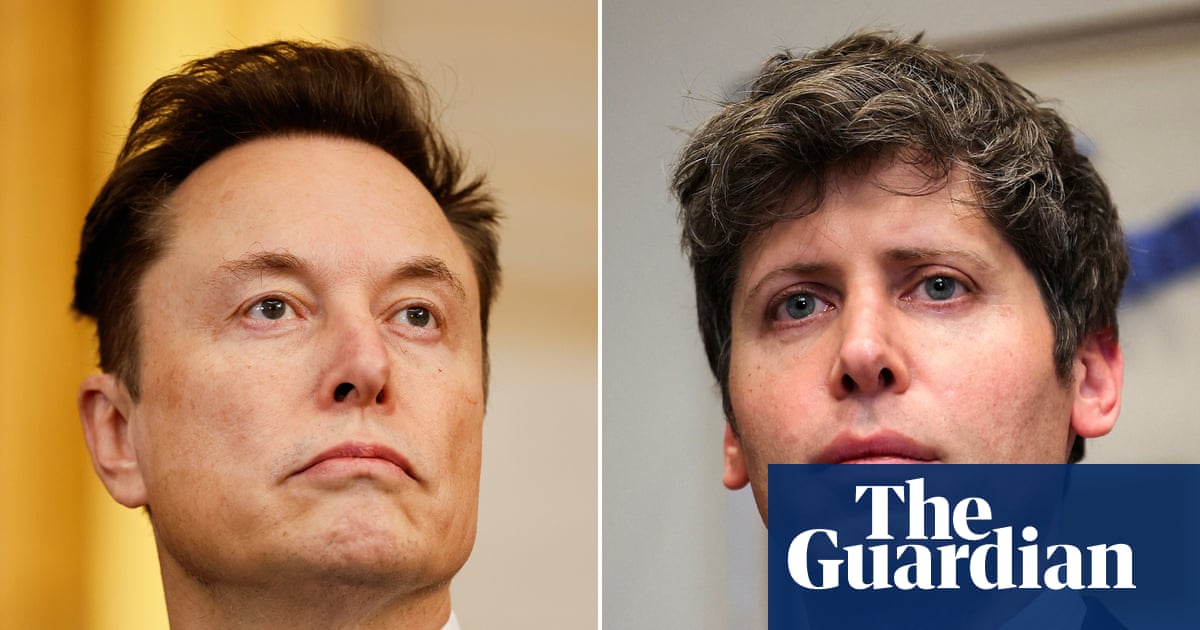
A high-profile AI feud ends in a decisive courtroom setback for Musk
OpenAI, chief executive Sam Altman, and president Greg Brockman have secured a major legal win in their battle with Elon Musk, after a federal jury in Oakland found them not liable on Musk’s claims. The verdict marks the sharpest rebuke yet of Musk’s argument that OpenAI’s leadership broke founding commitments and unjustly enriched themselves as the organization evolved beyond its original nonprofit structure.
The case has been one of the most closely watched legal dramas in the artificial intelligence industry because it fused personal rivalry, corporate governance, nonprofit law, and the strategic future of one of the world’s most influential AI companies. After weeks of testimony and less than two hours of deliberation, the jury sided with OpenAI. Judge Yvonne Gonzalez Rogers then said she agreed with the jury’s finding and dismissed Musk’s claims.
In immediate practical terms, the ruling removes a major overhang from OpenAI at a moment when the company is pursuing a larger commercial future. The reporting around the verdict says the decision clears the path for the firm to continue toward a possible public offering later this year at an approximately $1 trillion valuation. Even if broader legal and regulatory questions remain for the AI sector, this specific challenge appears to have failed decisively.
The core dispute: founding ideals versus later commercial reality
Musk’s case centered on the argument that OpenAI’s leaders violated commitments made when the organization was founded in 2015. He alleged that Altman and Brockman diverted the company from its charitable mission and used restructuring to pursue private gain. More broadly, the lawsuit tried to frame OpenAI’s evolution from nonprofit roots into a more commercially powerful organization as both a betrayal and a legal wrong.
OpenAI’s defense argued that Musk had long known the company was considering a for-profit structure. According to the reporting, the company said Musk was aware of those plans as early as 2017. That position mattered not just to the facts of the dispute but to the legal clock. One of the jury’s findings was that Musk’s case did not fall within the statute of limitations, meaning it came too late under the relevant legal timeframe.
That point may prove as important as the larger narrative battle. The courtroom drama invited sweeping arguments about trust, ambition, and the future of AI. The verdict shows that legal outcomes often turn on more disciplined questions: what was known, when it was known, and whether a claim was brought in time.

A symbolic defeat for a central critic of OpenAI
The decision is a notable blow to Musk, who has become one of OpenAI’s most visible critics after once helping launch the project. His lawsuit aimed to cast himself as a defender of the organization’s original public-interest purpose and to depict Altman as the architect of a self-serving transformation. The jury did not accept that framing in a way that created liability, and the judge’s immediate alignment with the verdict reinforced the scale of the setback.
OpenAI’s lead attorney went further, describing the case as a hypocritical effort to undermine a competitor. That language reflects how the lawsuit has been interpreted far beyond the courthouse. For many observers, the dispute has never looked like a purely principled clash over nonprofit governance. It has also looked like a power struggle inside a fast-moving industry where corporate structure, access to capital, and control over frontier models are central strategic assets.
The trial’s public profile only amplified that perception. It drew testimony from major figures in Silicon Valley and exposed years of private messages, internal disagreements, and personal animosity. Even before the verdict, it had already become a public excavation of the relationships that shaped the modern AI boom.
What the ruling means for OpenAI now
The immediate significance of the verdict is operational. OpenAI no longer faces this lawsuit as a near-term obstacle to its corporate plans. That matters because the company is attempting to balance rapid product development, large capital needs, and increasing public scrutiny, all while competing at the highest end of AI research and deployment.
Legal clarity, even partial clarity, has real value in that environment. Investors, partners, employees, and regulators all look differently at a company that has just defeated a closely watched case brought by one of the industry’s most powerful adversaries. The ruling does not settle broader debates about OpenAI’s governance or long-term obligations, but it substantially strengthens the company’s immediate position.
It also sends a message about the limits of retrospective challenges to AI company structure. Many leading labs are grappling with hybrid governance models, nonprofit affiliations, capped-profit arrangements, or other unusual institutional forms. The OpenAI case was watched in part because a ruling against the company might have invited more aggressive legal attacks on those structures elsewhere.
The deeper industry lesson
The Musk-Altman battle has often been narrated as a feud between personalities, and that element is real. But the legal clash also reflects a more durable tension in artificial intelligence: whether organizations founded with public-interest rhetoric can remain mission-driven once they require extraordinary levels of capital, compute, and commercial scale.
OpenAI’s victory does not resolve that tension. It does show that critics will need stronger legal theories than broad moral disappointment to unwind the strategic evolution of major AI firms. Courts may be willing to scrutinize evidence, timing, and formal agreements closely, but not to rewrite a company’s history simply because its present form looks different from its founding story.
For the AI industry, that is a consequential signal. Frontier model development is expensive, politically sensitive, and increasingly concentrated. Companies that began with idealistic or unusual structures are likely to face continued pressure to commercialize. The question is not whether that pressure exists. It is whether the institutions around these firms can keep pace with the gap between original mission and present reality.
In this case, the courtroom answer favored OpenAI. Musk’s challenge landed as a dramatic public spectacle, but not as a winning legal argument. For Altman and Brockman, the verdict is more than vindication. It is breathing room at a moment when the company wants freedom to keep building, raising, and expanding.
This article is based on reporting by The Guardian. Read the original article.
Originally published on theguardian.com