The Dexterity Gap in Robotics

The gap between what a robot can think and what it can physically do has long been a central limitation of practical robotics. AI systems have achieved remarkable capabilities in planning, reasoning, and responding to visual and tactile inputs, but translating that intelligence into fine motor control — the kind that allows a human to thread a needle, catch a falling glass, or sort mixed items by touch — has remained one of the hardest engineering problems in the field. The end effector, the hand at the end of a robot arm, is where intelligence meets the physical world, and most current designs fall far short of human capability.

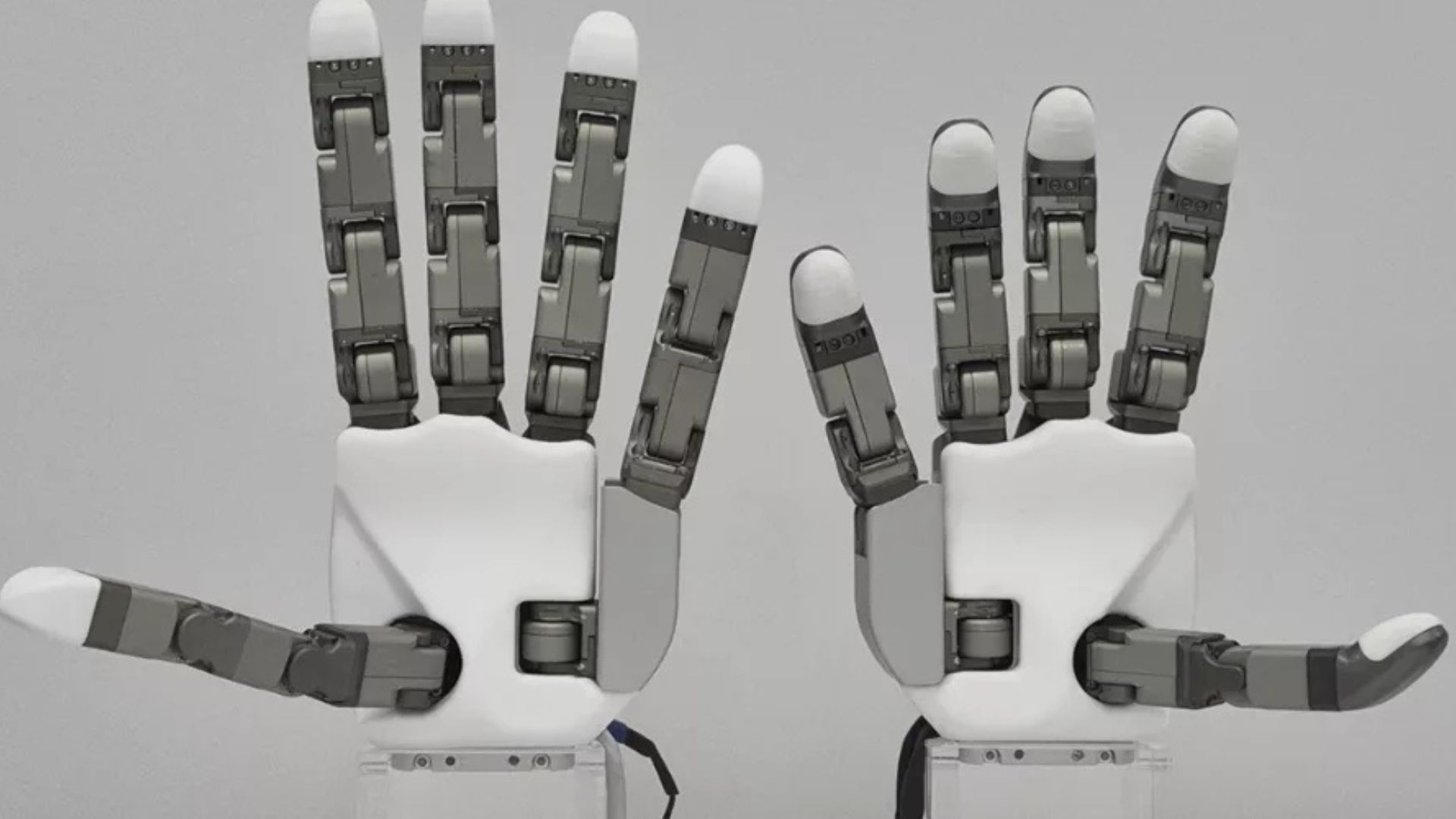
Tesollo, a South Korean company specializing in dexterous robotic hands and grippers, has introduced a device designed to close that gap significantly. The DG-5F-S is a five-finger robotic hand with 20 degrees of freedom, engineered to replicate human-like articulation within the size and weight constraints required for integration into humanoid robot platforms. At under 900 grams (approximately 2 pounds), it is designed to sit at the end of a humanoid robot's arm without disrupting the system's balance and dynamics.

Technical Specifications

The 20 degrees of freedom in the DG-5F-S represent a substantial advance over most commercial robotic hands, which typically offer between 6 and 12 degrees of freedom. Each degree of freedom corresponds to an independent joint axis — a direction in which part of the hand can independently flex, extend, or rotate. With 20 DoF across five fingers, the DG-5F-S can produce a much wider range of grasp configurations and manipulation movements than simpler designs, including the pinch grasps, power grips, and dexterous in-hand manipulations that characterize human hand use.

The actuation system uses a combination of electric motors and tendon-driven mechanisms — a design approach that borrows from the anatomy of the human hand, where muscles in the forearm transmit force to finger joints through tendons. This distributed actuation strategy keeps weight out of the fingers themselves, improving the hand's dynamic performance and making it less vulnerable to damage from impacts.

Sensor Integration

Dexterity without sensing is limited. The DG-5F-S integrates distributed tactile sensors across the fingertip and palm surfaces that provide contact force and pressure distribution data at update rates suitable for real-time control. These sensors allow the control system to detect whether an object is slipping from the grasp before a full slip occurs and to adjust grip force accordingly — a capability essential for handling fragile items, deformable objects, and items with unpredictable surface properties.

The sensor suite also includes joint position encoders with resolution sufficient to detect small deviations from commanded positions, enabling the kind of precise force-controlled manipulation required for tasks like inserting connectors, operating tools, or handling electronics components.

Target Applications and Platform Integration

Tesollo designed the DG-5F-S specifically for integration with humanoid robot platforms, a market that has seen dramatic investment and development activity in the past several years. Companies including Figure, Agility Robotics, 1X, and Boston Dynamics' Atlas program all require high-dexterity hands to extend their robots' task repertoire from locomotion and simple object handling to the broader range of manipulation tasks found in manufacturing, logistics, and service environments.

The under-2-pound weight specification reflects the payload constraints imposed by the arm designs of most existing humanoid platforms. A hand that is too heavy forces compromises in arm structure, drive train sizing, and battery capacity that cascade through the entire robot design. By keeping the DG-5F-S within the weight envelope that most humanoid arm designs can accommodate, Tesollo has made the device a drop-in upgrade option for platforms already in development or deployment.

The Market Moment

The DG-5F-S arrives as the humanoid robotics industry transitions from proof-of-concept demonstrations to early production deployments. Several companies have announced production commitments for thousands of humanoid units over the next two to three years, creating near-term demand for every subsystem that makes up a humanoid robot. A commercially available, high-dexterity hand from a specialized supplier reduces one of the significant engineering challenges that every humanoid developer would otherwise need to solve independently.

Tesollo's positioning as a specialist supplier — analogous to how camera module manufacturers or battery cell producers operate in the consumer electronics ecosystem — reflects a bet that the humanoid market will be large enough to support specialized component suppliers rather than requiring every robot manufacturer to develop every subsystem in-house. As the market develops, that ecosystem structure will accelerate overall progress by allowing each company to focus its resources on its distinctive competencies.

This article is based on reporting by Interesting Engineering. Read the original article.