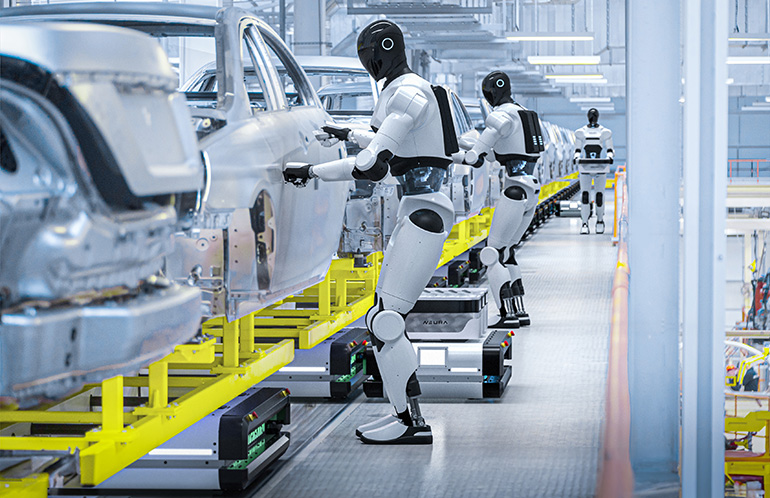
NEURA Robotics Announces Landmark Series C Funding
NEURA Robotics GmbH, a German pioneer in cognitive robotics, today revealed plans to raise up to $1.4 billion in Series C funding. The round, subject to unspecified investor conditions, is backed by global technology leaders and underscores the surging investor appetite for physical AI. The company aims to use the capital to accelerate development of its 'cognitive robots'—systems that continuously learn, collaborate, and operate across real-world environments through a shared intelligence ecosystem called the Neuraverse.
Founded in 2019 and headquartered in Metzingen, Germany, NEURA Robotics has rapidly positioned itself at the forefront of the physical AI revolution. The company's portfolio includes light robot arms, mobile robots, humanoid robots, and sensor kits tailored for manufacturing and supply chain applications. With this funding round, NEURA plans to expand its platforms for robot learning and global production of humanoids and other systems.
The Vision: Physical AI Beyond Screens
David Reger, founder and CEO of NEURA Robotics, articulated the company's ambitious vision: 'The future of AI will not only live on screens. It will move, interact, learn, and work beside us in the real world.' He emphasized that physical AI and cognitive robotics represent one of the largest technology shifts of the coming decades, transforming industries from manufacturing and logistics to healthcare, services, and household robotics.
Reger's statement reflects a growing consensus in the tech industry that the next frontier of artificial intelligence lies in embodied systems capable of perceiving, reasoning, and acting in physical spaces. NEURA's approach combines robotics, AI, sensors, edge compute, and large-scale infrastructure into a unified architecture, enabling machines that can operate autonomously and adapt to dynamic environments.
Neuraverse: An Open Ecosystem for Cognitive Robots
Central to NEURA's strategy is the Neuraverse, an open physical AI ecosystem that allows robots to learn across deployments. Unlike closed, proprietary systems, the Neuraverse is designed to facilitate shared learning and collaboration among robots from different manufacturers and applications. This approach aims to accelerate the development of general-purpose cognitive abilities, such as object manipulation, navigation, and human-robot interaction.
The company is also expanding its global network of NEURA Gyms—specialized large-scale training environments that combine real-world sensor interaction, simulation, and multimodal learning pipelines. These facilities provide a controlled yet realistic setting where robots can practice tasks, learn from failures, and refine their skills. By leveraging the Neuraverse, insights gained in one Gym can be transferred to robots in other locations, creating a virtuous cycle of improvement.
Global Partner Ecosystem and Decentralized AI
NEURA Robotics is building out a decentralized robotics and AI ecosystem with global partners. Reger noted, 'Many believed globally relevant AI infrastructure companies could only emerge from Silicon Valley. We believe the next generation of AI leaders can emerge anywhere in the world where there is enough vision, engineering talent, and execution speed.' With this financing, NEURA positions itself firmly among global leaders in the robotics race, alongside top players in the U.S. and China.
The company's partner ecosystem spans technology providers, research institutions, and industrial customers. By fostering an open platform, NEURA aims to lower barriers to entry for developers and enterprises, enabling a wide range of applications. The decentralized model also enhances resilience and adaptability, as intelligence and decision-making can be distributed across multiple nodes rather than centralized in a single data center.
Implications for Industry and Society
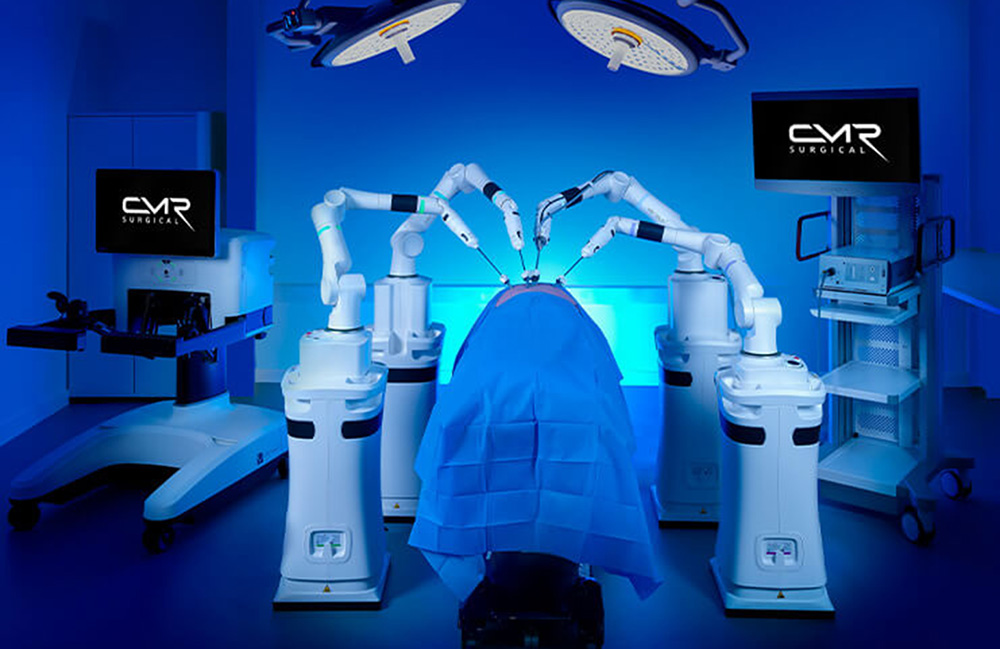
The infusion of $1.4 billion into NEURA Robotics signals a major vote of confidence in physical AI. As cognitive robots become more capable and affordable, they are poised to reshape industries. In manufacturing, humanoid robots could take on complex assembly tasks, while mobile robots handle logistics and material handling. In healthcare, robots could assist with surgery, rehabilitation, and elder care. In households, they might perform chores and provide companionship.
However, the rise of physical AI also raises important questions about job displacement, safety, and ethics. NEURA's emphasis on continuous learning and collaboration suggests a future where robots work alongside humans rather than replace them entirely. The company's open ecosystem approach could also promote transparency and accountability, as developers and users can inspect and modify robot behaviors.
Conclusion
NEURA Robotics' Series C round, potentially reaching $1.4 billion, marks a pivotal moment for the physical AI industry. With a clear vision, a robust technological foundation, and a growing ecosystem, the company is well-positioned to lead the transition from screen-based AI to embodied intelligence. As Reger put it, 'People will not only ask what AI can say—they will ask what AI can physically do.' NEURA Robotics is working to ensure that the answer is transformative.
This article is based on reporting by The Robot Report. Read the original article.
Originally published on therobotreport.com