The Kung Fu Problem in Humanoid Robotics
Watch most humanoid robot demonstrations and you'll see the same thing: impressive physical feats performed in controlled settings. Robots walking across rubble, doing backflips, lifting heavy boxes. The implicit message is that physical capability is the hard part, and once that's solved, useful robots will follow naturally.
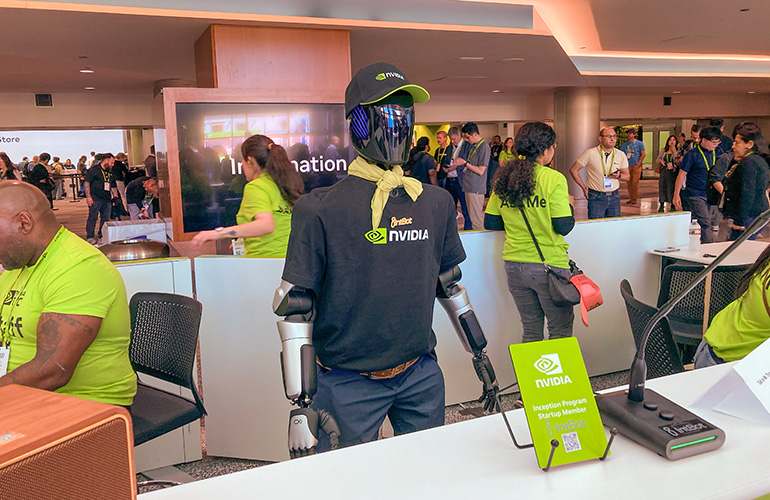
IntBot disagrees. The startup is building its Nilo humanoid around a fundamentally different thesis: physical capability is table stakes, but social intelligence is the differentiating factor that will determine which robots actually get deployed at scale.
What Social Intelligence Means in Practice
IntBot's IntEngine platform is designed to give robots the ability to understand and navigate human social environments. This goes well beyond recognizing faces or following voice commands. Social intelligence, as IntBot defines it, encompasses understanding social context, reading interpersonal dynamics, following unspoken workplace norms, and communicating naturally with co-workers.
Consider a robot deployed in a hospital. The physical task of carrying medication to a patient room is not technically challenging. What's hard is knowing when to interrupt a nurse who's busy, how to respond to a distressed patient, when to escalate to a human supervisor, and how to behave appropriately in emotionally sensitive environments. These are social intelligence problems, not motor control problems.
The IntEngine Platform
What distinguishes IntEngine is that it's designed to be platform-neutral. IntBot isn't trying to build the only robot that runs it. The company is positioning IntEngine as a software layer that can be integrated into any humanoid hardware — an operating system for social robotics rather than a complete robot product.
This is a smart strategic bet. The humanoid hardware market is crowded and capital-intensive. Building and selling robots requires massive manufacturing investment. Software platforms, by contrast, can scale with much lower marginal cost. If IntEngine becomes the standard social AI layer, IntBot could earn a share of every humanoid deployment regardless of who built the chassis.
Nilo as a Proof of Concept
Nilo, IntBot's own humanoid, serves as the primary demonstration vehicle for IntEngine's capabilities. The robot is designed to operate in workplace environments — offices, retail settings, hospitals — where smooth social interaction is as important as physical competence.
Early demonstrations have focused on scenarios that other humanoid robots handle poorly: navigating crowded spaces without making people uncomfortable, responding appropriately when humans give ambiguous instructions, and proactively communicating its state and intentions rather than silently executing tasks.
The Competitive Landscape
Most of the major players in humanoid robotics — Figure, Agility, 1X, Boston Dynamics — have focused primarily on expanding physical capabilities and operational durability. Social intelligence has been treated as a later-stage problem. IntBot is betting that this ordering is backwards, and that the first robots to achieve genuine social fluency will have a decisive advantage in deployment.
The argument has merit. Enterprise customers evaluating humanoid robots consistently cite concerns about how robots will interact with existing employees, how they'll handle unexpected social situations, and whether they can communicate clearly enough to be trusted with autonomous tasks. These are not hardware problems.
The Longer Arc
The broader question IntBot is raising is important for the entire robotics industry: what does it actually take for a robot to be trusted by humans who work alongside it? Physical reliability is necessary but not sufficient. Humans extend trust to other agents based on social cues — predictable behavior, clear communication, appropriate deference, and demonstrated awareness of social context.
If IntBot is right, the humanoid robots that will achieve real-world scale won't be the most physically capable ones. They'll be the ones that are easiest to work with.
This article is based on reporting by The Robot Report. Read the original article.