A Swift End to an Ambitious Sortation Effort
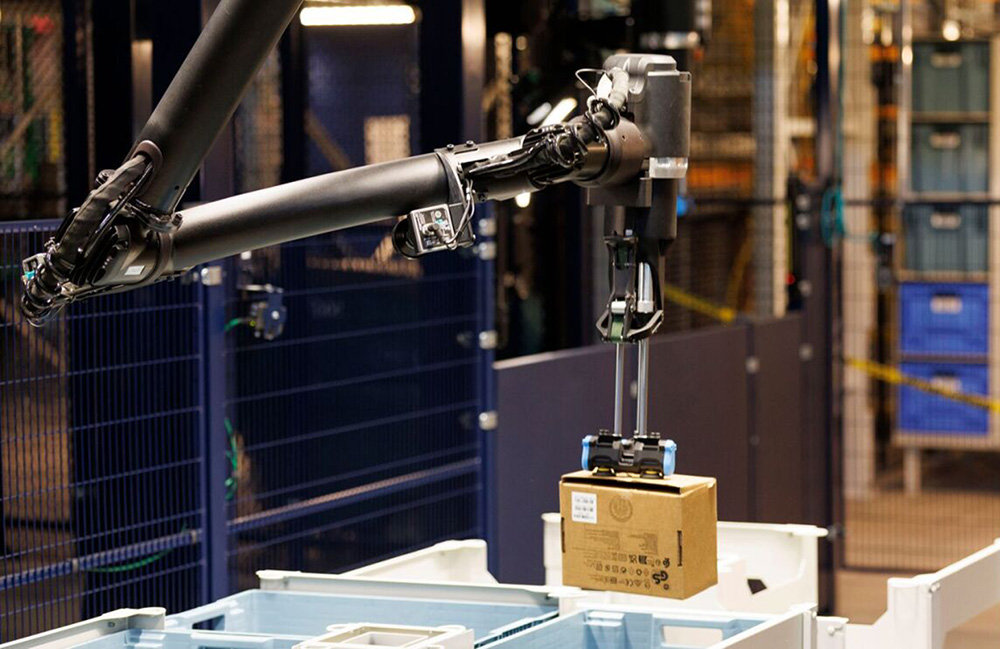
Amazon Robotics has pulled the plug on its Blue Jay sortation project, ending the initiative after a remarkably short six-month lifespan. The project, which aimed to develop a new approach to package sortation within Amazon's sprawling fulfillment network, has been shuttered and its engineering resources redirected to other automation efforts within the company. The decision is a striking example of Amazon's well-documented culture of rapid experimentation and equally rapid cancellation when projects fail to meet internal benchmarks.
Package sortation is one of the most labor-intensive and time-sensitive operations in any large-scale logistics network. Every day, Amazon's fulfillment centers process millions of packages that must be routed to the correct delivery vehicles based on destination, size, weight, and delivery priority. Automating this process more efficiently has been a long-standing goal for the company, and the Blue Jay project was one of several parallel efforts to push the boundaries of what sortation robots can do.
What Blue Jay Was Designed to Accomplish
While Amazon has not publicly disclosed the full technical details of the Blue Jay project, industry sources indicate that it was an attempt to develop a new class of sortation system that could handle a wider variety of package sizes and shapes than existing solutions. Current sortation robots in Amazon's facilities tend to work best with standardized package dimensions, and items that fall outside those parameters often require human intervention or slower, less efficient processing paths.
Blue Jay reportedly aimed to solve this problem with a combination of advanced computer vision, adaptive gripping mechanisms, and new conveyor integration techniques. The goal was a system that could sort irregular packages at speeds comparable to those achieved with standard-sized items, eliminating one of the persistent bottlenecks in Amazon's fulfillment pipeline.
The project drew from Amazon Robotics' deep bench of engineering talent, including teams that had previously worked on the company's successful Robin and Sparrow robotic systems. Robin, which handles package sortation at several Amazon facilities, has been operational for several years and represents the current state of the art within the company's sortation capabilities.
Why the Project Was Canceled
Amazon has a well-earned reputation for killing projects that do not demonstrate a clear path to scale. The company's leadership principles explicitly embrace experimentation, but they also demand that experiments produce measurable results quickly. Six months is a very short window for a hardware robotics project, but it appears to have been long enough for Amazon to conclude that Blue Jay's approach was not going to deliver the performance improvements it needed at a cost that made economic sense.
Several factors may have contributed to the decision:
- Technical complexity: Handling irregular packages at high speed is an extraordinarily difficult engineering challenge. The gap between laboratory demonstrations and production-ready systems in this domain is wide, and Blue Jay may have encountered fundamental technical obstacles that could not be resolved within a reasonable timeframe.
- Cost-benefit analysis: Even if the technology worked, the cost of deploying it at scale across Amazon's hundreds of fulfillment centers may have exceeded the labor savings it would generate. Amazon is famously rigorous about return-on-investment calculations for automation projects.
- Competing internal projects: Amazon Robotics operates multiple development streams simultaneously, and the company regularly reallocates resources from lower-priority projects to higher-priority ones. Blue Jay may have been deprioritized not because it failed outright but because other projects showed more promise.
Amazon's Broader Robotics Strategy Remains Aggressive
The cancellation of Blue Jay should not be interpreted as a retreat from robotics investment. Amazon continues to be one of the largest deployers of warehouse robotics in the world, with an estimated 750,000 robots operating across its global fulfillment network. The company acquired Kiva Systems in 2012 for $775 million, rebranding it as Amazon Robotics, and has since developed or deployed a growing family of robotic systems including Proteus, Sparrow, Robin, Sequoia, and Cardinal.
Each of these systems addresses a different part of the fulfillment workflow. Proteus is an autonomous mobile robot that moves carts through facilities. Sparrow uses computer vision and suction gripping to pick individual items from inventory bins. Sequoia integrates robotic storage with human picking stations. Together, they represent a comprehensive approach to automating the physical work of getting products from warehouse shelves to customer doorsteps.
The Blue Jay cancellation is better understood as a natural outcome of Amazon's approach to innovation, which values speed and decisiveness over sunk-cost loyalty. The company would rather kill ten projects quickly and redirect resources to the two that work than spend years nursing underperforming initiatives in the hope that they will eventually pay off.

What This Means for the Sortation Market
Amazon's decision may send a signal to the broader robotics industry about the difficulty of automating irregular-package sortation. Several startups and established robotics companies are working on similar problems, and the fact that a company with Amazon's resources and operational expertise could not make Blue Jay work in its initial form suggests that the challenge is even harder than many in the industry have assumed.
That said, the need for better sortation automation is not going away. E-commerce volumes continue to grow, labor costs are rising, and the pressure to deliver packages faster is intensifying. The company will undoubtedly continue pursuing sortation improvements through other channels, and the engineers and insights from the Blue Jay project will likely inform future efforts even if the specific product has been retired.
For now, Amazon's existing sortation systems will continue to handle the bulk of the work, and human workers will remain essential for the edge cases that robots cannot yet manage efficiently.
This article is based on reporting by The Robot Report. Read the original article.
Originally published on therobotreport.com
