The iPhone's Creator Wants Fewer Screens in Your Car
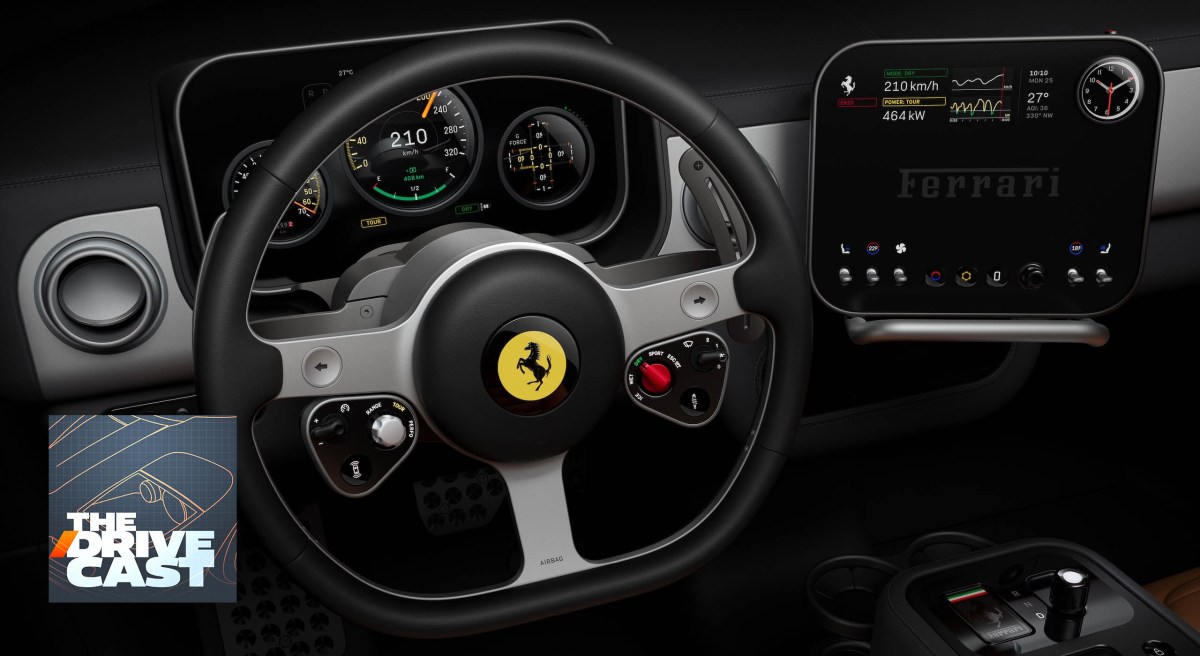
There is a particular irony in Jony Ive, the designer most responsible for embedding touchscreens into every corner of modern life, now arguing that automobiles have too many of them. Yet that is precisely the thesis behind Ive's latest project: the interior of the Ferrari Luce, the storied Italian automaker's first fully electric vehicle. Working alongside industrial designer Marc Newson, Ive has crafted a cabin that deliberately emphasizes analog controls and physical materials over the sprawling digital displays that have come to define contemporary car interiors.
The Luce, whose name translates to "light" in Italian, represents Ferrari's long-anticipated entry into the electric vehicle market. While the powertrain and exterior have drawn their share of attention, it is the interior that signals a potentially significant philosophical shift in automotive design. Ferrari made the unusual decision to outsource its cabin design to two figures who made their names far from the automotive world, and the result is a space that reportedly eschews carbon fiber, the material of choice in high-performance Ferraris for decades, in favor of a glass-heavy architecture that prioritizes transparency and tactile interaction.
A Case Study in Design Philosophy
Ive and Newson's approach reflects a growing counter-movement within the auto industry. Over the past decade, automakers from Tesla to Mercedes-Benz to Rivian have competed to install ever-larger touchscreens, consolidating climate controls, navigation, seat adjustments, and even basic vehicle functions behind glass panels. The trend has generated a backlash from drivers and safety advocates who argue that touch interfaces are more distracting than physical buttons and knobs, particularly for functions that drivers need to adjust without taking their eyes off the road.
European regulators have taken notice. Euro NCAP, the organization that sets the continent's vehicle safety standards, has begun penalizing cars that bury essential controls in touchscreen menus rather than providing dedicated physical switches. Hyundai, Porsche, and Volkswagen have all signaled a partial retreat from pure touchscreen cabins in response to customer feedback and regulatory pressure. The Ferrari Luce, designed by the world's most famous touchscreen pioneer, may prove to be the most high-profile endorsement yet of the idea that digital interfaces have overreached in the automotive context.
Ferrari's Existential Transition
The Luce arrives at a moment when Ferrari faces a delicate brand challenge. The company's identity is built on the sensory experience of driving: the sound of a naturally aspirated V12, the mechanical feel of a gated manual shifter, the raw connection between driver and road. An electric powertrain eliminates or fundamentally alters most of those signature elements. The interior, then, becomes one of the few places where Ferrari can assert that its electric car still feels unmistakably like a Ferrari rather than a fast appliance.
Ive and Newson's involvement is itself a statement about how Ferrari views the stakes. The company could have tasked its in-house design team, led by Flavio Manzoni, with the entire project. Instead, it brought in external talent with credibility in product design and human-computer interaction, fields that matter enormously when the car's cabin must compensate for the emotional deficit created by losing a combustion engine. Whether the Luce's interior succeeds as a driving environment will not be clear until journalists and customers experience it firsthand, but the design intent is unambiguous: analog warmth over digital spectacle.
Why It Matters Beyond Ferrari
The broader significance of the Luce's interior philosophy extends well beyond Maranello. If Ferrari, a brand that commands premium prices and sets aspirational standards for the entire industry, publicly rejects the maximalist-screen approach, it gives permission to other automakers to do the same. The auto industry has a long history of design trends cascading downward from flagship models, and a Ferrari that champions physical controls could accelerate the already-emerging correction away from all-touchscreen cabins.
For Ive personally, the project represents a fascinating second act. After departing Apple in 2019 and founding the design firm LoveFrom, he has taken on clients ranging from Airbnb to Ferrari. The Luce interior is arguably his most culturally loaded commission since the original iPhone: a direct engagement with the question of how much digital interface is too much, delivered through a product that will be scrutinized by designers, technologists, and automotive enthusiasts worldwide. It is not every day that the person who started a revolution gets to define where it should stop.
This article is based on reporting by The Drive. Read the original article.
Originally published on thedrive.com