More Than Meets the Eye
Electric vehicles have fundamentally changed what it means to shift gears. Without a traditional multi-speed transmission, the physical gear lever that has been a fixture of automobile cabins for over a century has become, in many EVs, little more than a toggle between drive, reverse, neutral, and park. Some manufacturers have eliminated the lever entirely, replacing it with buttons or steering column stalks. But Ford has a different vision, one that reimagines the shifter not as a vestigial relic but as a hub of vehicle control.
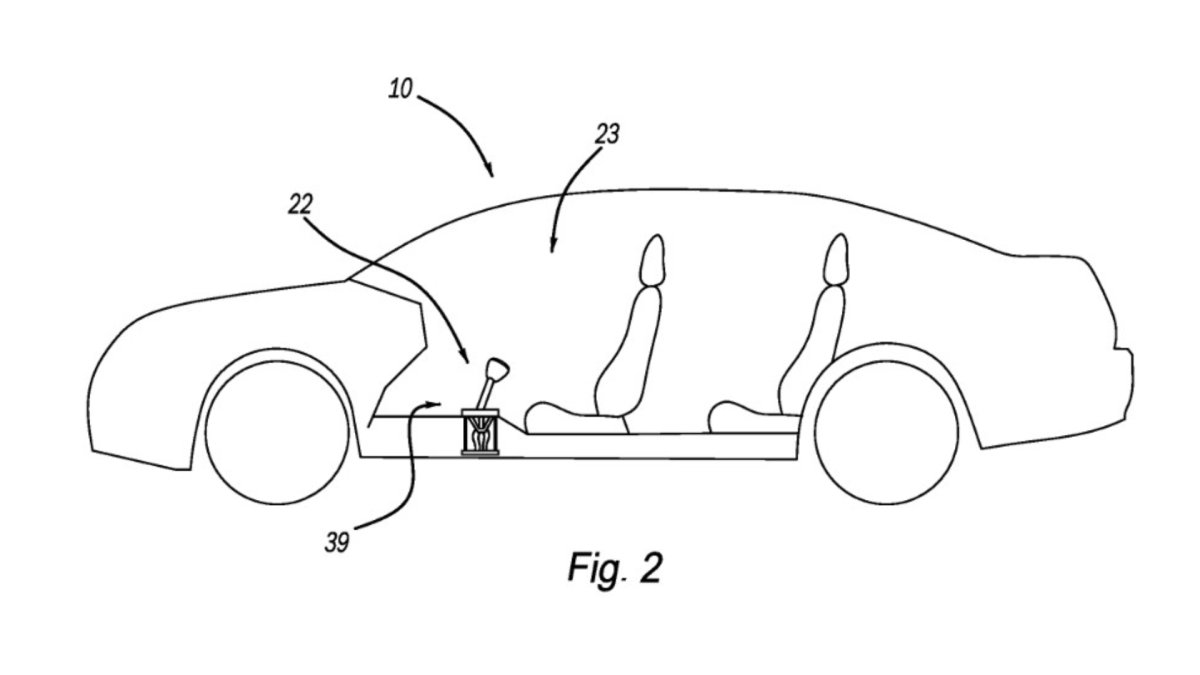
A recently published patent, number 12545234, reveals a multi-function input device that looks superficially like a traditional shifter but operates on an entirely different level. Discovered by automotive journalist Joel Feder, the patent describes an electronic controller that integrates gear selection, drive mode management, and additional digital interface functions into a single ergonomic component. There is no mechanical connection to the drivetrain whatsoever. Instead, the device communicates electronically with the vehicle's control systems, freeing designers to assign virtually any function to its various inputs.
The Engineering Philosophy Behind the Design
Ford's approach to this device is rooted in a design mantra that has become central to the company's next-generation EV development: "The best part is no part." The corollary to that principle is equally important: "The second-best part is one that performs multiple functions." By consolidating several control interfaces into a single component, Ford aims to reduce the overall number of parts in the cabin, simplify manufacturing, lower costs, and create a cleaner interior layout.
This philosophy extends well beyond the shifter. Ford has been applying the same thinking to side mirrors, electrical architecture, and structural castings throughout its upcoming EV platform. But the shifter patent is particularly interesting because it addresses a problem that most automakers have solved by simply removing the shifter altogether. Ford's answer is the opposite: keep the physical interface but make it dramatically more capable.
The patent documents describe a device that incorporates a rotating crown or bezel for mode selection, toggle switches for secondary functions, and integrated lighting elements that provide visual feedback about the vehicle's current state. Haptic feedback through vibration and sound adds a tactile dimension to interactions, giving drivers physical confirmation of their inputs without requiring them to look away from the road.
What Functions Could It Control?
While the patent does not specify every possible function, the multi-input nature of the device opens up a wide range of possibilities. The primary function remains gear selection, with the familiar forward-and-back motion handling drive, reverse, and neutral engagement. But the secondary inputs could handle an array of additional controls that currently require separate buttons, knobs, or touchscreen interactions.
Drive mode selection is the most obvious candidate. Most modern vehicles offer multiple driving profiles such as eco, comfort, sport, and off-road settings, and these are typically accessed through dashboard buttons or infotainment menus. Integrating mode selection into the shifter keeps the driver's hand in a natural position and reduces the visual distraction of navigating on-screen menus while driving.
Regenerative braking intensity is another likely application. Many EV drivers adjust regen braking levels frequently based on driving conditions, and a quick twist of the shifter's crown could provide intuitive, eyes-free adjustment. Other possibilities include traction control settings for different terrain conditions, tow-haul mode activation, and even audio or climate controls through programmable secondary inputs.
The patent filing even hints at potential integration with advanced driver assistance systems, where the shifter could serve as an input for adjusting adaptive cruise control following distance or activating specific ADAS features.
A Response to the Touchscreen Problem
Ford's multi-function shifter can also be read as a tacit acknowledgment that the industry's wholesale migration to touchscreen controls has created usability problems. Numerous studies have shown that touchscreen interactions while driving are significantly more distracting than physical controls, because they require visual attention to locate the correct on-screen target. Physical interfaces with distinct shapes, positions, and haptic feedback can be operated largely by feel, allowing drivers to maintain their focus on the road.
By packing more functionality into a physical control that sits in a fixed, easily reachable position in the center console, Ford could potentially reduce the driver's reliance on touchscreen inputs for commonly adjusted settings. This approach aligns with a growing counter-movement in automotive design that seeks to bring back physical controls for frequently used functions while reserving touchscreens for less time-critical interactions.
Engineers involved in the project reportedly compared the device's multi-input nature to a "Bop-It" toy, a playful analogy that underscores the variety of interactions the component supports: push, pull, twist, toggle, and press, each mapped to a different vehicle function.
Will It Reach Production?
It is important to emphasize that a patent filing does not guarantee production. Automakers patent hundreds of concepts each year, and many never progress beyond the design stage. The vehicle silhouette in the patent diagrams bears a resemblance to a Ford Taurus sedan, though this likely holds minimal significance for predicting which actual model might receive the technology.
That said, the patent aligns closely with Ford's stated strategy for its upcoming universal electric platform, which is expected to underpin at least five new EVs. The company has been vocal about reducing component counts and integrating multiple functions into single parts across these vehicles. A multi-function shifter fits naturally into that vision.
If Ford does bring this device to production, it could set a new standard for EV cabin controls, one that bridges the gap between the physicality that drivers crave and the electronic flexibility that electric powertrains enable. In an era where many EV interiors feel sterile and overly reliant on glass screens, a thoughtfully designed physical interface that does the work of several controls could be a genuine differentiator.
This article is based on reporting by The Drive. Read the original article.
Originally published on thedrive.com