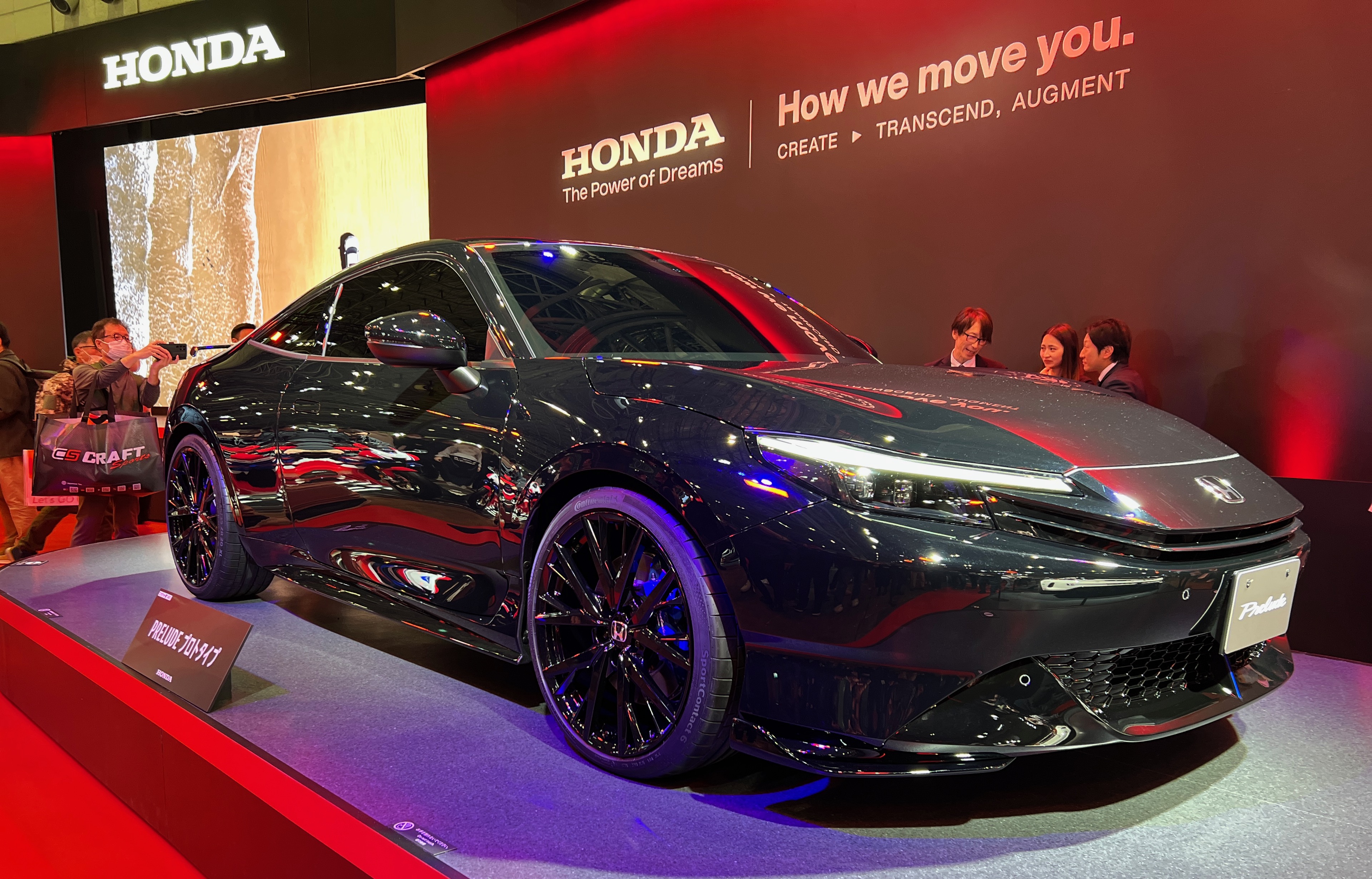
Honda signals a major strategic reset
Honda is confronting what Automotive News described as its first-ever annual loss, and the scale of the setback is forcing a public rethink of the company’s product strategy. Chief Executive Toshihiro Mibe is now presenting a plan that shifts emphasis toward hybrids instead of electric vehicles, a notable reversal for an industry that has spent years describing battery-electric expansion as the core path forward.
The message is stark. Honda’s losses are being tied to a costly bet on EVs, and the company is now moving to contain the damage by leaning harder on technology that offers lower emissions without requiring a full battery-electric transition at the same pace. For an automaker of Honda’s size and history, that amounts to more than a quarterly course correction. It signals a reassessment of timing, capital discipline, and consumer demand.
The financial pressure behind the move
The source material does not detail the full makeup of the loss, but it is explicit on the headline point: Honda faces its first annual loss, and mounting EV costs are central to the problem. That framing matters because it captures a challenge facing several legacy carmakers. Building out a competitive electric-vehicle lineup is not simply a matter of designing new cars. It also requires major spending on platforms, supply chains, production systems, and pricing strategies that can hold up against lower-cost rivals and uncertain demand.
When those investments outrun near-term returns, management has to decide whether to double down or to rebalance. Honda appears to be choosing the latter. By prioritizing hybrids, the company can continue to offer electrified vehicles while avoiding some of the financial strain associated with an all-in battery push.
Why hybrids look attractive again
Hybrid vehicles occupy an increasingly practical middle position. They allow automakers to market efficiency gains and lower fuel use while relying on manufacturing and ownership patterns that are more familiar to many customers. They also reduce dependence on the charging infrastructure, battery scale, and cost structures that continue to complicate full EV adoption in many markets.
For Honda, that may be especially important in a period when investors and boards are demanding clearer returns on capital. A hybrid-centered plan can be presented as both commercially realistic and technologically credible. It does not abandon electrification outright, but it slows the rate at which the company exposes itself to the most expensive parts of the transition.
A warning for the broader auto industry
Honda’s repositioning is also a broader industry signal. For years, the dominant public narrative in automotive strategy treated the EV transition as a one-directional race. The latest Honda move suggests the reality is more uneven. Consumer demand, manufacturing economics, regional policy differences, and pricing pressure all still matter enough to force large strategic revisions.
That does not mean electric vehicles are disappearing from the long-term picture. It does mean the path is proving more expensive and more politically exposed than many corporate roadmaps implied. A company can support electrification in principle and still conclude that the next several years require a heavier mix of hybrids to protect earnings and stabilize production.
The leadership test for Toshihiro Mibe
The situation puts unusual pressure on CEO Toshihiro Mibe. Automotive News frames him as scrambling for a reboot, language that reflects both urgency and accountability. Strategy shifts are always difficult in the auto sector because product cycles are long, factories are costly, and supplier relationships cannot be rearranged overnight. When a company is simultaneously dealing with financial stress, the room for error narrows further.
Mibe now has to persuade investors, employees, and partners that a hybrid-first reset is not a retreat born of panic, but a disciplined response to changing market conditions. That will require more than announcing a new emphasis. It will require evidence that Honda can restore profitability while preserving competitiveness in an industry still being reshaped by electrification.
- Honda faces what the source describes as its first-ever annual loss.
- The company is blaming mounting EV costs for the pressure.
- CEO Toshihiro Mibe is shifting strategy toward hybrids instead of EVs.
The immediate takeaway is clear: Honda is no longer speaking as though the EV transition can be pursued at any cost. Its new posture is built around a harder question now confronting much of the car industry: how to keep moving toward electrification without breaking the economics of the business on the way there.
This article is based on reporting by Automotive News. Read the original article.
Originally published on autonews.com